How Local Farmers Understand and Adapt to Climate Change

Greg Howard
10th March, 2025

How Local Farmers Understand and Adapt to Climate Change

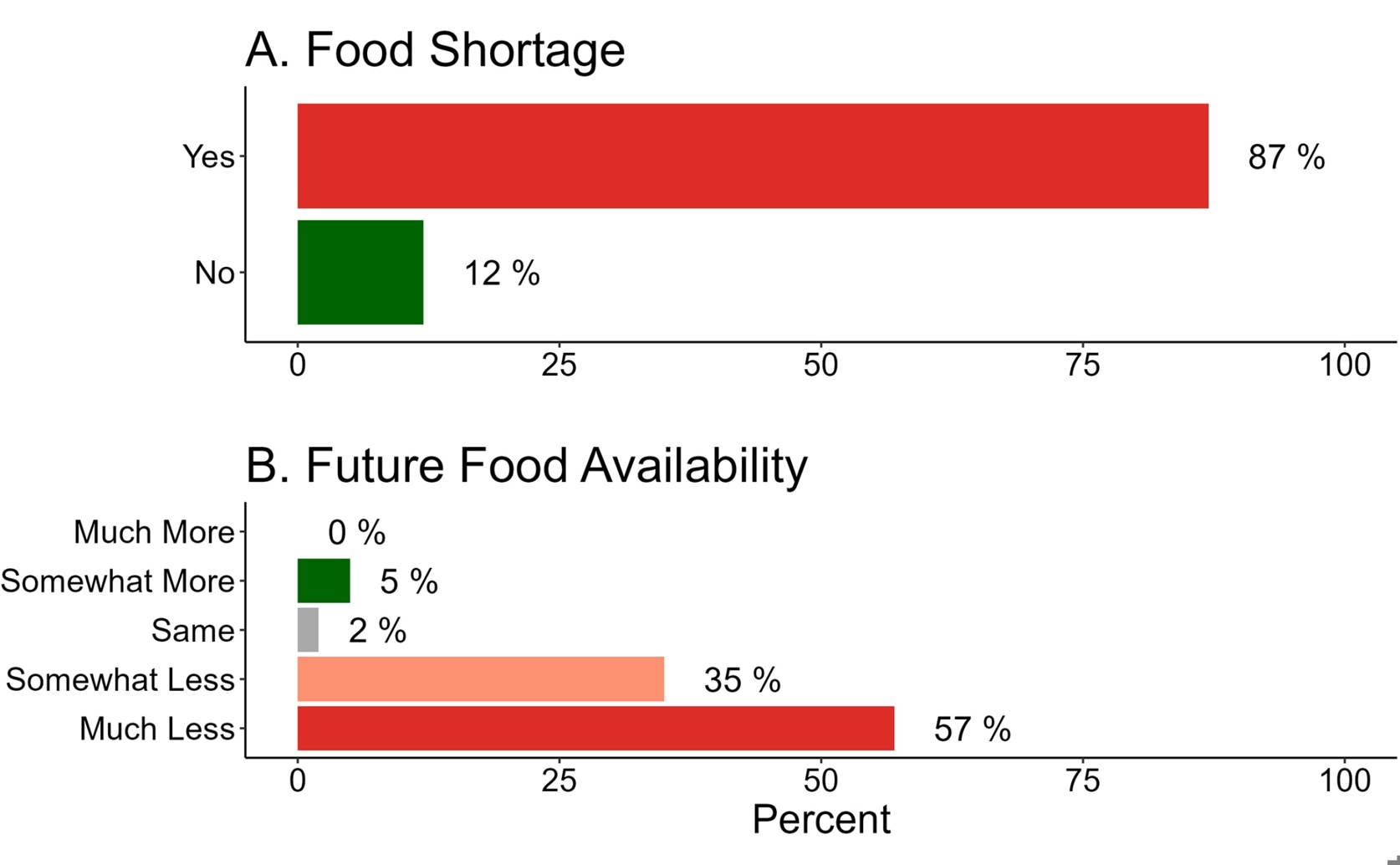
The vast majority of smallholder farmers in northeast Madagascar reported recent food insecurity (a), and nearly all expect climate change to further reduce their future food availability (b), underscoring the severe threat that perceived changes in temperature and rainfall pose to household food security in this region.

Image adapted from: Barrett et al. / CC BY (Source)

Key Findings

  • In northeast Madagascar, almost all small farmers notice higher temperatures and less rainfall, fearing future food shortages
  • Despite these concerns, only about one in five farmers have changed their farming practices to cope with the climate changes
  • Farmers with more financial resources and men are more likely to adapt, showing that money and gender play key roles in overcoming challenges
Climate change poses a significant threat to food security and health worldwide, with smallholder farmers in developing regions being particularly vulnerable[2]. These farmers often rely on traditional agricultural practices and have limited resources to adapt to changing climate conditions. A recent study conducted by researchers at Duke University[1] investigates how climate change affects smallholder farmers in rural northeast Madagascar and explores the factors that influence their ability to adapt. The study surveyed 479 smallholder farmers in two villages, aiming to understand their perceptions of climate changes, the impacts on their livelihoods, health, and food security, and the adaptive measures they are taking in response. The researchers focused on changes in rainfall and temperature, key factors that directly affect agricultural productivity. They hypothesized that farmers with greater market-based wealth and more farming experience would be more likely to adopt new farming practices. Additionally, they explored whether the farming practices of peers influenced individual adaptation strategies. Findings revealed that an overwhelming majority of farmers observed significant climate changes, with 94% reporting increased temperatures and 91% noting decreased rainfall over the past five years. These alterations in climate patterns have led most farmers to anticipate a reduction in the amount of food available to feed their families, with 57% expecting much less and 35% somewhat less food in the future. Despite the clear recognition of these challenges, only 21% of the farmers had implemented changes in their farming practices to adapt to these new conditions. The study identified key factors influencing whether farmers adopted new practices. Farmers with greater market-based wealth were more likely to adopt adaptive measures, suggesting that access to financial resources plays a crucial role in enabling adaptation. Additionally, men were found to have higher odds of implementing new farming methods compared to women, highlighting the role of gender in adaptation strategies. Contrary to expectations, the farmers' experience and the farming practices of their peers did not significantly influence their own adaptation efforts. These results underscore the complex interplay between socioeconomic status, gender, and climate adaptation. The limited adoption of adaptive practices despite widespread recognition of climate threats indicates that existing socioeconomic inequalities hinder effective responses to climate change[2]. This aligns with previous research from Université d’Antananarivo, Madagascar[3], which highlighted pervasive malnutrition and the urgent need for public health interventions to ensure nutritional security in remote communities. The lack of adaptation measures among many farmers exacerbates food security issues, as changing climate conditions reduce agricultural yields and increase vulnerability to malnutrition. Furthermore, the study builds on findings from Duke University[4], which emphasized the importance of personal beliefs and perceptions in shaping responses to climate change. In the Madagascar study, the strong perceptions of climate change impacts directly influenced farmers' concerns about future food security, yet economic and gender-related barriers limited their ability to act. This suggests that while awareness of climate change is high, translating this awareness into effective action requires addressing underlying socioeconomic factors. Additionally, the research resonates with insights from the study on Yucatec Maya farmers[5], which found that local, high-resolution climate data are essential for understanding and responding to climate variations that directly affect agricultural cycles. In Madagascar, the farmers' perceptions of daily rainfall and temperature changes are critical for their decision-making processes. However, without access to precise local climate information and the resources to implement adaptive practices, farmers remain constrained in their ability to mitigate the adverse effects of climate change. The study conducted by Duke University provides valuable insights into the challenges faced by smallholder farmers in northeast Madagascar. It highlights the urgent need for targeted interventions that address socioeconomic disparities and promote gender equity to enhance climate adaptation. By understanding the specific factors that influence farmers' ability to adapt, policymakers and development organizations can design more effective strategies to support these communities in building resilience against climate change. In conclusion, while the recognition of climate change impacts among smallholder farmers in Madagascar is high, the capacity to adapt is limited by economic and gender-related inequalities[2]. Addressing these barriers is essential for improving food security and health outcomes in vulnerable rural communities. Future efforts should focus on providing financial resources, empowering women, and delivering localized climate information to enable more widespread and effective adaptation practices.

AgricultureEnvironmentSustainability

References

Main Study

1) Climate Change Perceptions and Adaptive Behavior Among Smallholder Farmers in Northeast Madagascar

Published 7th March, 2025

https://doi.org/10.1371/journal.pclm.0000501


Related Studies

2) The impact of climate change on smallholder and subsistence agriculture.

Journal: Proceedings of the National Academy of Sciences of the United States of America, Issue: Vol 104, Issue 50, Dec 2007


3) Seasonal trends of nutrient intake in rainforest communities of north-eastern Madagascar.

https://doi.org/10.1017/S1368980019001083


4) Climate change: believing and seeing implies adapting.

https://doi.org/10.1371/journal.pone.0050182


5) Scaling climate change to human behavior predicting good and bad years for Maya farmers.

https://doi.org/10.1002/ajhb.23524


Related Articles

An unhandled error has occurred. Reload 🗙