Filter mud improves date palm growth, yield and fruit quality in dry areas

Greg Howard
3rd March, 2026

Filter mud improves date palm growth, yield and fruit quality in dry areas

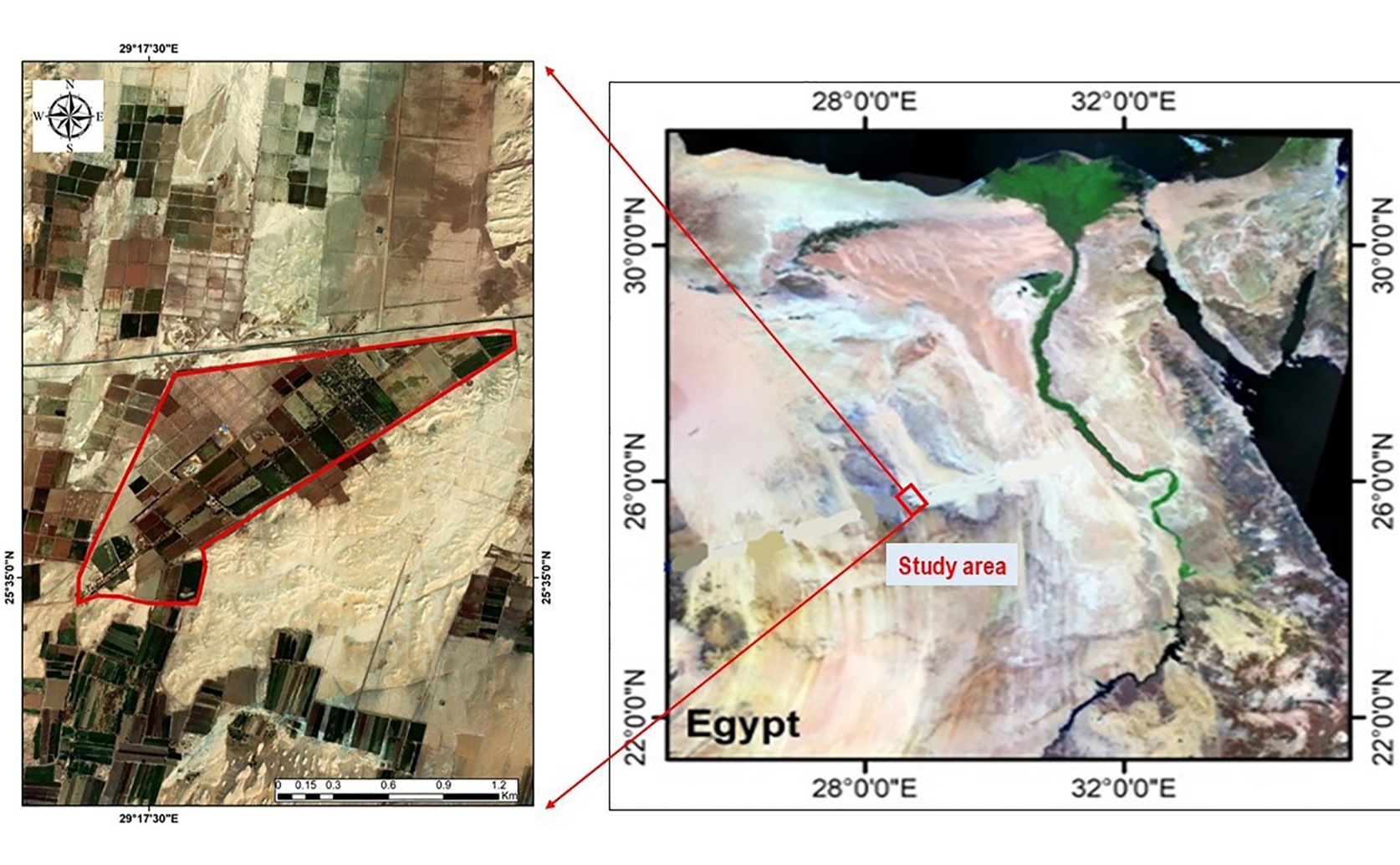
This study took place in a desert orchard in the Dakhla Oasis, Egypt, a key region for cultivating Phoenix dactylifera L. and a source of the sugarcane byproduct tested as a sustainable fertilizer.

Image adapted from: Abo-Ogiala et al. / CC BY (Source)

Key Findings

  • In Egypt’s Dakhla Oasis, research on Medjool date palms showed that adding filter mud, a sugarcane industry byproduct, improved soil health
  • Combining filter mud with poultry manure (treatment T6) significantly boosted soil water retention and essential nutrient levels (nitrogen, phosphorus, potassium)
  • Treatment T6 also led to higher date palm yields and improved fruit quality, with larger fruit size and better composition compared to other treatments
Soils in dryland environments, characterized by limited water and nutrient availability, are particularly vulnerable to desertification – the process by which fertile land turns into desert. Finding effective ways to improve these soils’ ability to retain water and essential nutrients is therefore crucial for sustainable agriculture. Recent research from Tanta University and Kafrelshaikh University[1] investigated the potential of filter mud, a byproduct of the sugarcane industry, as a soil amendment in the arid conditions of the Dakhla Oasis, Egypt. The goal was to determine if this often-discarded material could offer a solution to improve soil health and support crop production, while simultaneously reducing environmental waste. The study focused on Medjool date palms, a commercially important crop grown in the region. Researchers compared the effects of applying filter mud alone, animal manure alone, poultry manure alone, and various combinations of filter mud with either animal or poultry manure to the soil. They monitored a range of factors over two growing seasons – 2022 and 2023 – including soil properties, date palm yield, and the quality of the harvested fruit. The results demonstrated that incorporating filter mud into the soil consistently improved all measured parameters compared to using animal or poultry manure by itself. However, the most significant positive effects were observed when filter mud was combined with poultry manure (treatment T6). This combination led to higher water content at field capacity – the amount of water the soil can hold after excess water has drained away – reaching 12.58% and 12.59% in 2022 and 2023, respectively. Crucially, it also boosted the levels of essential nutrients in the soil: nitrogen (N), phosphorus (P), and potassium (K) reached 35.23/35.25 mg/kg, 5.33/5.37 mg/kg, and 61.21/61.18 mg/kg for the same seasons. Beyond soil improvements, treatment T6 also significantly increased date palm yield, producing 65 and 66 kg of dates per tree in 2022 and 2023. Furthermore, the fruit produced under this treatment exhibited superior quality, with an average length of 8/8.1 cm and diameter of 2.7/2.8 cm. These findings build upon existing knowledge of soil health and the benefits of organic amendments. For example, previous research[2] has highlighted how manure substitution for chemical fertilizer improves soil properties, promotes microbial growth, and enhances enzyme activity. The study by extends this understanding by identifying filter mud as a particularly effective organic amendment, especially when used in conjunction with poultry manure. This synergy is likely due to the complementary nature of the materials; poultry manure provides a rich source of readily available nutrients, while filter mud may improve soil structure and water retention, creating a more favorable environment for microbial activity and nutrient uptake. The increased fungi/bacteria ratio observed in[2] with manure application could also be relevant, as a balanced microbial community is vital for nutrient cycling and overall soil health. The positive impact on soil nutrient levels observed in is particularly noteworthy, as nutrient deficiencies are a major limiting factor for crop production in arid and semiarid regions. The increased availability of nitrogen, phosphorus, and potassium directly supports plant growth and development, leading to higher yields and improved fruit quality. The study also aligns with the growing understanding of the importance of soil organic carbon (SOC) in influencing microbial composition and activity[2], as filter mud contributes significantly to SOC levels. The research from Tanta University and Kafrelshaikh University presents a promising solution for improving soil health and promoting sustainable agriculture in arid environments. By valorizing a byproduct of the sugarcane industry, the study not only addresses a key environmental challenge but also contributes to several United Nations Sustainable Development Goals, including Zero Hunger (SDG 2), Industry, Innovation, and Infrastructure (SDG 9), and Responsible Consumption and Production (SDG 12).

AgricultureSustainabilityPlant Science

References

Main Study

1) Enhanced soil attributes, yield and fruit quality of Medjool date palm (Phoenix dactylifera L.) in response to filter mud/cake for drylands sustainability

Published 2nd March, 2026

https://doi.org/10.1371/journal.pone.0343806


Related Studies

2) Substitution of manure for chemical fertilizer affects soil microbial community diversity, structure and function in greenhouse vegetable production systems.

https://doi.org/10.1371/journal.pone.0214041


Related Articles

An unhandled error has occurred. Reload 🗙