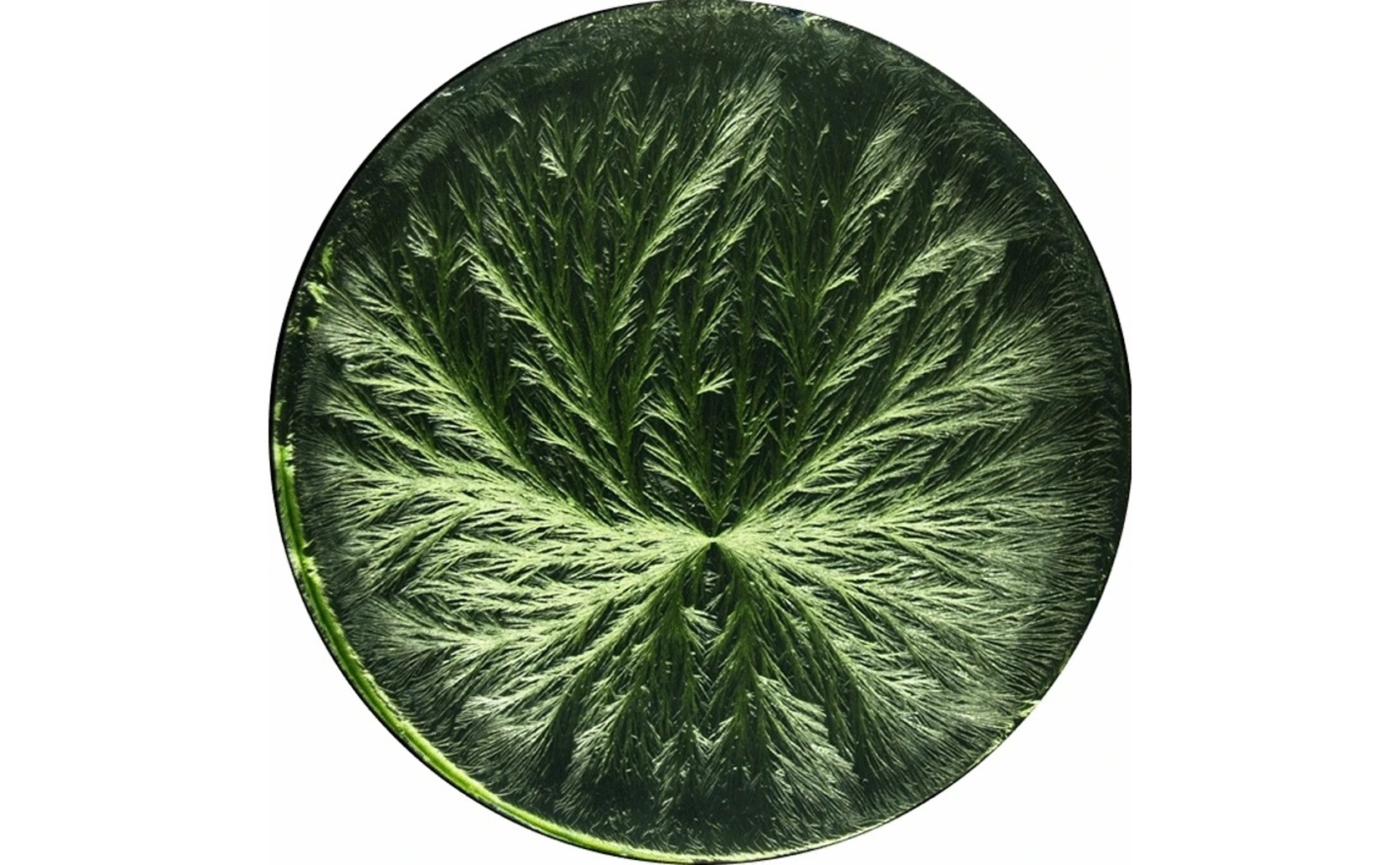
Copper chloride crystals help assess the quality of plant-based medicines

Jenn Hoskins
27th February, 2026

Copper chloride crystals help assess the quality of plant-based medicines

The Copper Chloride Crystallisation method produces a unique crystallisation pattern, or "fingerprint," whose structural and textural features are analyzed to reveal subtle systemic differences between phytotherapeutic extracts of Viscum album L.

Image adapted from: Guglielmetti et al. / CC BY (Source)

Key Findings

  • This study, conducted on mistletoe extracts, investigated a new method called copper chloride crystallisation (CCC) fingerprint analysis for comprehensively assessing herbal medicine quality
  • CCC successfully distinguished between different subspecies of mistletoe, indicating its ability to detect variations in plant composition
  • While more subtle, CCC could also identify differences based on the host tree the mistletoe grew on and, to a lesser extent, the blending method used during processing
Herbal medicines, also known as phytotherapeutic products, are increasingly popular globally, offering potential treatments for a wide range of illnesses. However, ensuring their safety and effectiveness presents a significant challenge. The inherent complexity of these products, stemming from variations in plant genetics, growing conditions, and processing methods, makes consistent quality control difficult.[2] highlights this issue, noting that adverse events are often linked to poor raw material quality or inconsistencies in the final product, categorising problems as either ‘external’ (contamination, adulteration) or ‘internal’ (ingredient complexity). Researchers at Univ. of Witten/Herdecke, Hiscia Research Institute, have been investigating a new method for comprehensively characterising these complex products, focusing on a technique called copper chloride crystallisation (CCC) fingerprint analysis[1]. Agricultural research has indicated CCC’s potential for detailed analysis, prompting the study to explore its application to phytopharmaceuticals. The core idea is that subtle differences in a plant’s chemical composition will influence how its extract interacts with copper chloride during crystallisation, creating a unique ‘fingerprint’ that can be used for identification and quality assessment. The pilot trial centred on Viscum album L. (mistletoe), a plant widely used in complementary medicine. The researchers deliberately introduced three levels of variation within this single genus: different subspecies (album vs. austriacum), varying deciduous host trees (apple vs. oak) on which the mistletoe grew, and different blending methods (machine vs. hand). These variations represent the kinds of real-world inconsistencies that can occur in herbal medicine production. The goal was to determine if CCC could reliably detect these differences. The study employed a systematic approach, analyzing plant extracts and assessing CCC fingerprints based on seven variables – characteristics of the crystals’ texture and structure. Rigorous control experiments were performed to ensure the setup's stability and minimise the risk of false positives. The researchers then conducted three ‘sensitivity tests’ to evaluate CCC’s ability to differentiate between the variations. The first sensitivity test examined all seven variables and showed clear differences between all groups (p < 0.01, Cohens’d 1.75–0.22). This indicated that CCC could readily distinguish between subspecies, host trees, and blending methods. However, as the differences became more subtle – moving from subspecies to host trees, and then to blending methods – the ability to detect them diminished. The second test, focusing on the most prominent variables, still showed significant differences (p < 0.01, Cohens’d 0.56–0.26), but with a smaller effect size. The third test, examining even more nuanced differences, revealed significant differences in only four texture-related and two structure-related variables (p < 0.01, Cohens’d 0.27, 0.20). These findings demonstrate that CCC can indeed detect differences in Viscum album extracts based on subspecies, host tree, and blending procedure, although the statistical significance weakens with increasing subtlety. This aligns with the concept of ‘pattern-oriented approaches’ discussed in[3], which advocates for analyzing the overall fingerprint of a plant extract rather than relying on single, isolated compounds as quality markers. The compound-oriented approach, while useful in some cases, is often insufficient for complex herbal mixtures, and a holistic approach is required. The study builds on the work highlighted in[4], which critiques the reliance on single marker assays for quality control. While these assays are common in European Pharmacopoeia standards, they often measure analytical markers with no proven correlation to therapeutic efficacy. CCC fingerprinting offers a potential alternative, providing a more comprehensive assessment of the extract’s composition. The FDA's increasing engagement with botanical IND applications[5] also underscores the need for robust quality control methods, and CCC could potentially contribute to meeting these regulatory requirements. The researchers acknowledge that further development is needed to fully establish the relevance of CCC for phytopharmaceuticals. Specifically, it remains to be seen whether it can detect ‘systems-level properties’ – the complex interactions between different compounds that contribute to a plant’s overall effect. However, the pilot trial provides a promising foundation for future research, suggesting that CCC fingerprint analysis may become a valuable tool for ensuring the quality and consistency of herbal medicines.

MedicineBiochemPlant Science

References

Main Study

1) Evaluation of copper chloride crystallisation as a method for systems-level characterisation of phytopharmaceuticals – a pilot investigation

Published 24th February, 2026

https://doi.org/10.1038/s41598-026-41081-6


Related Studies

2) Quality of herbal medicines: challenges and solutions.

https://doi.org/10.1016/j.ctim.2011.09.004


3) Quality Control of Herbal Medicines: From Traditional Techniques to State-of-the-art Approaches.

https://doi.org/10.1055/a-1529-8339


4) Quality Standards for Herbal Drugs and Herbal Drug Preparations - Appropriate or Improvements Necessary?

https://doi.org/10.1055/s-0043-118534


5) Scientific and Regulatory Approach to Botanical Drug Development: A U.S. FDA Perspective.

https://doi.org/10.1021/acs.jnatprod.9b00949


Related Articles

An unhandled error has occurred. Reload 🗙