Plant compounds from Ardisia villosa show promise in stopping gastric cancer cell growth

Jenn Hoskins
10th January, 2026

Plant compounds from Ardisia villosa show promise in stopping gastric cancer cell growth

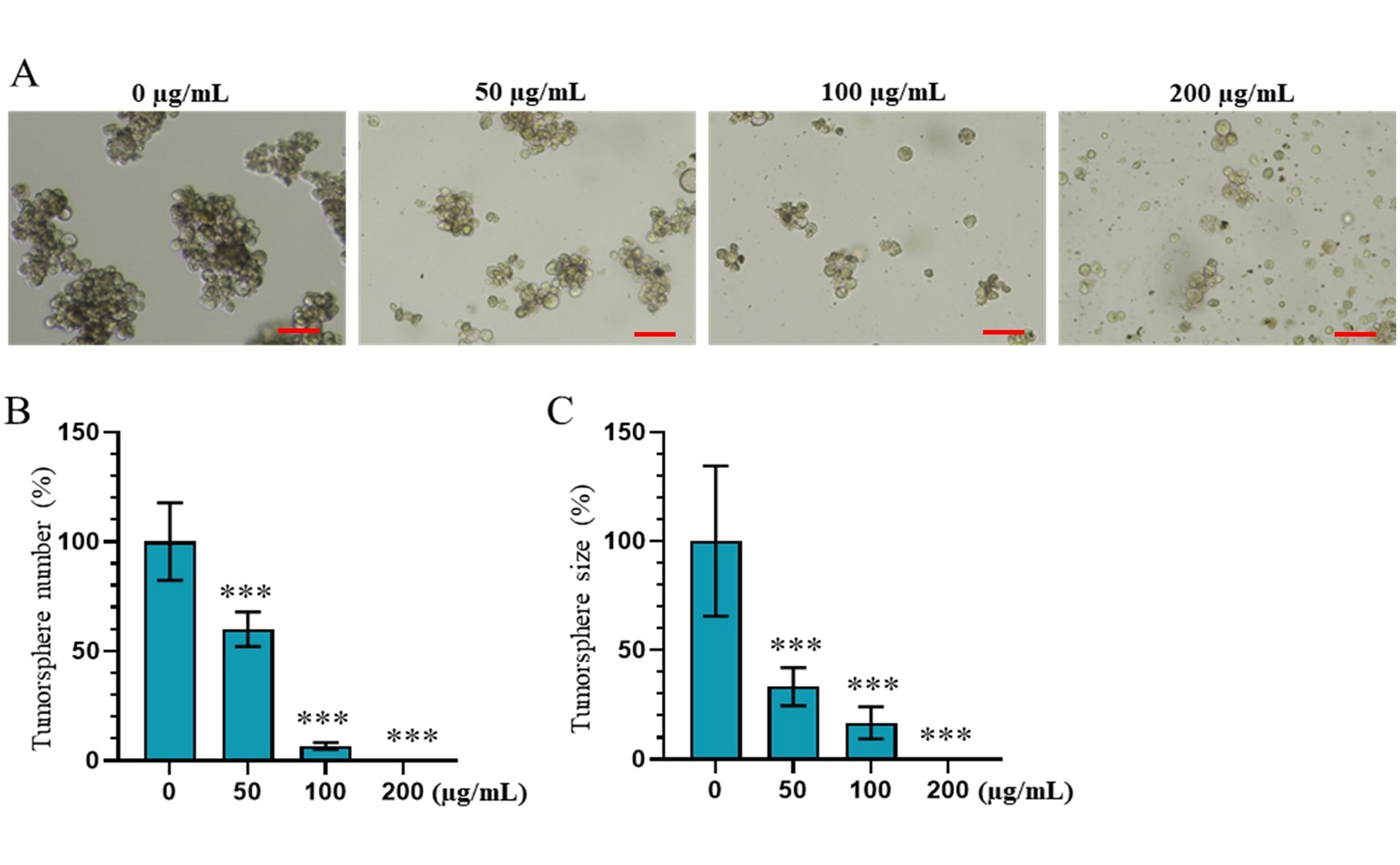
The n-butanol fraction from Ardisia villosa extract demonstrates potent anticancer activity by significantly inhibiting tumorsphere formation in AGS gastric cancer cells, resulting in altered morphology (a) and a dose-dependent reduction in both their number (b) and size (c).

Image adapted from: Hua et al. / CC BY (Source)

Key Findings

  • Researchers at Thai Nguyen University studied Ardisia villosa, a traditional Vietnamese medicine, and found its extract slowed growth of breast and gastric cancer cells
  • The n-butanol fraction of the Ardisia villosa extract effectively stopped cancer cell multiplication, particularly in AGS gastric cancer cells, and disrupted their ability to spread
  • The extract works by interfering with the cell cycle, reducing proteins that promote cell division and increasing those that halt growth, potentially activating the body’s immune defenses
Cancer remains a significant global health challenge, with nearly 20 million new cases diagnosed in 2022 alone[2]. While treatments like chemotherapy are often used, they can have severe side effects, prompting research into alternative, less harmful therapies. One promising avenue is the exploration of natural compounds from medicinal plants. Researchers at Thai Nguyen University (TNU)[1] have been investigating the anticancer potential of Ardisia villosa, a plant traditionally used in medicine, focusing on its effects against breast and gastric cancer cells. The study began with an analysis of the chemical components present in an extract from Ardisia villosa called the n-butanol fraction. Using a sophisticated technique called UPLC-QToF-MS, the team identified 118 different compounds, including flavonoids, lignans, and alkaloids – all known for potential biological activity. They then tested the fraction’s ability to stop cancer cells from multiplying, finding it effective against both breast cancer (MCF-7 cells) and gastric cancer (MKN45 and AGS cells). The concentration at which the extract halted the growth of half the cells (IC50 value) varied between the cell lines, indicating differing sensitivities. Importantly, the n-butanol fraction showed particularly strong effects against AGS gastric cancer cells, not only preventing their proliferation but also disrupting their ability to form 3D structures called tumorspheres – a key step in cancer spread – and reducing their migration. Furthermore, it induced cellular senescence, essentially forcing the cancer cells into a state of permanent growth arrest. To understand how the extract was working, the TNU researchers examined the molecular mechanisms involved. They discovered that the extract interfered with the cell cycle, the process by which cells divide and replicate. Specifically, it slowed down the cycle by reducing the levels of proteins like CCND1 and CDK2, which are crucial for cell division. Simultaneously, it increased the levels of tumor suppressor proteins like p53 and p21, which normally halt uncontrolled cell growth. These findings align with research highlighting the potential of immunotherapy to activate the body’s natural defenses against cancer[3][4]. Gastric cancer, the sixth most common cancer worldwide, often has a poor prognosis, particularly in advanced stages[3]. Current treatments primarily involve surgery and chemotherapy, but new approaches are urgently needed. The TNU team used molecular docking – a computer simulation technique – to predict how the identified compounds from Ardisia villosa interacted with the cell cycle proteins they had identified. This analysis revealed strong binding affinities, suggesting a direct molecular basis for the extract’s effects, and potentially explaining why it’s so effective at stopping cancer cell growth. The findings are particularly relevant considering the global variations in cancer incidence and characteristics[5]. While Eastern Asia has the highest rates of gastric cancer, treatment options and outcomes differ significantly across regions. The exploration of plant-based therapies like Ardisia villosa could offer new, locally-sourced options, particularly in areas where access to conventional treatments is limited. Moreover, the focus on cell cycle inhibition and senescence induction is consistent with emerging strategies in cancer therapy aimed at targeting fundamental cancer processes[4]. The study provides a strong foundation for further research into the development of Ardisia villosa-derived compounds as potential anticancer drugs.

MedicineBiochemPlant Science

References

Main Study

1) Phytochemical profiling and anticancer activity of the n-butanol fraction from Ardisia villosa extract: Inhibition of gastric cancer cell proliferation via cell cycle arrest and senescence induction

Published 8th January, 2026

https://doi.org/10.1371/journal.pone.0340458


Related Studies

2) Global cancer statistics 2022: GLOBOCAN estimates of incidence and mortality worldwide for 36 cancers in 185 countries.

https://doi.org/10.3322/caac.21834


3) Advances and key focus areas in gastric cancer immunotherapy: A comprehensive scientometric and clinical trial review (1999-2023).

https://doi.org/10.3748/wjg.v29.i40.5593


4) From chemotherapy to biological therapy: A review of novel concepts to reduce the side effects of systemic cancer treatment (Review).

https://doi.org/10.3892/ijo.2018.4661


5) Characteristics of gastric cancer around the world.

https://doi.org/10.1016/j.critrevonc.2022.103841


Related Articles

An unhandled error has occurred. Reload 🗙