Strawberry guava extract shows promise in laboratory cancer studies

Greg Howard
30th October, 2025

Strawberry guava extract shows promise in laboratory cancer studies

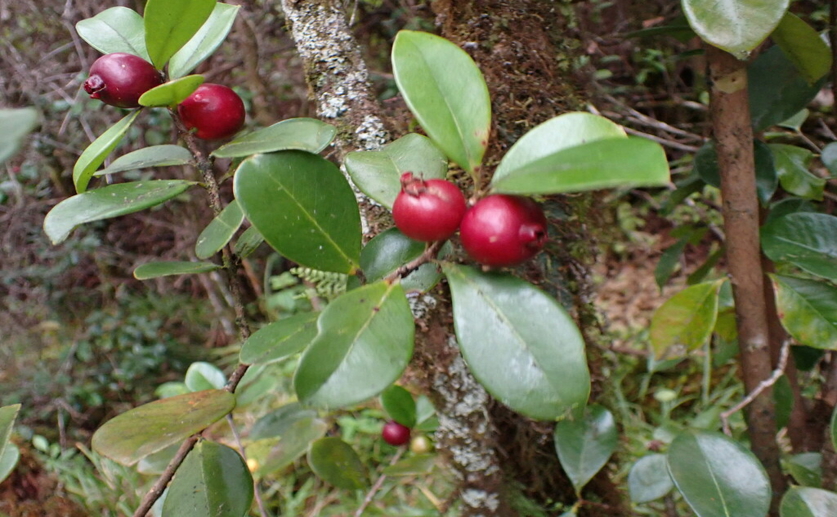
Strawberry guava (Psidium cattleyanum)

Public Domain Photo

Key Findings

  • Strawberry guava extract from leaves and stems, studied at October 6 University, showed toxicity to breast and colon cancer cells in lab tests
  • The extract’s anticancer activity is likely due to compounds called β-caryophyllene oxide and humulene, which were found in high amounts
  • β-caryophyllene oxide appears to work by interfering with the estrogen receptor, a protein involved in breast cancer growth
Psidium cattleianum, commonly known as strawberry guava, is a fruit native to Brazil with a growing reputation for its health benefits. Researchers at October 6 University recently investigated its potential as an anticancer agent, focusing on extracts from the plant’s leaves and stems[1]. This research builds upon existing knowledge of the fruit’s diverse pharmacological effects, including antioxidant, anti-inflammatory, and antimicrobial properties[2][3][4]. The core challenge in utilizing natural products like strawberry guava for drug development lies in isolating and identifying the specific compounds responsible for these effects, and then determining their efficacy and safety. While natural products have historically been a major source of pharmaceuticals[5], the process of drug discovery from natural sources can be complex and time-consuming. Recent advances in analytical techniques, however, are revitalizing this field. The study began by creating an extract from the aerial parts (leaves and stems) of the strawberry guava plant using hexane, a solvent commonly used to dissolve specific compounds. This extract, termed HE, was then analyzed using Gas Chromatography-Mass Spectrometry (GC-MS) and High-Performance Thin-Layer Chromatography-Mass Spectrometry (HPTLC-MS). GC-MS identifies the different chemical components within a sample based on their mass and how they interact with a gas stream, while HPTLC-MS separates compounds on a thin layer and identifies them using their mass. These analyses revealed 32 different components, primarily terpenes, hydrocarbons, and sterols. Two compounds, β-caryophyllene oxide and humulene, were particularly abundant. To further refine the investigation, the HE extract was separated into five subfractions. These subfractions contained varying concentrations of the identified compounds, with fractions I and II being particularly rich in caryophyllene oxide and humulene. The researchers then tested the anticancer activity of HE and its subfractions using human breast adenocarcinoma (MCF-7) and human colon cancer (HCT-116) cells. The IC50 value, a measure of the concentration required to inhibit 50% of cell growth, was determined for HE. It showed potent cytotoxicity, meaning it was toxic to cancer cells, with IC50 values of 29.18 μg/mL for MCF-7 cells and 56.55 μg/mL for HCT-116 cells. Further tests examined the effects of HE on cell migration (the ability of cancer cells to spread) and colony formation (the ability of cancer cells to multiply and form new tumors). HE significantly inhibited both processes, even at lower concentrations. Importantly, subfractions I and II, those high in caryophyllene oxide, demonstrated the most promising anticancer activity in all tests. This suggests that these compounds are key contributors to the observed effects. To understand how β-caryophyllene oxide might be working, the researchers used a technique called molecular docking. This involves computationally predicting how a molecule (β-caryophyllene oxide) interacts with a target protein (the estrogen receptor ligand binding domain, relevant in breast cancer). The results indicated that β-caryophyllene oxide binds favorably to the estrogen receptor, suggesting it may interfere with the receptor’s function. These findings align with previous research highlighting the diverse biological activities of Psidium cattleianum[2][3][4]. For example, a study[3] found that strawberry guavas possessed superior antioxidant and antimicrobial activities compared to common guavas. Another[4] demonstrated the successful in vitro propagation of the plant, allowing for consistent production of plant material for research. The current study expands on this knowledge by identifying specific compounds within the plant and demonstrating their potential to inhibit the growth and spread of breast and colon cancer cells. While these results are encouraging, further research is needed. The study concludes by advocating for in vivo studies – testing the extract in a living organism – to assess its efficacy and safety in a more complex biological system.

MedicineBiochemPlant Science

References

Main Study

1) Phytochemical characterization and anticancer potential of Psidium cattleianum Sabine aerial parts’ n-hexane extract and its subfractions

Published 27th October, 2025

https://doi.org/10.1371/journal.pone.0335134


Related Studies

2) Psidium cattleianum fruits: A review on its composition and bioactivity.

https://doi.org/10.1016/j.foodchem.2018.03.024


3) Nutritional and nutraceutical comparison of Jamaican Psidium cattleianum (strawberry guava) and Psidium guajava (common guava) fruits.

https://doi.org/10.1016/j.foodchem.2012.03.018


4) Phenolic profiling and bioactivity assessment of in vitro propagated Psidium cattleianum Sabine: A promising study.

https://doi.org/10.1016/j.heliyon.2024.e29379


5) Natural products in drug discovery: advances and opportunities.

https://doi.org/10.1038/s41573-020-00114-z


Related Articles

An unhandled error has occurred. Reload 🗙