How Sappanwood Compounds Attach to Acne Bacteria Enzymes: Simulation Study

Jenn Hoskins
6th March, 2025

How Sappanwood Compounds Attach to Acne Bacteria Enzymes: Simulation Study

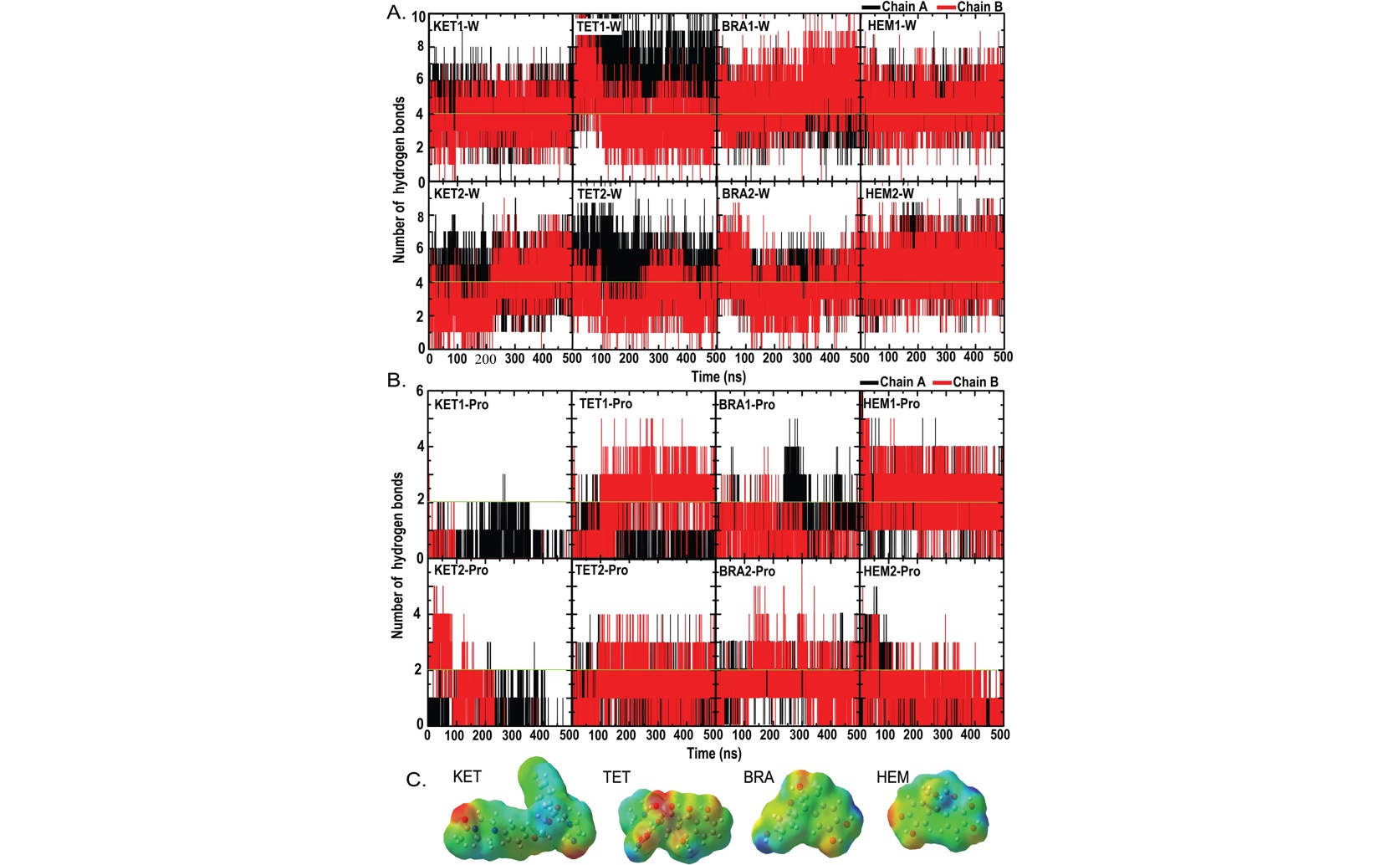
This figure demonstrates that brazilin (BRA) and hematein (HEM) form stable hydrogen-bonding interactions with both Cutibacterium acnes lipase and surrounding water comparable to tetracycline (TET), whereas ketoconazole (KET) relies predominantly on hydrophobic interactions, supporting the study’s conclusion that BRA and HEM bind lipase through more electrostatic and hydrogen-bond–driven mechanisms distinct from bulky hydrophobic inhibitors.

Image adapted from: Pengsawang et al. / CC BY (Source)

Key Findings

  • *A study by Kasetsart University in Thailand discovered that herbal compounds from Caesalpinia sappan effectively target acne-causing bacteria.*
  • *The natural substances brazilin and hematein were found to inhibit key enzymes, reducing skin inflammation and bacterial growth.*
  • *These herbal treatments offer promising alternatives to traditional acne medications, potentially minimizing antibiotic resistance issues.*
Acne remains a prevalent skin condition that affects millions worldwide, often leading to significant emotional and psychological distress. Traditional acne treatments, such as antibiotics and retinoids, have been effective but come with drawbacks, including the rising issue of antimicrobial resistance. This resistance makes it increasingly difficult to combat the bacteria responsible for acne, specifically Cutibacterium acnes (C. acnes). As a result, researchers are turning their attention to alternative treatments, particularly those derived from natural sources. A recent study conducted by Kasetsart University[1] explores the potential of herbal medicines in addressing this challenge. The research focuses on evaluating the effectiveness of natural compounds, brazilin (BRA) and hematein (HEM), extracted from the heartwood of Caesalpinia sappan L. (C. sappan), in inhibiting the lipase enzyme of C. acnes. Lipases are crucial in the development of acne as they break down sebum triglycerides, releasing free fatty acids that irritate the skin and promote inflammation[2]. By targeting lipase, it's possible to reduce the inflammatory response and control acne more effectively. The study employs molecular docking and dynamics simulations to assess how BRA and HEM interact with the lipase enzyme compared to established anti-acne agents like ketoconazole (KET) and tetracycline (TET). Molecular docking is a method that predicts the preferred orientation of one molecule to a second when bound together, which in this case helps to understand how these compounds inhibit the enzyme's activity. Dynamics simulations further analyze the stability and behavior of these interactions over time. Findings from the study indicate that both BRA and HEM show promising binding affinities to C. acnes lipase. While KET and TET, being bulkier molecules, inhibit lipase activity primarily through π-π interactions targeting the enzyme's lid domain, BRA and HEM exhibit distinct binding patterns. BRA behaves similarly to TET by localizing near the lid domain, whereas HEM interacts with both the lid and catalytic sites of the enzyme. These unique binding modes suggest that BRA and HEM could effectively inhibit lipase activity, thereby reducing the production of irritating free fatty acids and subsequent inflammation associated with acne. This research builds on earlier studies that have highlighted the importance of targeting lipase in acne treatment. Previous work demonstrated that plant extracts, such as those from Terminalia chebula and Embelia ribes, could inhibit lipase activity in C. acnes[2]. Additionally, efforts to optimize the extraction of beneficial compounds like brazilin from C. sappan have been crucial in maximizing their antibacterial properties against acne-causing bacteria[3]. By utilizing optimized extraction conditions, researchers ensure that the highest concentrations of active compounds are present, enhancing their effectiveness in inhibiting lipase. The study by Kasetsart University not only validates the potential of BRA and HEM as anti-acne agents but also emphasizes the broader trend of exploring natural products for medical applications[4]. Natural compounds often offer a multi-faceted approach to treatment, targeting various pathogenic factors without the severe side effects associated with some conventional medications. This aligns with the growing interest in sustainable and holistic health solutions. Moreover, the findings from this research provide a foundation for future investigations into natural products as alternatives to traditional antibiotics. Given the stagnation in the development of new therapeutic agents for acne and the serious side effects of current treatments, the exploration of compounds like BRA and HEM is timely and necessary[4]. These natural compounds could potentially offer effective acne management with fewer adverse effects, addressing both the efficacy and safety concerns associated with existing treatments. In conclusion, the study underscores the significant potential of brazilin and hematein from Caesalpinia sappan as alternative treatments for acne. By effectively inhibiting the lipase enzyme of C. acnes, these natural compounds could reduce inflammation and bacterial growth, offering a promising avenue for combating acne and mitigating the issue of antimicrobial resistance. Further research and clinical trials will be essential to fully establish their efficacy and safety in real-world applications, paving the way for more natural and sustainable acne treatments.

MedicineBiochemPlant Science

References

Main Study

1) The binding modes of brazilin and hematein from Caesalpinia sappan L. to Cutibacterium acnes lipase: Simulation studies

Published 4th March, 2025

https://doi.org/10.1371/journal.pone.0318706


Related Studies

2) Inhibition of Propionibacterium acnes lipase by extracts of Indian medicinal plants.

https://doi.org/10.1111/j.1468-2494.2012.00706.x


3) Optimization of Caesalpinia sappan L. heartwood extraction procedure to obtain the highest content of brazilin and greatest antibacterial activity.

https://doi.org/10.1016/j.joim.2019.05.003


4) Seeking new acne treatment from natural products, devices and synthetic drug discovery.

https://doi.org/10.1080/19381980.2017.1356520


Related Articles

An unhandled error has occurred. Reload 🗙