Health Benefits and Chemical Makeup of Sea Fennel Essential Oils: A New Study

Jenn Hoskins
28th October, 2024

Health Benefits and Chemical Makeup of Sea Fennel Essential Oils: A New Study

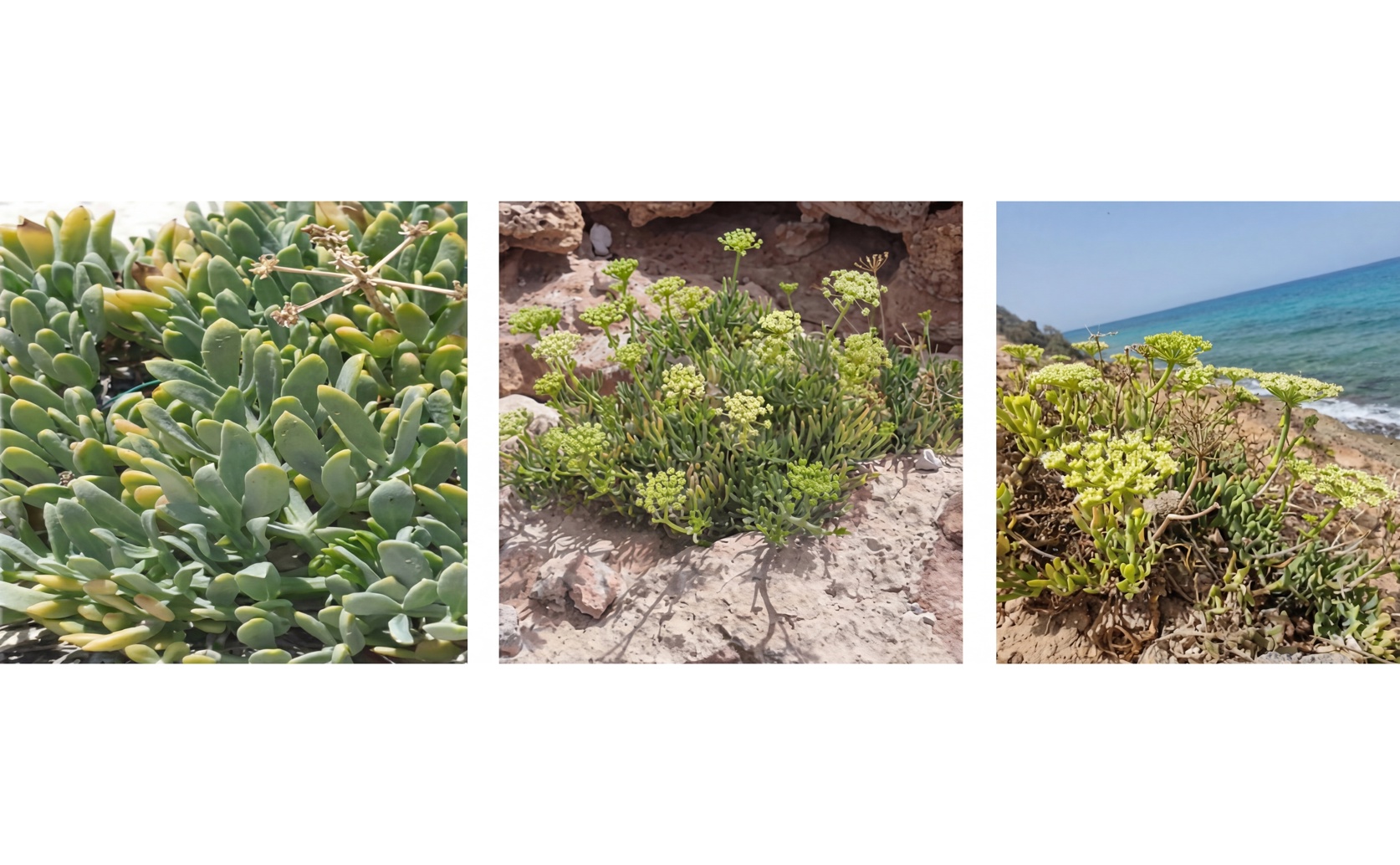
Photographs of aerial part of Crithmum maritimum from the coastal region of Jebel Akhdar in east of Libya. Images upscaled from study.

Image adapted from: Ismail et al. / CC BY (Source)

Key Findings

  • The study analyzed the chemical composition and biological activities of sea fennel (C. maritimum) from Jebel Akhdar, Libya
  • Researchers identified 24 volatile compounds, with thymyl methyl ether, γ-terpinene, and ledene oxide being the most abundant
  • The plant's volatile oil showed strong antioxidant activity and enzyme inhibition, suggesting potential therapeutic applications
Crithmum maritimum, commonly known as sea fennel, is a halophytic plant species thriving in coastal environments worldwide. A recent study conducted by Fayoum University has delved into the chemical composition and biological activities of C. maritimum found in Jebel Akhdar, Libya[1]. This investigation marks the first of its kind to analyze the volatile components and biological activities of this particular species from this region. The study employed Gas Chromatography-Mass Spectrometry (GC-MS) to identify and profile the plant's volatile components. The analysis revealed twenty-four compounds, which accounted for 99.17% of the total peaks in the GC-MS chromatogram. Among these, thymyl methyl ether, γ-terpinene, and ledene oxide were identified as the major volatile constituents, representing 56.86%, 16.17%, and 4.32% of the total composition, respectively. Interestingly, the volatile composition of the Libyan C. maritimum showed substantial variations compared to those from other geographic regions. The biological activities of the plant's volatile oil were also assessed. The oil demonstrated significant antioxidant activity, as evidenced by its ability to scavenge free radicals and reduce ferric ions in the DPPH and FRAP assays. These assays yielded values of 34.30 ± 0.10 and 38.90 ± 0.51 Trolox equivalents, respectively. Additionally, the oil exhibited enzyme inhibition properties, notably reducing acetylcholinesterase (AChE) activity with an IC50 value of 34.43 ± 0.25, and to a lesser extent, inhibiting tyrosinase with an IC50 value of 12.449 ± 0.68. To further understand the mechanisms underlying these enzyme inhibitory effects, the study employed an in silico approach. This computational method highlighted that stigmastene and γ-santonin, two of the plant's volatile compounds, demonstrated stronger binding affinities towards AChE and tyrosinase compared to the co-crystalized controls, donepezil and tropolone. The findings of this study are particularly significant in light of previous research on halophytes and their roles in extreme environments. Halophytes like C. maritimum are recognized for their nutritional and medicinal values due to their high production of secondary metabolites, such as phenolics and flavonoids, which contribute to their survival in high salinity and drought conditions[2]. These secondary metabolites have been shown to play critical roles in suppressing oxidative stress, modulating the immune system, and exhibiting anti-cancer effects[2]. The antioxidant and enzyme inhibition activities observed in C. maritimum align with these known benefits, underscoring the plant's potential in developing novel therapeutic agents. Furthermore, the study's focus on the volatile oil's antioxidant properties is particularly relevant given the broader context of agricultural challenges posed by salinity. Salinity is a persistent problem in irrigated agriculture, leading to significant yield losses[3]. Understanding the mechanisms by which halophytes like C. maritimum cope with saline conditions can provide insights into improving crop salt tolerance, which is crucial for securing agricultural yield in the face of global warming and population growth[4]. The ability of C. maritimum to thrive in high salinity environments and produce bioactive compounds suggests that similar mechanisms could be harnessed to enhance the salt tolerance of crop plants. In summary, the study conducted by Fayoum University provides valuable insights into the chemical composition and biological activities of C. maritimum from Libya. The identification of major volatile constituents and the demonstration of significant antioxidant and enzyme inhibition activities highlight the plant's potential for therapeutic applications. These findings also contribute to the broader understanding of halophytes' roles in extreme environments and their potential to address agricultural challenges related to salinity.

MedicineBiochemPlant Science

References

Main Study

1) Chemical composition, antioxidant, and enzyme inhibition activities of Crithmum maritimum essential oils: the first chemo-biological study for species grown in North Africa.

Published 25th October, 2024

https://doi.org/10.1038/s41598-024-74544-9


Related Studies

2) Salt-Tolerant Plants, Halophytes, as Renewable Natural Resources for Cancer Prevention and Treatment: Roles of Phenolics and Flavonoids in Immunomodulation and Suppression of Oxidative Stress towards Cancer Management.

https://doi.org/10.3390/ijms24065171


3) Lessons from crop plants struggling with salinity.

https://doi.org/10.1016/j.plantsci.2014.04.013


4) Salinity and crop yield.

https://doi.org/10.1111/plb.12884


Related Articles

An unhandled error has occurred. Reload 🗙