Sustainable farming practices improve soil health, water retention, and harvests

Jenn Hoskins
27th February, 2026

Sustainable farming practices improve soil health, water retention, and harvests

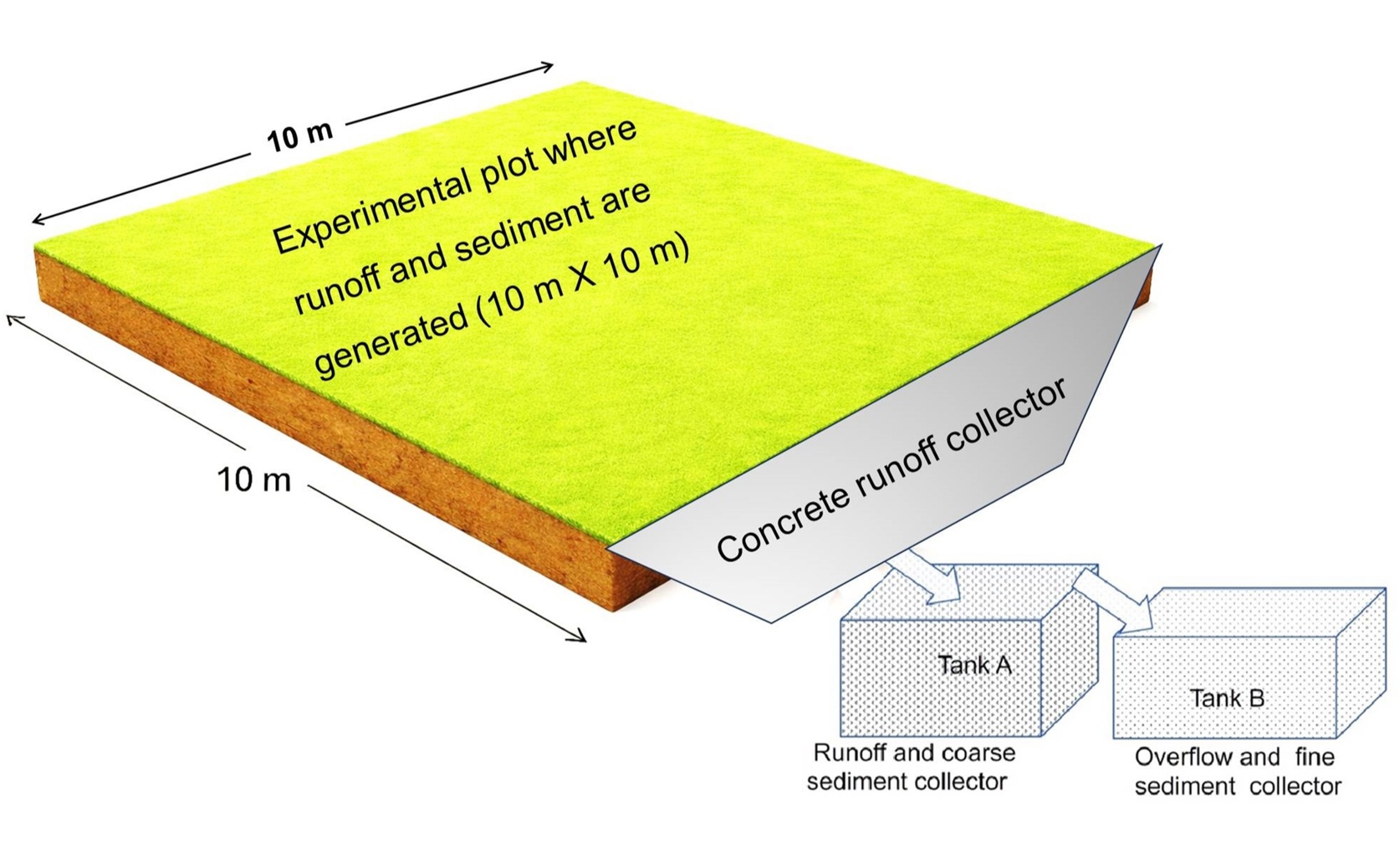
Collection tanks installed at the end of each plot were used to quantify runoff and soil loss, providing direct evidence that conservation agriculture practices reduce erosion more effectively than conventional tillage.

Image adapted from: Alemie et al. / CC BY (Source)

Key Findings

  • In Ethiopia’s highlands, a study at Adet agricultural research centre showed conventional farming causes soil loss, while conservation agriculture (CA) offers a solution
  • No-tillage farming with mulching and either crop rotation or intercropping significantly reduced runoff by 60-71% and soil loss by 82-88% compared to standard farming methods
  • Combining no-tillage with mulching increased maize and faba bean yields by 46-48% and 62-88% respectively, improving crop production and soil health
Ethiopian highlands agriculture relies heavily on conventional tillage (CT), a method involving significant soil disturbance and the removal of plant residue after harvest. While effective in the short term, CT contributes to soil degradation and declining crop yields, a problem worsened by changing climate patterns. Researchers at the Amhara Regional Agricultural Research Institute, in collaboration with ICAR National Bureau of Soil Survey & Land Use Planning, investigated conservation agriculture (CA) as a potential solution, but a conclusive understanding of its benefits in the region was lacking[1]. The study focused on evaluating how different CA techniques impacted key soil health indicators – runoff, soil loss, water infiltration, and ultimately, crop yield. Four different farming approaches were compared: no-tillage combined with mulching and intercropping (NT + M + In), no-tillage with mulching and crop rotation (NT + M + R), conventional tillage with mulching and crop rotation (CT + M + R), and standard conventional tillage (CT) as a control. Each approach was implemented on plots measuring 10x10 meters, with multiple years of data collection used to ensure reliable results. Statistical analysis was performed to determine if the differences observed between the treatments were significant. The results demonstrated that CA practices were substantially more effective at preserving soil and water resources compared to conventional tillage. Specifically, the no-tillage approaches – NT + M + R and NT + M + In – reduced runoff by 71% and 60% respectively, and soil loss by 88% and 82%. Even combining mulching with conventional tillage (CT + M + R) showed improvements, decreasing runoff and soil loss by 45% and 60% respectively. This reduction in runoff was accompanied by increased water infiltration, with the CA treatments showing improvements of 137%, 161%, and 43% compared to CT. These improvements in soil health directly translated to higher crop yields. Maize grain yield increased by 48%, 46%, and 47% with the three CA treatments, while faba bean yield saw even more substantial gains – 122%, 321%, and 91% increases. The study clearly indicated that combining no-tillage with mulching provided the greatest benefits for both soil and water conservation, leading to enhanced crop production. The importance of mulching in maintaining soil health is well established[2][3]. These earlier studies highlighted how organic mulches reduce surface runoff, increase water penetration into the soil, and prevent erosion, particularly in regions with intense rainfall events. The work in Jiufeng National Forestry Park[3] demonstrated that optimal mulch application rates (0.25-0.50 kg/m2) maximize water retention and minimize runoff, findings that align with the positive effects observed in the Ethiopian study when using mulching in combination with no-tillage. Furthermore, research in South Western Nigeria[4] showed that using elephant grass as a mulch material effectively reduced soil loss and increased water infiltration, comparable to the effects of rice straw, and that mulch cover had a strong correlation with these benefits. The Ethiopian research builds upon these previous findings by demonstrating the synergistic effect of combining no-tillage with mulching, and further highlighting the benefits of incorporating crop rotation or intercropping. The results suggest that prioritizing no-tillage combined with mulching, alongside either crop rotation or intercropping (NT + M + R), is a practical and effective strategy for improving soil and water conservation, and ultimately, increasing food production in similar agro-ecological regions worldwide. The study underscores the need to move beyond solely focusing on immediate yields and consider the long-term health and sustainability of agricultural systems[2].

AgricultureEnvironmentSustainability

References

Main Study

1) Conservation agriculture enhances soil and water conservation and crop yield in the Ethiopian highlands

Published 25th February, 2026

https://doi.org/10.1371/journal.pone.0341622


Related Studies

2) Soil and the intensification of agriculture for global food security.

https://doi.org/10.1016/j.envint.2019.105078


3) Efficient organic mulch thickness for soil and water conservation in urban areas.

https://doi.org/10.1038/s41598-021-85343-x


4) Grass mulching effect on infiltration, surface runoff and soil loss of three agricultural soils in Nigeria.

Journal: Bioresource technology, Issue: Vol 98, Issue 4, Mar 2007


Related Articles

An unhandled error has occurred. Reload 🗙