Ancient mud brick reveals insights into building techniques and materials

Greg Howard
24th February, 2026

Ancient mud brick reveals insights into building techniques and materials

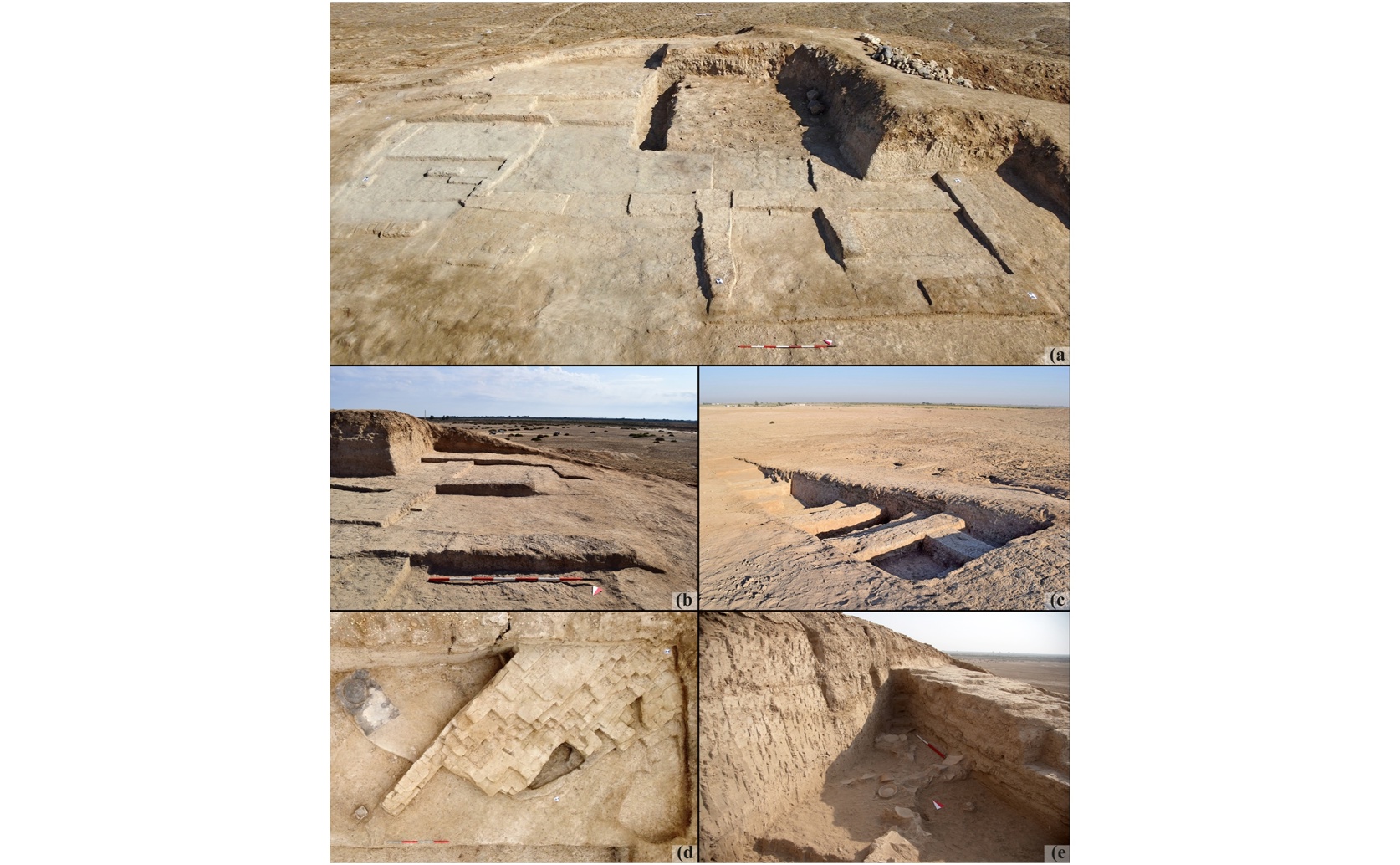
Excavations at Tell Zurghul/Nigin uncovered adobe wall structures from different time periods on Mound B (a–c) and Mound A (d, e), providing the essential samples for analyzing changes in Mesopotamian earthen construction over two millennia.

Image adapted from: Volpi et al. / CC BY (Source)

Key Findings

  • Archaeological study at Tell Zurghul/Nigin, Iraq, examined 5th and 3rd millennium BCE adobe bricks to understand ancient building practices
  • The bricks were made from locally sourced materials, primarily clay, quartz, and calcite, with consistent composition across time periods
  • Bricks with more aggregate content proved more resistant to water damage than those with a clay-rich matrix, influencing long-term durability
The preservation of ancient buildings made from earth, like mudbrick, is a significant challenge in archaeology. These structures are vulnerable to weathering and decay, making it difficult to understand past civilizations and their building practices. A recent study by researchers at U Autónoma de Madrid and U of Padova[1] focused on adobe bricks and earthen plasters excavated from Tell Zurghul/Nigin in southern Iraq, dating back to the 5th and 3rd millennia BCE, to address this problem. The goal was to understand how these materials were made and how durable they were, ultimately informing better conservation strategies. The study’s core issue revolves around the degradation of earthen architecture. Unlike stone or metal, earth-based buildings are directly affected by the environment – rain, wind, temperature fluctuations, and even microbial activity – leading to erosion and collapse. Knowing the exact composition and properties of the original materials is crucial for developing effective preservation techniques. Simply put, you can’t effectively protect something if you don’t know what it is. The research team investigated the adobe bricks and plasters using a multi-faceted approach. They analyzed the chemical makeup of the materials, identifying the types of minerals present. They also examined their hydric properties – how they absorb and retain water – and conducted mechanical tests to measure their strength and resistance to damage. This combined analysis allowed them to create a detailed profile of the building materials used at Tell Zurghul/Nigin over time. One key aspect of the study was the diachronic framework, meaning the researchers examined how construction techniques changed over the centuries. They considered the local geology, looking at the available raw materials – different types of soil, sand, and organic matter – and how these resources were utilized in building. This is important because the availability of materials directly influences building practices. Interestingly, the study revealed insights that connect to earlier research on earthen construction in the region. For example, the re-use of materials, observed in the 1st millennium BC structures of Armenia[2], could be a common practice throughout ancient Mesopotamia. While the Armenian study focused on a later period, it highlights the potential for communities to adapt and utilize existing resources, including recycling older building components. The Iraqi study didn’t directly confirm re-use, but the detailed analysis of material composition could potentially reveal such practices in the future. The chemical and mineralogical analyses performed on the adobe bricks and plasters identified the primary components used in their construction. These included clay minerals, silt, sand, and varying amounts of organic matter, such as plant remains. The hydric tests showed how porous the materials were, and how readily they absorbed water. This is critical, as water absorption is a major factor in deterioration, leading to weakening and eventual collapse. The mechanical tests confirmed the relative strength and durability of the materials, providing a baseline for assessing their condition and potential for restoration. The findings suggest that the builders at Tell Zurghul/Nigin were resourceful in utilizing locally available materials. The composition of the adobe bricks varied depending on the source of the soil, indicating a degree of local adaptation. While the materials themselves weren’t exceptionally strong, the construction techniques employed – the way the bricks were laid, the thickness of the walls, and the use of plasters – likely played a significant role in the structures’ longevity. The study also indirectly supports findings from research into hemp-lime renders[3]. While that study focused on a different type of earthen composite, it highlighted the importance of microbial activity in the long-term performance of these materials. The Iraqi study didn’t specifically examine microbial growth, but it acknowledged the potential for organic matter within the adobe bricks to support such activity, contributing to their degradation over time. This reinforces the need for considering biological factors when assessing the preservation of ancient earthen structures.

AgricultureEnvironmentPlant Science

References

Main Study

1) Chemical-mineralogical features and physical properties of archaeological adobe: The evidence from Tell Zurghul/Nigin (Dhi Qar, Iraq)

Published 23rd February, 2026

https://doi.org/10.1371/journal.pone.0342009


Related Studies

2) Exploring mudbrick architecture and its re-use in Artaxata, Armenia, during the 1st millennium BC. A multidisciplinary study of earthen architecture in the Armenian Highlands.

https://doi.org/10.1371/journal.pone.0292361


3) Predicting the long-term durability of hemp-lime renders in inland and coastal areas using Mediterranean, Tropical and Semi-arid climatic simulations.

https://doi.org/10.1016/j.scitotenv.2015.10.141


Related Articles

An unhandled error has occurred. Reload 🗙