How lime affects the strength and durability of traditional building materials

Jenn Hoskins
19th January, 2026

How lime affects the strength and durability of traditional building materials

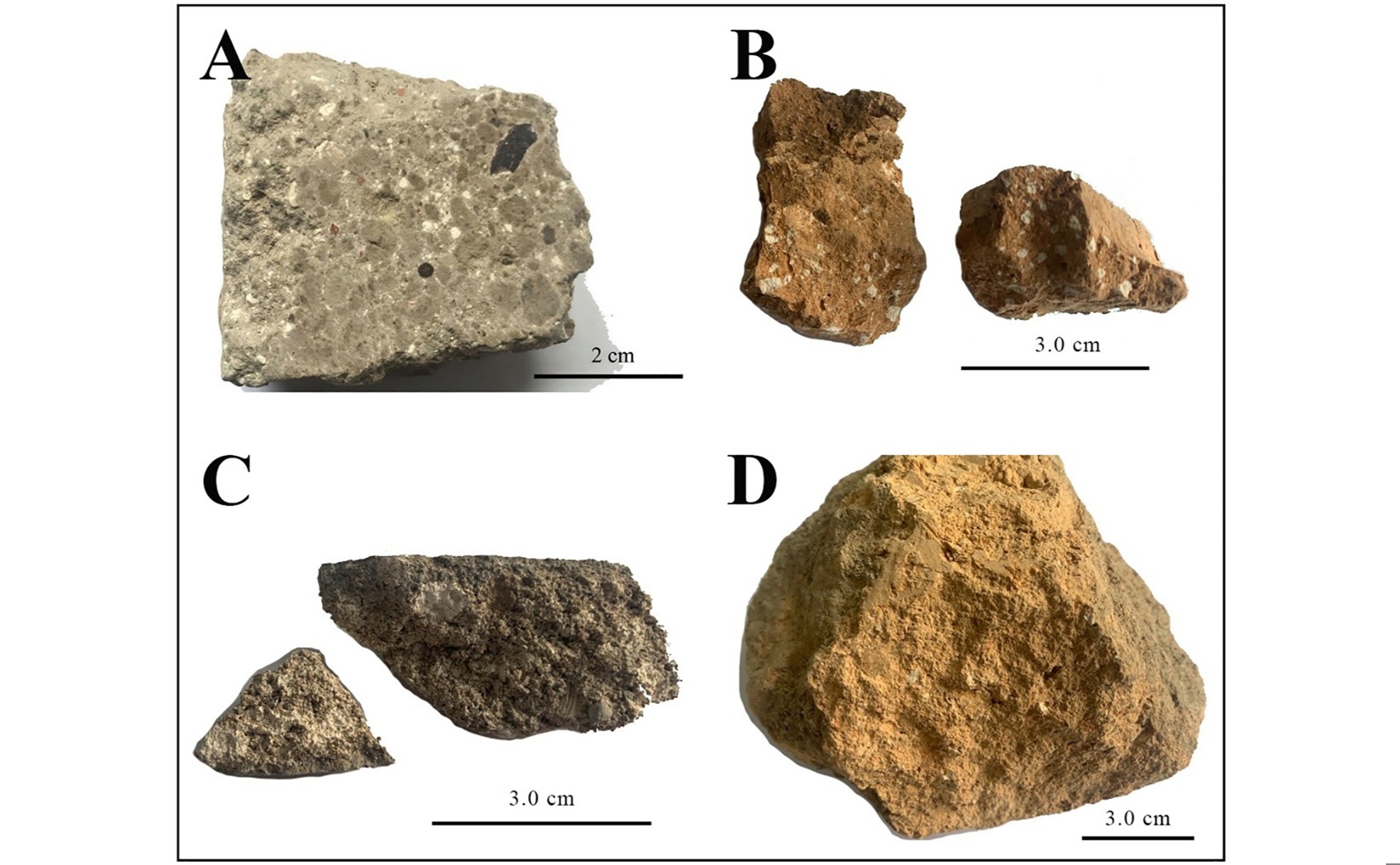
Archaeological lime-soil samples from a tomb (a), masonry (b), a floor (c), and a fort (d) display characteristic white lumps, providing the historical evidence for the use of blocky quicklime that this study investigates.

Image adapted from: Fang et al. / CC BY (Source)

Key Findings

  • In Ningbo, China, the study compared lime-soil mixtures using different lime types to improve earthen structure repair
  • Powdered quicklime consistently strengthened lime-soil, offering predictable results for high-performance applications
  • Blocky quicklime effectively improved lime-soil up to 15% content, but performance declined above this level due to expansion stresses from incomplete hydration
The preservation of historic earthen structures – buildings made from compacted soil – presents a significant challenge. Effective repair requires materials that are strong and long-lasting, but also compatible with the original construction, avoiding damage and maintaining historical integrity. Modern conservation often relies on powdered lime, but recent archaeological findings suggest that builders in the past frequently used a different form: blocky quicklime. This creates a dilemma, as the properties and optimal use of blocky quicklime haven't been thoroughly investigated with modern scientific methods. Researchers at Ningbo University of Finance & Economics, in collaboration with Zhejiang University, addressed this knowledge gap in a recent study[1]. The study systematically compared lime-soil materials made with three different types of lime: hydrated lime, powdered quicklime, and blocky quicklime, using lime contents ranging from 10% to 20%. The goal was to determine how each type of lime affected the strength, structure, and chemical composition of the resulting repair material. Hydrated lime, a pre-processed form of lime, consistently performed the worst, exhibiting lower strength and durability compared to the quicklime options. Both powdered and blocky quicklime improved performance, but through different mechanisms. Powdered quicklime demonstrated a predictable, dose-dependent relationship – the more added, the stronger the material became. This makes it a reliable choice when high performance is the primary goal. However, blocky quicklime showed a more complex behavior. Its effectiveness peaked at a 15% content, beyond which the material's performance actually declined. This decline was linked to expansion stresses caused by partially hydrated cores within the blocky lime. Hydration is a chemical reaction where lime combines with water, and incomplete hydration can lead to internal stresses that weaken the material. The researchers used Fourier Transform Infrared (FT-IR) spectroscopy, a technique that identifies chemical compounds based on how they absorb infrared light, to confirm the presence of these partially hydrated cores. This finding is particularly interesting when considered alongside earlier research on ancient mortar technologies. For example, the study of sticky rice-lime mortar in China[2] highlights the importance of understanding the chemical composition and microstructure of historic materials. While the specific ingredients differ, both studies emphasize the role of organic and inorganic components in creating durable composite materials. The Chinese study demonstrated that amylopectin, derived from sticky rice, controlled the growth of calcium carbonate crystals, resulting in a compact structure and enhanced performance. Similarly, the current study shows that the form of lime – whether powdered or blocky – influences the hydration process and resulting microstructure. Furthermore, the investigation of Roman concrete[3] underscores the significance of reactive lime components and their contribution to long-term durability through self-healing mechanisms. The Romans utilized hot mixing techniques and retained lime clasts within the concrete matrix, providing a source of calcium for pore and crack filling. While the current study doesn’t directly explore self-healing, the presence of partially hydrated cores in blocky quicklime suggests a potential for continued reactivity and a degree of self-repair, although uncontrolled hydration can also be detrimental. The researchers also investigated how different slaking conditions affected the properties of lime-soil mixtures[4], finding that controlling the reaction rate of lime with water could reduce cracking and improve mechanical strength. This reinforces the idea that the process of preparing the lime material is just as important as the lime itself. The study concluded that the choice of lime form is critical for successful earthen structure repair. Powdered quicklime offers predictable and consistent enhancement, making it suitable for applications where high strength is paramount. Blocky quicklime can be effective, but requires careful dosage control – specifically, a 15% content – to avoid the detrimental effects of expansion stresses from incomplete hydration. This research provides a scientific basis for selecting and applying lime materials, bridging the gap between archaeological evidence and modern conservation practice.

AgricultureEnvironmentPlant Science

References

Main Study

1) The influence of lime type on the properties of traditional lime-soil materials

Published 16th January, 2026

https://doi.org/10.1371/journal.pone.0339877


Related Studies

2) Study of sticky rice-lime mortar technology for the restoration of historical masonry construction.

https://doi.org/10.1021/ar9001944


3) Hot mixing: Mechanistic insights into the durability of ancient Roman concrete.

https://doi.org/10.1126/sciadv.add1602


4) Experimental Study on the Cracking and Mechanical Properties of Lime Soil with Different Slaking Conditions of Newly Repaired Earthen City Walls.

https://doi.org/10.3390/ma15124151


Related Articles

An unhandled error has occurred. Reload 🗙