Assessing the Quality of City Park Plantings with a Ranking System

Greg Howard
28th September, 2025

Assessing the Quality of City Park Plantings with a Ranking System

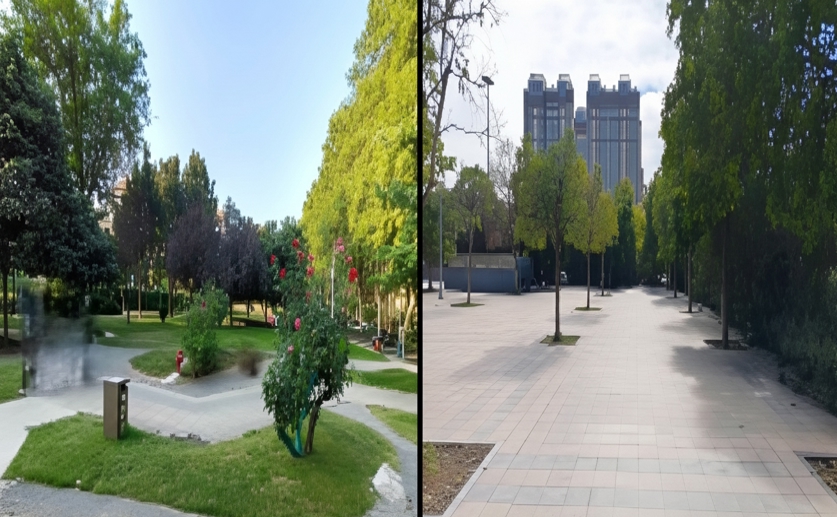
Example photos from study (upscaled): Left photo showcases a diverse and layered high-quality plant landscape, contrasting with the right photo's comparatively sparse and less complex green space.

Image adapted from: Zhang et al. / CC BY (Source)

Key Findings

  • In Zhengzhou City, China, parks consistently show the highest plant diversity compared to other green space types like plazas and regional areas
  • While most green spaces in Zhengzhou were rated as medium-to-high quality using a detailed evaluation system, over half require improvements in aesthetic appeal
  • Both scientific analysis and public perception methods agree that parks generally offer the best plant landscape quality in Zhengzhou, highlighting the importance of design and maintenance
Urban green spaces are vital components of modern cities, offering ecological benefits and contributing to the well-being of residents. However, not all green spaces are equal in quality; the design and composition of plant life – termed ‘plantscapes’ – significantly impact their effectiveness. Researchers at Henan Agricultural University, Zhengzhou Business University, Qinghai Normal University, SuperMap Software Co., Ltd, and Shahid Beheshti University recently undertook a detailed study[1] to assess the quality of plantscapes across Zhengzhou City, China. This research aimed to provide data-driven insights for improving the design and development of urban green areas. The study focused on 349 sample sites within the city, evaluating 40 representative plantscape units. The team developed a ‘comprehensive evaluation index system’ to quantify various aspects of plantscapes, then used two primary methods for assessment: the Analytical Hierarchy Process (AHP) and the Scenic Beauty Estimation (SBE) method. AHP is a structured technique for organizing and analyzing complex decisions, breaking down the evaluation into a hierarchy of criteria, while SBE relies on human perception to score the aesthetic appeal of landscapes. The findings revealed clear differences in plant diversity across different green space types. Parks consistently exhibited the highest diversity, boasting greater species richness for trees, shrubs, and herbs compared to other areas like protective or regional green spaces. This aligns with previous research suggesting that suburban areas often maintain higher plant diversity[2], potentially due to a more varied range of microhabitats and less intensive management. Using the AHP method, the researchers categorized plantscapes into three quality levels. Only 10% of the samples were deemed ‘high-quality’, with over half (57.5%) classified as ‘medium-to-high quality’ and a substantial 32.5% falling into the ‘medium or below’ category. The ranking of green space types based on AHP scores was: parks > ancillary green spaces > protective green spaces > regional green spaces > plaza land. This suggests that parks, with their focus on horticultural design and maintenance, generally provide the most favorable conditions for diverse and well-structured plantscapes. However, the aesthetic quality, as determined by SBE, presented a more concerning picture. A significant 60% of the samples received below-zero standardized scores, indicating a widespread need for improvement in the visual appeal of Zhengzhou’s planted landscapes. This discrepancy between quantitative diversity and perceptual quality highlights the importance of considering aesthetic factors alongside ecological metrics when evaluating green spaces. Interestingly, the AHP and SBE methods demonstrated a strong positive correlation in their rankings of plant landscape units. This consistency validates the use of both quantitative and perceptual approaches, suggesting that areas identified as ecologically diverse also tend to be perceived as more visually appealing.[3] similarly employed SBE in landscape resource assessment, demonstrating its practicality in evaluating scenic beauty. The study provides a valuable theoretical basis and practical guidance for optimizing plantscape design in urban environments. By combining quantitative evaluation with human perception, the research reveals the characteristics and differences of plantscapes across various green space types. This information can inform the development of more effective strategies for enhancing both the ecological function and aesthetic quality of urban green spaces, ultimately contributing to the high-quality development of these vital urban ecosystems.

AgricultureEnvironmentPlant Science

References

Main Study

1) Evaluation of urban green space plant landscape quality in Zhengzhou city using the AHP-SBE method

Published 26th September, 2025

https://doi.org/10.1371/journal.pone.0329119


Related Studies

2) Negative effects of urbanization on plants: A global meta-analysis.

https://doi.org/10.1002/ece3.9894


3) Assessment of landscape resource using the scenic beauty estimation method at compound ecological system.

https://doi.org/10.1007/s11356-020-10978-8


Related Articles

An unhandled error has occurred. Reload 🗙