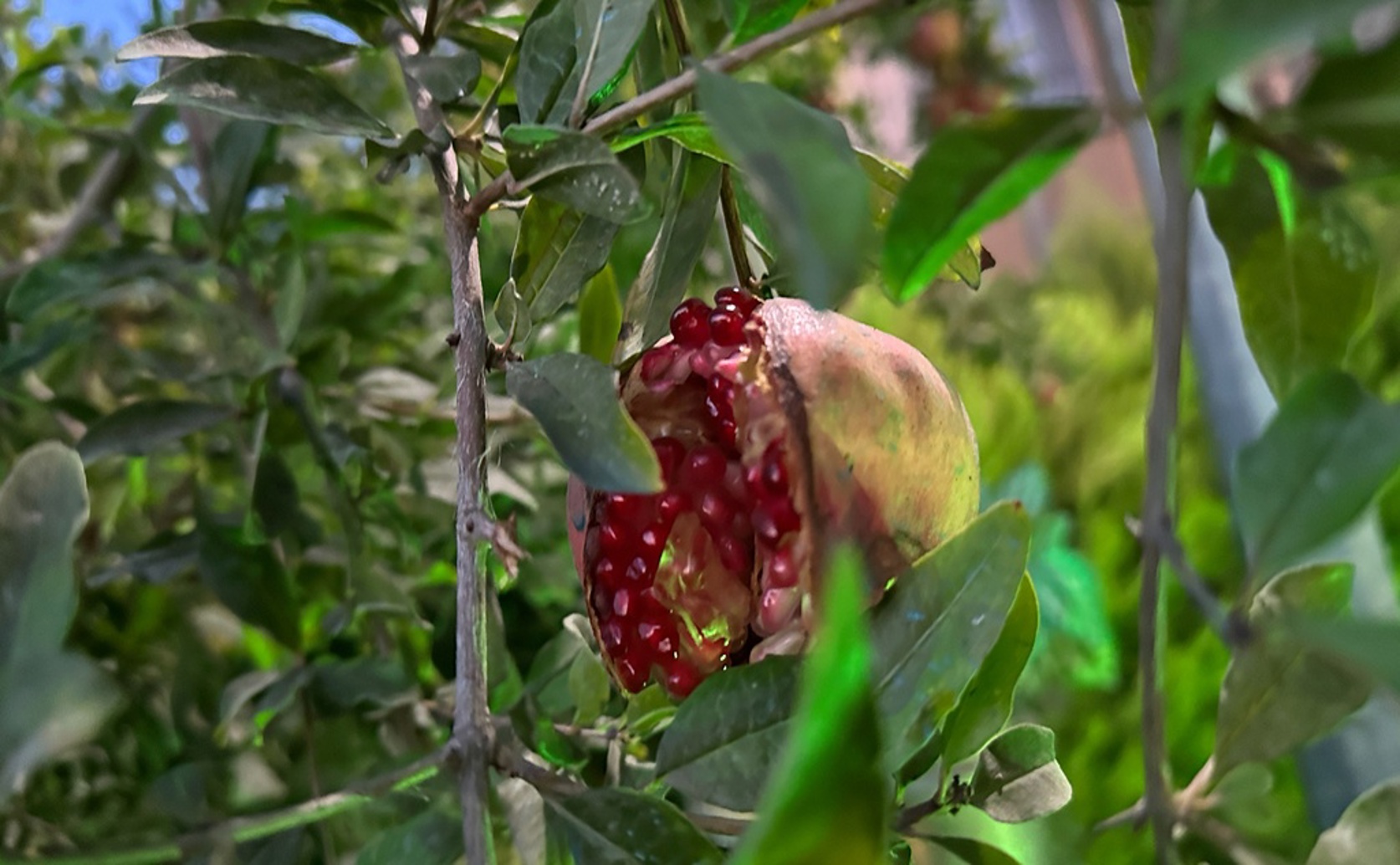
Reducing Salt Stress in Pomegranate Seedlings with Nanoparticle Spray

Jim Crocker
2nd September, 2025

Reducing Salt Stress in Pomegranate Seedlings with Nanoparticle Spray
Pomegranate (Punica granatum)

Key Findings

  • This study, conducted on pomegranate seedlings in Iran, investigated how nanoparticle sprays could help plants withstand salt stress
  • Combining chitosan and silicon nanoparticles (CTS-SiO2 NPs) was most effective at improving seedling growth—height, diameter, and weight—under salty conditions
  • The CTS-SiO2 NP treatment also boosted essential nutrient levels (phosphorus, potassium) and improved plant cell health, indicated by a better potassium to sodium ratio and membrane stability
Salinity, or salt stress, is a major problem in agriculture, reducing crop yields globally by hindering plant growth and nutrient uptake. As land becomes increasingly affected by salt, finding ways to protect crops is crucial for food security. Researchers at the University of Maragheh[1] have been investigating whether nanotechnology, specifically using nanoparticles, can help pomegranate seedlings withstand salt stress. This study focused on comparing different nanoparticle treatments – silicon nanoparticles (SiO2 NPs), chitosan nanoparticles (CTS NPs), and a combination of both (CTS-SiO2 NPs) – applied to the leaves of two-year-old pomegranate seedlings exposed to varying levels of salt. The core of the research involved growing pomegranate seedlings under both normal conditions and with added salt (150 mM sodium chloride) to simulate salinity stress. The seedlings were then treated with the different nanoparticle solutions via foliar spray – meaning the solutions were sprayed directly onto the leaves. Researchers then measured a range of plant characteristics to assess how well the seedlings were coping with the stress, including height, diameter, leaf area, weight, chlorophyll levels, and indicators of cell damage. The results showed that salt stress negatively impacted all measured growth parameters. However, the combination treatment of chitosan and silicon nanoparticles (CTS-SiO2 NPs) consistently outperformed the individual nanoparticle treatments and the control group (water only) in mitigating these negative effects. Seedlings treated with CTS-SiO2 NPs showed improved height, diameter, leaf area, fresh and dry weight, and higher levels of chlorophyll a and carotenoids – pigments essential for photosynthesis. They also exhibited a higher membrane stability index (MSI), indicating healthier cell membranes, and improved concentrations of phosphorus and potassium, vital plant nutrients. Crucially, the combined treatment also increased the ratio of potassium to sodium within the plant tissues, which is beneficial as high sodium levels are a hallmark of salt stress. These findings build upon earlier research demonstrating the protective effects of silicon against salt stress in other crops[2][3]. Previous studies have shown that silicon can improve water status, nutrient uptake, and fruit yield in salt-stressed sweet pepper plants[2], and reduce sodium content within plant tissues[3]. The current study extends these findings to pomegranate and, importantly, demonstrates a synergistic effect when silicon is combined with chitosan. Chitosan, a natural polymer, also showed benefits on its own, increasing leaf number and reducing levels of hydrogen peroxide (H2O2) and nitrogen under stress. Hydrogen peroxide is a reactive oxygen species produced during stress, and its accumulation can cause cellular damage. The study also investigated biochemical markers of stress. Electrolyte leakage (EL), a measure of cell membrane damage, was reduced by the combined CTS-SiO2 treatment. Similarly, levels of malondialdehyde (MDA), another indicator of oxidative stress, were lowered by silicon nanoparticles alone. This aligns with research on maize, which found that silicon application reduced oxidative damage and improved antioxidant enzyme activity under salt stress[4]. The University of Maragheh researchers found that the combined treatment also boosted the activity of ascorbate peroxidase (APX), an antioxidant enzyme, further supporting the idea that these nanoparticles help plants combat the damaging effects of salt stress at a cellular level. The effectiveness of the combined treatment suggests that chitosan and silicon nanoparticles work together to enhance plant tolerance. While the exact mechanisms are still being investigated, it’s likely that chitosan helps the plant activate its own defense mechanisms, while silicon provides structural support and improves nutrient uptake. This research represents an early investigation into the potential of CTS-SiO2 nanoparticles for improving pomegranate resilience to salinity, and the researchers acknowledge that further studies are needed to confirm these findings and optimize application methods.

AgricultureEnvironmentPlant Science

References

Main Study

1) Alleviation of the effect of salinity on pomegranate seedlings by priming foliar spray of chitosan-silicon nanoparticles (CTS-SiO2 NPs)

Published 29th August, 2025

https://doi.org/10.1186/s12870-025-07016-5


Related Studies

2) Silicon Foliar Application Mitigates Salt Stress in Sweet Pepper Plants by Enhancing Water Status, Photosynthesis, Antioxidant Enzyme Activity and Fruit Yield.

https://doi.org/10.3390/plants9060733


3) Silicon in Horticultural Crops: Cross-talk, Signaling, and Tolerance Mechanism under Salinity Stress.

https://doi.org/10.3390/plants9040460


4) Silicon mediated improvement in the growth and ion homeostasis by decreasing Na+ uptake in maize (Zea mays L.) cultivars exposed to salinity stress.

https://doi.org/10.1016/j.plaphy.2020.10.040


Related Articles

An unhandled error has occurred. Reload 🗙