Seaweed Extracts Boost Growth, Health, and Quality of Chardonnay Grapes

Jim Crocker
3rd September, 2025

Seaweed Extracts Boost Growth, Health, and Quality of Chardonnay Grapes

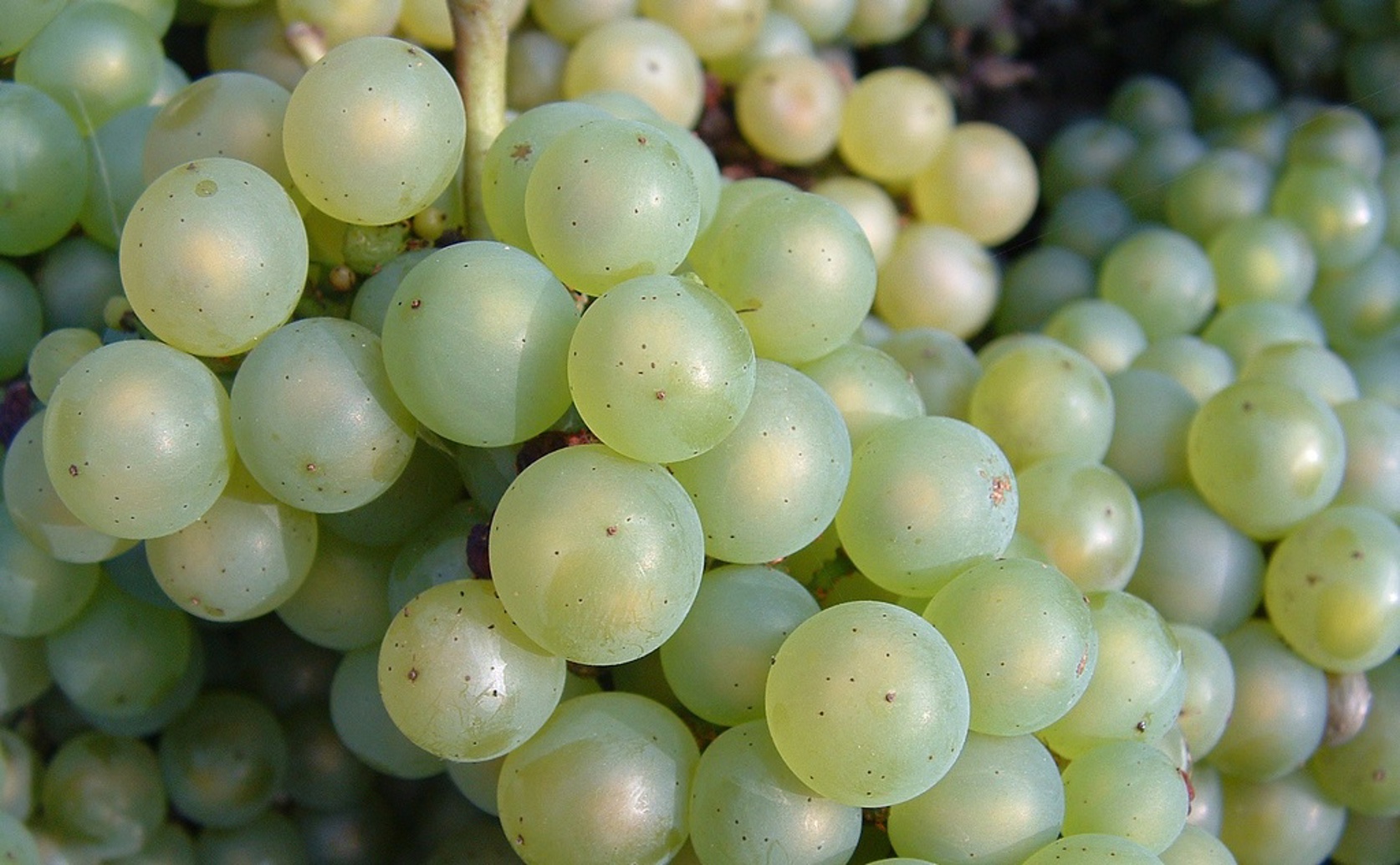
Chardonnay grapes

Photo adapted from: Wikimedia Commons / CC BY (Source)

Key Findings

  • In Belgium’s cool climate, foliar sprays of Ascophyllum nodosum seaweed extract boosted leaf area by 12-15%, similar to standard NPK fertilizer
  • Ascophyllum nodosum improved vine photosynthesis by increasing chlorophyll content and efficiency of light energy use, particularly under cloudy conditions
  • Ecklonia maxima showed limited impact on growth but helped vines recover from heat stress and increased yield by 60% in one year, comparable to NPK fertilizer
Seaweed extracts are gaining attention as potential biostimulants in agriculture, offering a natural way to improve plant growth and resilience. Recent research from KU Leuven, Stellenbosch University, and Universidade do Minho[1] investigated their use in viticulture – specifically, grape growing – focusing on the cool climate conditions of Belgium and the effects on white wine grape varieties. While the benefits of seaweed extracts are becoming clearer, understanding how different species perform and how environmental factors influence their effectiveness remains a key challenge. The study centered around Vitis vinifera cv. Chardonnay vines, testing two commercially available seaweed extracts: one derived from Ascophyllum nodosum and the other from Ecklonia maxima. These were compared against a standard NPK fertilizer (nitrogen, phosphorus, and potassium) and a water-only control group. The extracts were applied directly to the leaves of the vines five times throughout the growing seasons of 2021 and 2022, starting at flowering and continuing until the grapes ripened. The researchers observed distinct responses from the two seaweed extracts. Ascophyllum nodosum consistently showed positive effects on vegetative growth, notably increasing leaf area by 12-15% in both years. This was accompanied by improvements in chlorophyll content – a measure of the plant’s ability to photosynthesize – increasing by 12% in 2021, and enhanced efficiency of photosystem II, a key component of photosynthesis. Photosystem II (PSII) is responsible for converting light energy into chemical energy, and the study found a small but significant improvement in its maximum quantum yield (Fv/Fm) with A. nodosum treatment. This suggests the extract helped the vines utilize light more effectively. Importantly, the efficiency of electron transport within PSII (ΦE0) remained unchanged, indicating the improvement wasn’t due to a simple increase in overall photosynthetic capacity, but rather a more refined process. These physiological improvements translated to larger berries with increased sugar content during the 2022 ripening phase, performance comparable to vines treated with the NPK fertilizer. In contrast, Ecklonia maxima had a limited impact on leaf growth and physiology. However, it did demonstrate a significant effect on yield, specifically increasing it by 60% in 2022 compared to the control group. The NPK fertilizer also showed a substantial yield increase (80%). This highlights a key finding: the benefits of seaweed extracts aren’t uniform and depend on the species used. These findings build upon broader understanding of how climate change impacts viticulture[2][3]. Rising temperatures and increased frequency of extreme weather events are threatening traditional wine-growing regions, forcing growers to adapt. One strategy is to improve the inherent resilience of vines, and biostimulants like seaweed extracts offer a promising avenue for achieving this. The study also links to the idea that plant microbiomes play a crucial role in adaptation[4], suggesting that seaweed extracts may influence the plant’s interaction with beneficial microbes, further enhancing its ability to cope with stress. The differential effects observed between A. nodosum and E. maxima underscore the importance of understanding the specific biochemical composition of each seaweed species. A. nodosum appears to directly enhance photosynthetic efficiency and berry development, while E. maxima seems to have a greater impact on overall yield, potentially through different mechanisms. Furthermore, the varying responses between the two growing seasons (2021 and 2022) demonstrate that environmental conditions play a critical role in modulating the effectiveness of these biostimulants. The warmer conditions of 2022, for example, may have favored the yield-enhancing effects of E. maxima. The research also contributes to the growing body of evidence suggesting that adaptation strategies, such as variety selection and improved agricultural practices, are vital for maintaining the European winemaking sector[5], especially given the safe limit of 2°C warming beyond which adaptation becomes significantly more challenging.

AgricultureEnvironmentPlant Science

References

Main Study

1) Assessing the potential of seaweed extracts to improve vegetative, physiological and berry quality parameters in Vitis vinifera cv. Chardonnay under cool climatic conditions

Published 2nd September, 2025

https://doi.org/10.1371/journal.pone.0331039


Related Studies

2) Climate change, wine, and conservation.

https://doi.org/10.1073/pnas.1210127110


3) Grapevine Responses to Heat Stress and Global Warming.

https://doi.org/10.3390/plants9121754


4) Plant-microbiome interactions under a changing world: responses, consequences and perspectives.

https://doi.org/10.1111/nph.18016


5) Non-linear loss of suitable wine regions over Europe in response to increasing global warming.

https://doi.org/10.1111/gcb.16493


Related Articles

An unhandled error has occurred. Reload 🗙