
How soil releases zinc in areas mined for rare earth elements
Jim Crocker
16th December, 2025


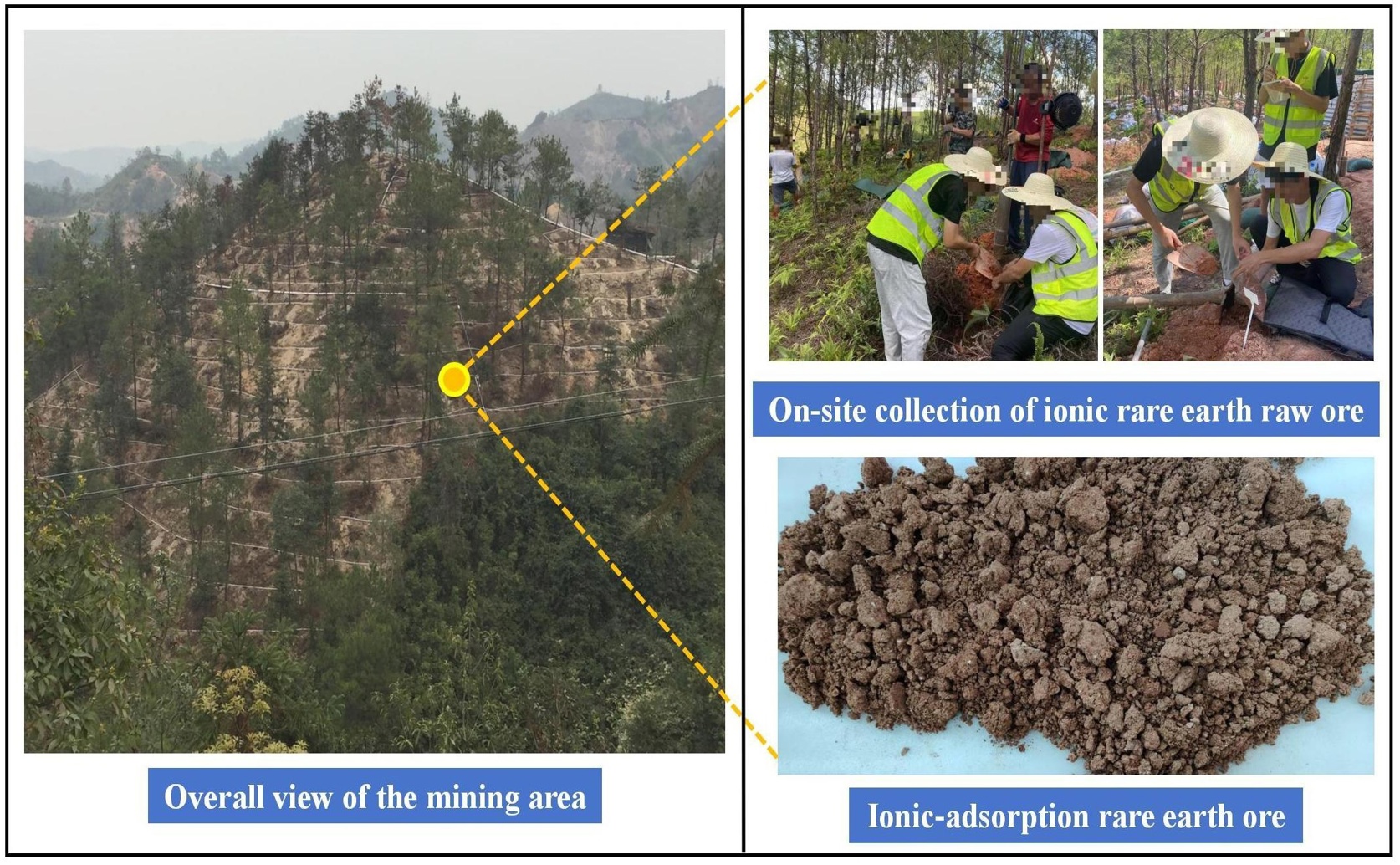
Schematic of the mining area overview and the on-site sampling process.
Key Findings
- In southern China rare earth mining areas, leaching processes using acidic solutions release zinc (Zn) from soil, posing environmental risks
- Magnesium sulfate (MgSO4) initially released the most Zn into the leachate, but aluminum sulfate (Al2(SO4)3) left a higher amount of Zn remaining in the soil
- A 3% concentration of aluminum sulfate (Al2(SO4)3) was most effective at transforming zinc in the soil, indicating a greater potential for long-term environmental risk due to increased residual Zn
AgricultureEnvironmentPlant Science
References
Main Study
1) Study on the release pattern of Zn in soil of ionic rare earth mining areas under different leaching conditions
Published 15th December, 2025
https://doi.org/10.1371/journal.pone.0338566
Related Studies
2) Study on Pb release by several new lixiviants in weathered crust elution-deposited rare earth ore leaching process: Behavior and mechanism.
3) The usability of the IR, RAC and MRI indices of heavy metal distribution to assess the environmental quality of sewage sludge composts.
4) Leaching characteristics and environmental impact of heavy metals in tailings under rainfall conditions: A case study of an ion-adsorption rare earth mining area.
Related Articles
 9th September, 2025 | Jenn Hoskins