Communication interventions reduce illegal tree cutting by 57% in Norwegian national park

Jim Crocker
21st February, 2026

Communication interventions reduce illegal tree cutting by 57% in Norwegian national park

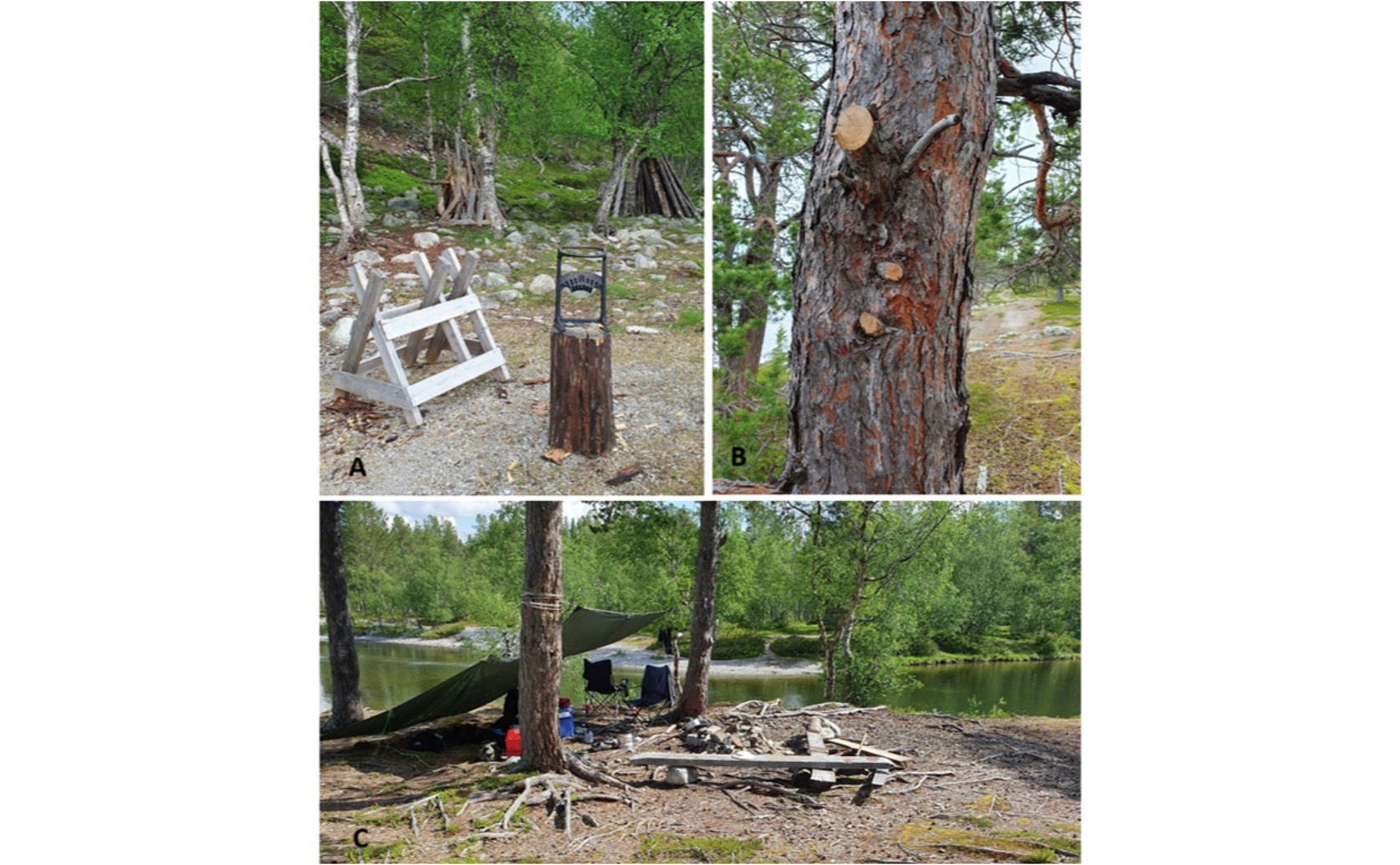
Although park management provides firewood (a), persistent damage to ancient trees from campfires (b, c) highlights the need for the effective communication strategies tested in this study.

Image adapted from: Selvaag et al. / CC BY (Source)

Key Findings

  • In Norway’s Femundsmarka National Park, both pamphlets and face-to-face conversations reduced tree damage from campfires by 57%
  • Simple, low-cost communication methods like pamphlets can be as effective as direct interaction with park staff in changing visitor behavior
  • Visitor numbers and weather conditions also influenced tree damage, with more damage occurring when more visitors were present and less damage during rainy or windy weather
Managing natural areas often involves balancing visitor enjoyment with environmental protection. A significant challenge is minimizing the impact of activities like campfires, which, despite being a popular tradition, can lead to substantial ecological damage, particularly when visitors collect firewood from living trees.[1] Researchers at the Norwegian Institute for Nature Research and the Norwegian University of Life Sciences recently investigated how different communication methods could reduce this damage. The core of the problem lies in the “wicked” nature of recreation management[2]. There’s often disagreement on what constitutes a problem, how to solve it, and what success looks like. Visitor values, their understanding of the environment, and their interactions with the landscape all add complexity. Previous research has highlighted that visitors are often more concerned with crowding than specific resource impacts[3], and that education about ecological knowledge and minimal-impact practices can improve awareness. However, simply informing visitors doesn’t always translate into behavioral change. This study employed a quasi-experimental field study, meaning researchers observed real-world situations without directly controlling all variables, to assess the effectiveness of two communication strategies: passive (providing pamphlets) and active (face-to-face conversations with park staff). The research combined multiple data sources – visitor interviews, surveys, direct observations of visitor behavior, and assessments of tree damage – to provide a comprehensive picture. The study focused specifically on reducing the use of ancient trees for firewood, a particularly sensitive issue. A key aspect of the research design was its attempt to reflect real-world conditions. The analysis used a statistical technique called multiple regression, which allowed the researchers to account for factors like the number of visitors, weather conditions, and individual visitor characteristics. This is important because the effectiveness of any communication strategy is likely to vary depending on these variables. The results showed that both communication methods were surprisingly effective. Both pamphlets and direct conversations reduced tree damage incidents by 57% compared to days when no communication was present. This is a significant finding, as it challenges the widely held belief that direct, personal interaction is always the most effective way to influence visitor behavior. The study revealed that simple, low-cost methods like pamphlets can be just as powerful. Interestingly, these findings contrast with some earlier research[4] which found that educational messages didn’t consistently lead to more responsible behavior and could even, in some cases, encourage undesirable actions like hiking off designated trails. The difference may lie in the specific behavior being targeted. While the earlier study focused on trail use, this study concentrated on a more direct and easily observable action – collecting firewood. The implications of this study are substantial. Many natural areas face limited staff capacity, making it difficult to implement extensive face-to-face communication programs. The finding that passive communication can be equally effective suggests that resource managers can achieve significant conservation gains with relatively low-cost interventions. Furthermore, the study reinforces the importance of visitor education, aligning with earlier work suggesting that increasing awareness of ecological impacts can positively influence behavior[3].

EnvironmentMental HealthSustainability

References

Main Study

1) Fostering Pro-environmental Behavior Among National Park Visitors: Testing Communication Strategies for Campfire Management

Published 18th February, 2026

https://doi.org/10.1007/s00267-026-02392-6


Related Studies

2) Understanding the wicked nature of "unmanaged recreation" in Colorado's Front Range.

Journal: Environmental management, Issue: Vol 38, Issue 5, Nov 2006


3) The effects of local ecological knowledge, minimum-impact knowledge, and prior experience on visitor perceptions of the ecological impacts of backcountry recreation.

https://doi.org/10.1007/s00267-012-9910-x


4) Determinants of Responsible Hiking Behavior: Results from a Stated Choice Experiment.

https://doi.org/10.1007/s00267-015-0513-1


Related Articles

An unhandled error has occurred. Reload 🗙