
Wellbeing in a Climate-Vulnerable Area: A Study of People’s Experiences
Jim Crocker
8th September, 2025


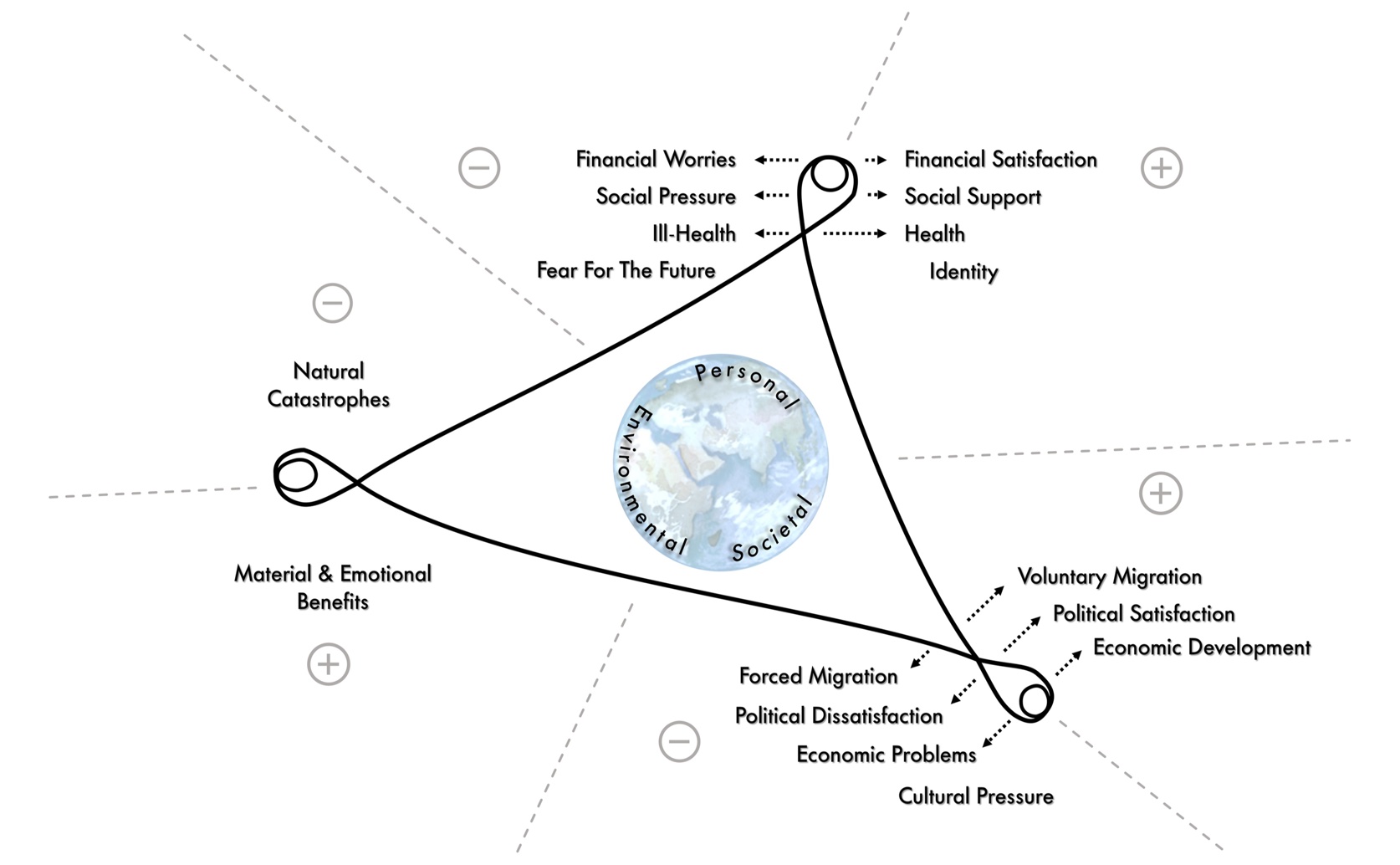
This framework illustrates that in a climate-vulnerable population in Bangladesh, relational well-being is dynamically shaped by an interplay of positive factors, such as social support and voluntary migration, and negative factors, like natural catastrophes and financial worries, across personal, societal, and environmental domains.
Key Findings
- This study, conducted in Bhola Island, Bangladesh, a climate-vulnerable region, investigated factors impacting residents’ well-being
- Financial worries, forced migration, social pressures, and natural disasters negatively affected well-being, aligning with existing research on climate change vulnerabilities
- Strong social support, financial satisfaction, a sense of place, and voluntary migration contributed to positive well-being, highlighting the importance of relational factors
EnvironmentMental HealthSustainability
References
Main Study
1) The “most beautiful place” where “it’s not possible to live”: A qualitative study of relational well-being in an area of climate vulnerability, Bangladesh
Published 4th September, 2025
https://doi.org/10.1371/journal.pone.0325972
Related Studies
2) Increasing the provision of mental health care for vulnerable, disaster-affected people in Bangladesh.
3) Flooding and mental health: a systematic mapping review.
4) Hope, despair and transformation: Climate change and the promotion of mental health and wellbeing.
5) Climate change and mental health: a causal pathways framework.
Related Articles
 29th August, 2025 | Greg Howard