
How Clay Minerals Help Trap Carbon Dioxide During Oil Recovery
Jim Crocker
7th September, 2025


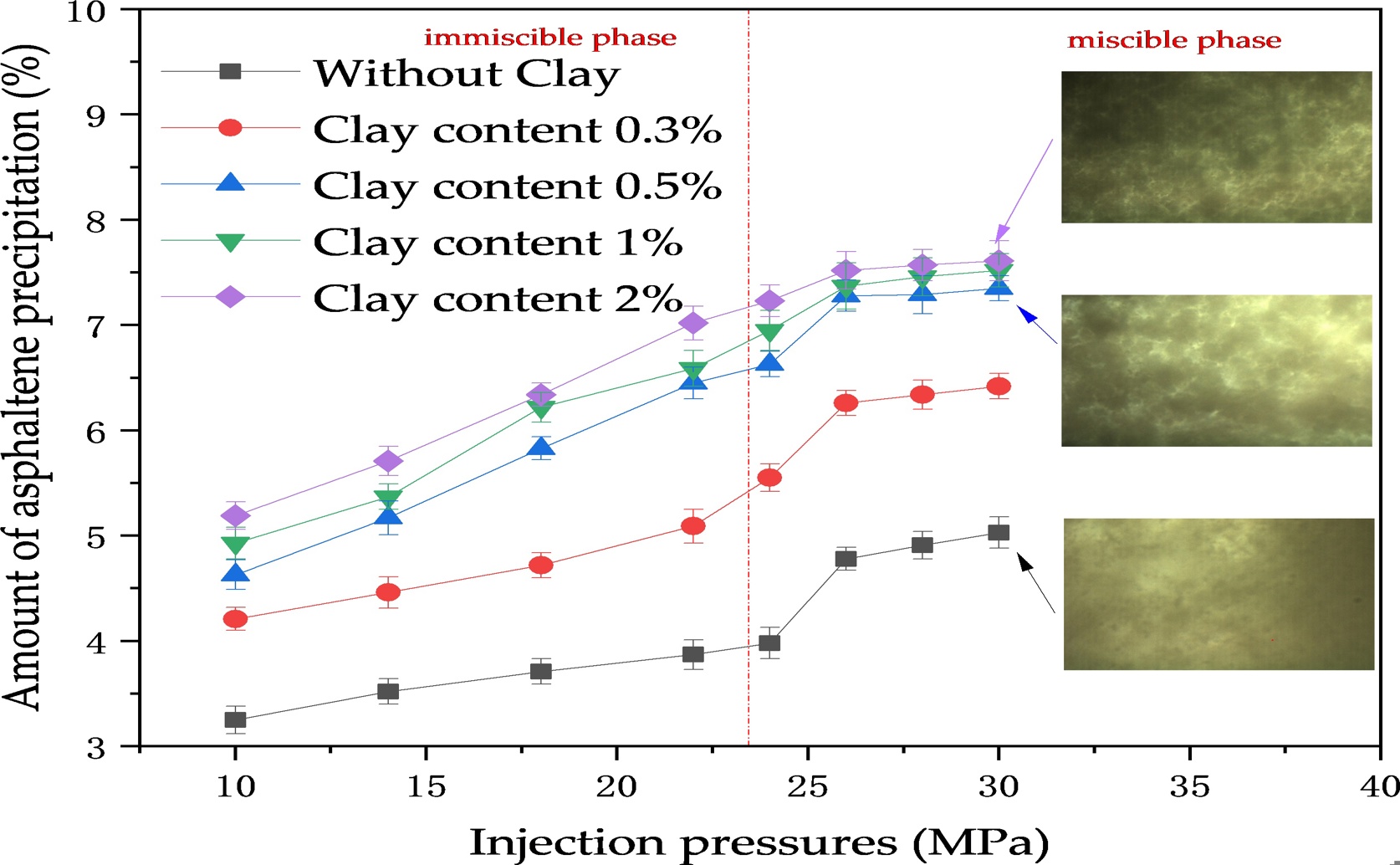
Percentage of sediment mass at different injection pressures.
Key Findings
- This study, conducted in strongly water-sensitive reservoirs, investigates how clay minerals affect oil recovery and carbon dioxide (CO2) storage
- Clay minerals promote asphaltene deposition during CO2 injection, increasing it by 37% in clay-containing crude oil compared to clay-free samples
- Despite some reduction in reservoir permeability due to asphaltene buildup, CO2 sequestration rates increase with higher clay content, ranging from 43.15% to 48.21% as clay content rises
AgricultureEnvironmentSustainability
References
Main Study
1) Mechanisms of clay mineral-induced targeted deposition and synergistic CO2 sequestration potential in the CCUS-EOR process
Published 5th September, 2025
https://doi.org/10.1371/journal.pone.0331674
Related Studies
2) Experimental study of asphaltene deposition during CO2 and flue gas injection EOR methods employing a long core.
3) Review on asphaltene precipitation and deposition kinetics and CO2 interactions.
4) Quantification of Methane-Induced Asphaltene Precipitation in a Multiple Contact Process.
Related Articles
 15th August, 2025 | Jenn Hoskins