New Way to Recycle Oil Drilling Waste: Separating Clay and Heavy Minerals

Greg Howard
1st September, 2025

New Way to Recycle Oil Drilling Waste: Separating Clay and Heavy Minerals

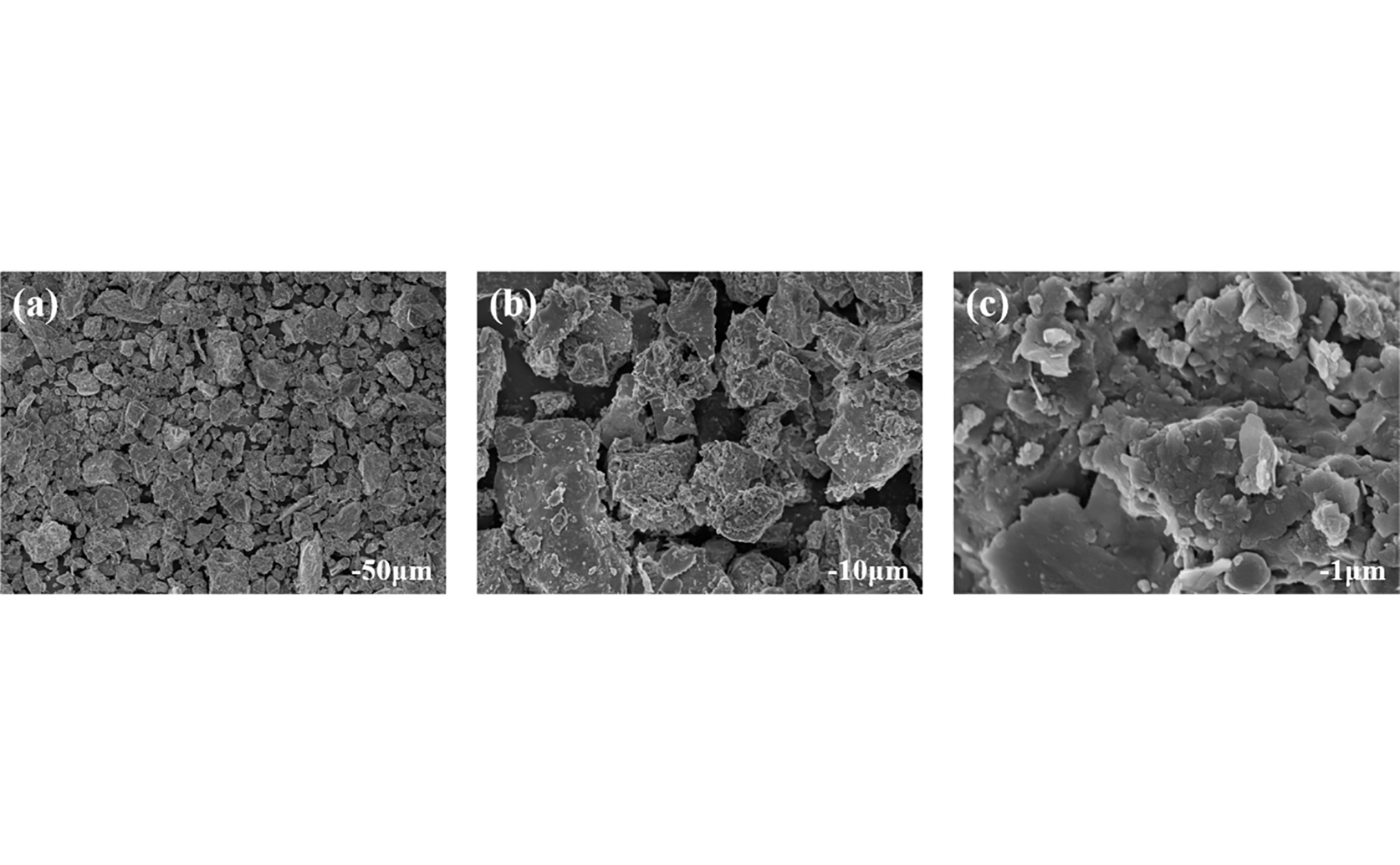
Scanning electron microscopy confirms the high separation efficiency of the stepwise flotation strategy, revealing that the recovered bentonite and barite (b–c) display clean, distinctive morphologies free of the oil film impurities observed in the untreated waste drilling fluid (a).

Image adapted from: Lihu et al. / CC BY (Source)

Key Findings

  • In northern Shaanxi oilfields, a new process efficiently recovers valuable minerals barite and bentonite from waste drilling fluids, addressing environmental concerns
  • The process uses ultrasonic cleaning with SDS to remove over 95% of oil coating minerals, restoring their surfaces for better separation
  • A two-stage flotation process, carefully controlling pH and using specific reagents, achieves 86.3% bentonite recovery and 92.1% barite purity
Northern Shaanxi’s oil and gas drilling generates substantial waste drilling fluids containing valuable minerals like barite and bentonite. Traditionally, these fluids are disposed of, leading to environmental concerns and the loss of potentially useful resources. Researchers at Wuqi Oil Production Plant[1] have developed a new process to recover these minerals efficiently, addressing both environmental and economic issues. The core problem lies in the complex composition of the waste fluid. Oil coatings wrap around the mineral particles, hindering their separation, and the similar surface properties of barite and bentonite make direct recovery challenging. The new approach focuses on a two-step flotation process, designed to overcome these obstacles. Flotation is a technique used to separate materials based on their surface properties – essentially making one material ‘float’ while the other remains submerged. The first step involves cleaning the solid particles using ultrasonic cleaning with a 0.5% sodium dodecyl sulfate (SDS) solution. This process removes over 95% of the oil, restoring the minerals’ natural surface characteristics. SDS, a common surfactant, effectively breaks down the oil film adhering to the solid phase, preparing it for the subsequent separation stages. This cleaning step is crucial as it exposes the mineral surfaces, allowing for more effective flotation. Following cleaning, the process moves to a two-stage flotation system. The first stage, conducted at a pH of 4.0, utilizes 0.8 kg/t of SDS and 0.6 kg/t of sodium hexametaphosphate to selectively recover bentonite, achieving a recovery rate of 86.3%. The second stage, at a pH of 8.0, employs 1.2 kg/t of SDS and 0.7 kg/t of gellan gum to concentrate barite, reaching a grade of 92.1% purity (BaSO₄ content) with an 88.7% recovery rate. The success of this process relies on carefully controlling the surface properties of the minerals. SDS acts as both a cleaning agent – removing the oil – and a collector, promoting the flotation of the desired mineral. Sodium hexametaphosphate plays a key role in inhibiting the flotation of barite in the first stage by binding to barium ions (Ba²⁺) on the barite surface. This prevents barite from floating, allowing for selective bentonite recovery. Gellan gum, in the second stage, then separates bentonite by shielding its active sites through hydrogen bonds, preventing it from floating and allowing for barite concentration. This stepwise approach builds upon earlier research into barite recovery from waste drilling fluids. For example, studies have demonstrated the potential of using β-cyclodextrin (β-CD) as a depressant to selectively inhibit barite flotation[2]. While β-CD works through enhancing hydrophilicity and electrostatic adsorption, the current study utilizes gellan gum, achieving a similar selective inhibition through a different mechanism – hydrogen bonding. Similarly, previous work has highlighted the benefits of pre-treatment methods like washing and microwave heating to improve barite grade and recovery[3]. The ultrasonic cleaning step in serves a similar purpose, effectively preparing the solid phase for efficient separation. Further optimization through a closed-circuit flotation experiment – a continuous recycling loop – resulted in even higher recovery rates. This experiment, using a “one roughing, two cleaning and three scavenging” process, achieved 91.4% bentonite recovery at 91.5% grade and 90.2% barite recovery at 92.1% grade. Scanning Electron Microscopy (SEM) analysis confirmed the effectiveness of the separation, revealing clean, oil-free bentonite lamella and prismatic barite crystals. The mechanism studies provide a detailed understanding of the process. SDS's dual function, coupled with the selective inhibition provided by sodium hexametaphosphate and gellan gum, enables efficient and targeted mineral recovery. This approach offers a practical and low-consumption solution for the resource utilization of drilling waste liquid in northern Shaanxi, minimizing environmental impact and maximizing resource recovery.

AgricultureEnvironmentSustainability

References

Main Study

1) A novel strategy for resource utilization of oily drilling waste fluids in northern Shaanxi: Stepwise flotation of bentonite and barite using SDS and interfacial reaction mechanisms

Published 29th August, 2025

https://doi.org/10.1371/journal.pone.0331415


Related Studies

2) Flotation recovery of barite from high-density waste drilling fluid using β-cyclodextrin as a novel depressant and its mechanism.

https://doi.org/10.1371/journal.pone.0298626


3) Application and mechanistic insights of a washing/microwave/ultrasonic ternary pretreatment for enhancing barite flotation in waste drilling fluids.

https://doi.org/10.1038/s41598-024-71441-z


Related Articles

An unhandled error has occurred. Reload 🗙