
Digital Soil Maps Help Track Carbon in Farmland
Jenn Hoskins
5th September, 2025


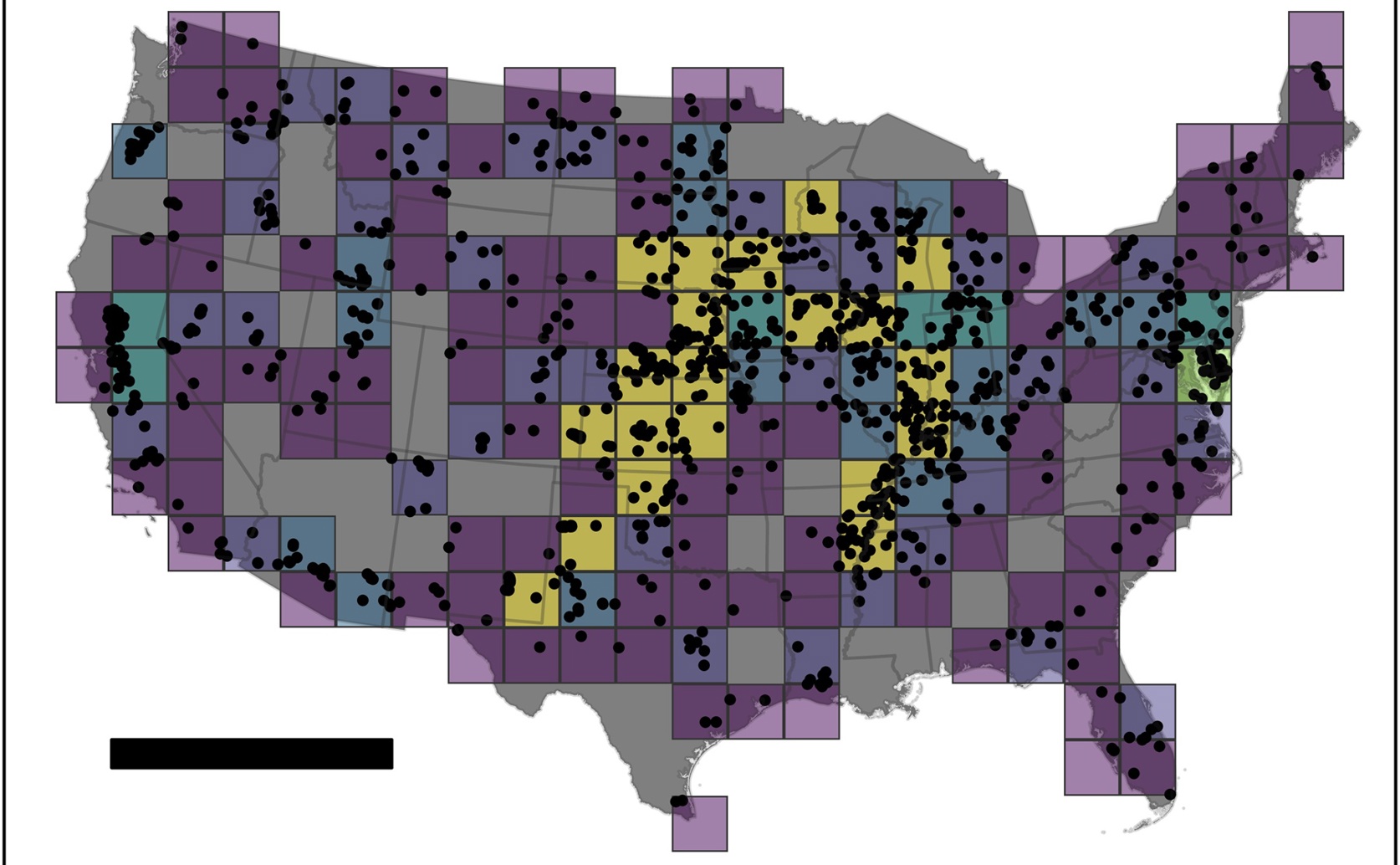
The spatial distribution of 5,230 in-situ soil samples across 47 states demonstrates the geographically representative coverage of active row-crop agriculture that enabled the ATLAS-SOC framework to accurately predict soil organic carbon content in support of voluntary carbon markets.
Key Findings
- A new machine learning model, ATLAS-SOC, accurately predicts soil organic carbon (SOC) levels across agricultural land in the contiguous United States
- This model excels at predicting SOC because it focuses specifically on agricultural soils and uses recent data, unlike existing maps which often underestimate or overestimate levels
- Time-series data from Sentinel-2 satellites, tracking vegetation changes, was the most important factor in accurately predicting SOC content, highlighting the value of monitoring land use
AgricultureEnvironmentSustainability
References
Main Study
1) Digital soil mapping in support of voluntary carbon market programs in agricultural land
Published 2nd September, 2025
https://doi.org/10.1371/journal.pone.0327895
Related Studies
2) Climate-smart soils.
3) SoilGrids250m: Global gridded soil information based on machine learning.
4) How to measure, report and verify soil carbon change to realize the potential of soil carbon sequestration for atmospheric greenhouse gas removal.
Related Articles
 3rd August, 2025 | Jenn Hoskins