How visiting sustainable gardens impacts whether people return

Greg Howard
9th January, 2026

How visiting sustainable gardens impacts whether people return

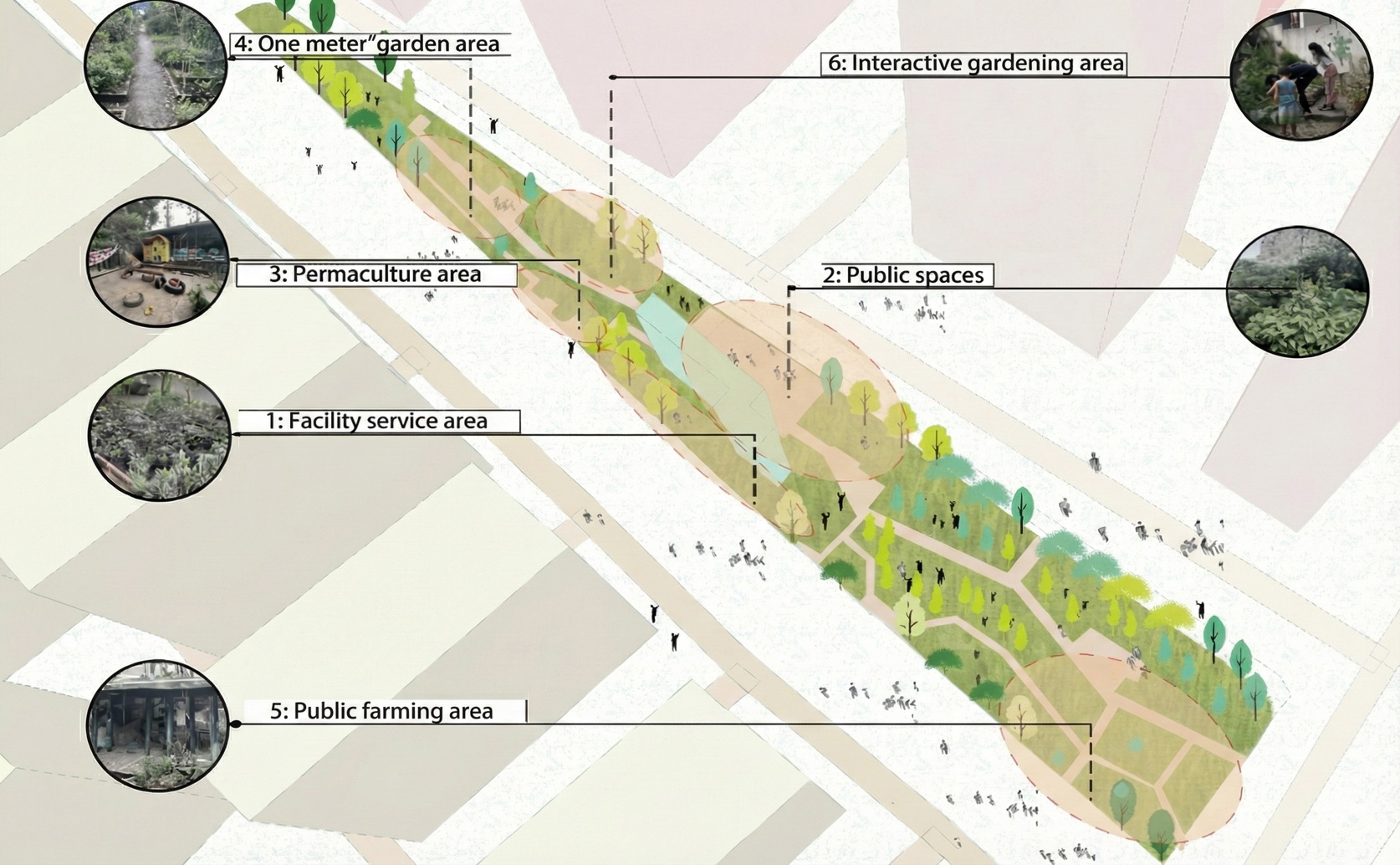
KICG-sustainable garden (created by the authors from field observation).

Image adapted from: Chen et al. / CC BY (Source)

Key Findings

  • This study, conducted in Shanghai’s Knowledge and Innovation Community Garden, investigated what drives tourists to return to sustainable gardens
  • Tourists who highly value a garden—appreciating its environmental, emotional, and cognitive benefits—are more likely to be satisfied with their visit and want to return
  • Two factors—becoming immersed in the garden’s stories and feeling a sense of agency through participation—strengthen the connection between valuing the garden and wanting to revisit
Sustainable gardens are increasingly recognised as a promising form of urban tourism, combining environmental benefits with community involvement. However, understanding what makes tourists return to these spaces – and how to encourage repeat visits – remains a key challenge.[1] Researchers at Nantong Institute of Technology, NingboTech University, and Guilin University of Technology recently investigated the factors influencing tourists’ intention to revisit sustainable gardens, focusing on how tourists’ initial assessment of the garden’s worth (perceived value) affects their desire to return, and identifying the psychological elements that strengthen this connection. The study centred around the idea that a tourist’s experience isn’t simply about the place itself, but how they feel about the place and their level of involvement. To understand this, the researchers used a two-stage approach. First, they conducted in-depth interviews to develop a detailed understanding of the key elements at play, using a method called grounded theory. This process allowed them to build a conceptual framework outlining the relationships between perceived value, satisfaction, and revisit intention. Second, they distributed a large-scale survey to gather data from a wider range of tourists, which was then analysed using a statistical technique called structural equation modeling. The findings revealed that tourists who highly valued the garden were more likely to be satisfied with their visit, and this satisfaction, in turn, increased their intention to revisit. However, the researchers discovered that this relationship wasn't straightforward. Two factors were found to significantly strengthen the connection between perceived value and revisit intention: narrative transportation and empowerment capability. Narrative transportation refers to the extent to which tourists become immersed in the stories and history associated with the garden. This could involve learning about the garden’s origins, the plants grown there, or the community involved in its upkeep. Empowerment capability, on the other hand, relates to the feeling of agency and control tourists experience within the garden – for example, opportunities to participate in gardening activities or contribute to the garden’s development. These findings build upon earlier research highlighting the importance of ‘authentic experience’ in tourism[2]. The study in Nanjing Quarry Park demonstrated that tourists’ perceptions of authenticity could influence their emotions and, ultimately, their behaviour. Similarly, the current study suggests that perceived value acts as a crucial driver of positive emotions and behavioural intention. However, it goes further by identifying the specific psychological mechanisms – narrative transportation and empowerment capability – that translate perceived value into tangible outcomes like revisit intention. The concept of community involvement is also relevant here. Studies on community-based tourism[3] have shown that local participation can significantly improve tourists’ experiences and contribute to sustainable development. The current research echoes this, suggesting that providing tourists with opportunities for ‘empowerment’ – actively involving them in the garden’s activities – can foster a stronger connection and increase their likelihood of returning. This aligns with findings from research on community gardens[4], which noted the positive impact of community engagement on neighbourhood environments and public participation. Importantly, the research highlights that simply having a sustainable garden isn’t enough. The success of these spaces depends on how they are managed and the experiences they offer. Creating immersive narratives and providing opportunities for tourists to feel a sense of ownership and contribution are crucial for fostering long-term loyalty and achieving sustainable destination development. The study’s use of structural equation modeling allowed researchers to quantify these relationships, providing actionable insights for garden managers seeking to enhance visitor engagement and promote sustainable tourism practices.

AgricultureEnvironmentSustainability

References

Main Study

1) Exploring the mechanism by which tourists’ perceived value influences revisit intention in sustainable gardens: A case study of KICG-sustainable garden, Shanghai

Published 7th January, 2026

https://doi.org/10.1371/journal.pone.0338508


Related Studies

2) Experiencing authenticity to environmentally responsible behavior: Assessing the effects of perceived value, tourist emotion, and recollection on industrial heritage tourism.

https://doi.org/10.3389/fpsyg.2022.1081464


3) Toward sustainable community-based tourism development: Perspectives from local people in Nhon Ly coastal community, Binh Dinh province, Vietnam.

https://doi.org/10.1371/journal.pone.0287522


4) Community-Engaged Research for the Promotion of Healthy Urban Environments: A Case Study of Community Garden Initiative in Shanghai, China.

https://doi.org/10.3390/ijerph16214145


Related Articles

An unhandled error has occurred. Reload 🗙