How formic acid affects honeybee foraging, revealed by advanced DNA analysis

Jenn Hoskins
28th February, 2026

How formic acid affects honeybee foraging, revealed by advanced DNA analysis

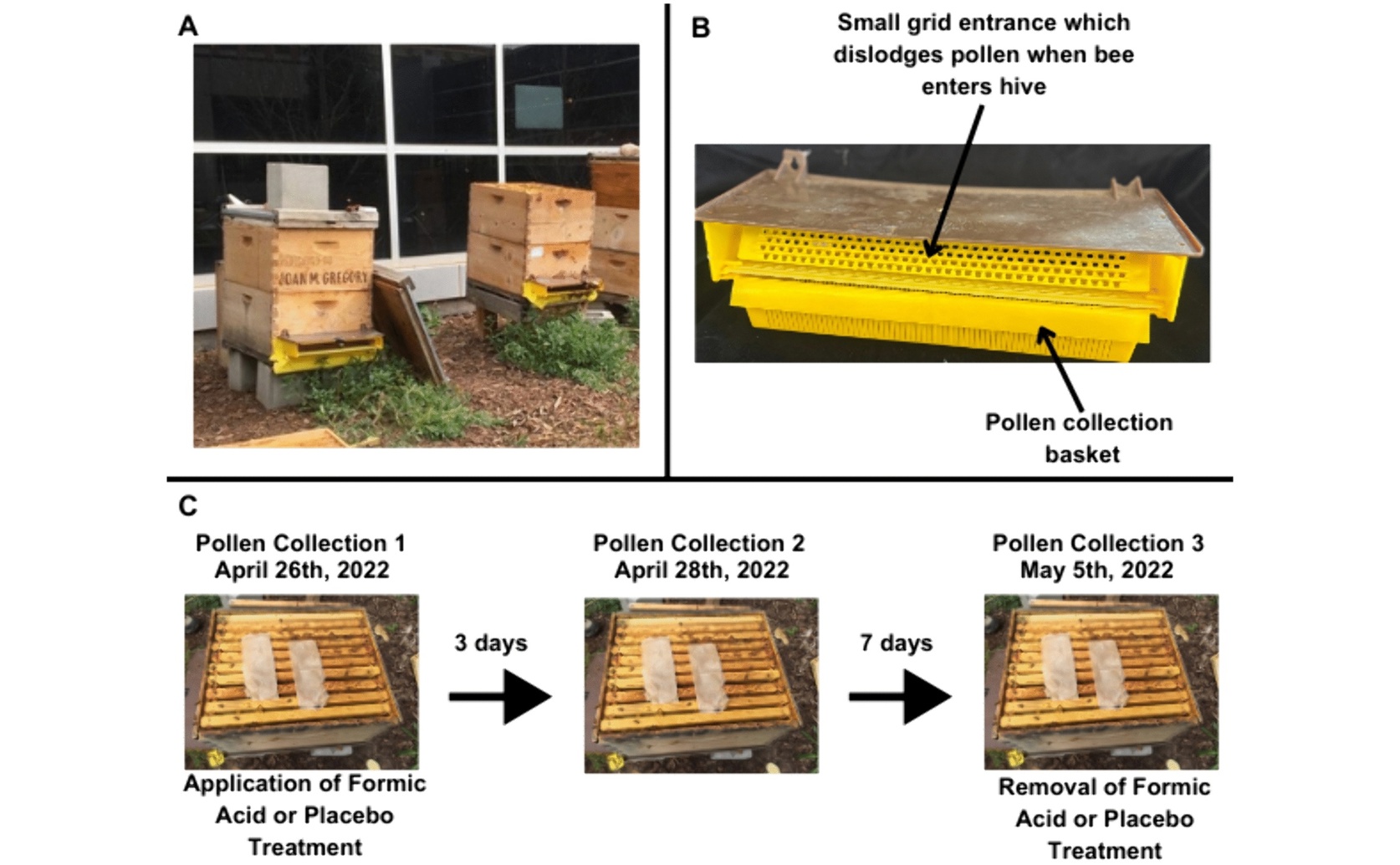
By collecting pollen from Apis mellifera hives using entrance traps (a, b) before, during, and after the application of Formic Acid or a placebo (c), this study revealed that the common mite treatment is associated with changes in the bees' foraging patterns.

Image adapted from: Wiese et al. / CC BY (Source)

Key Findings

  • This University of Utah study examined how formic acid (FA) treatment, used to control Varroa mites, affects honeybee foraging habits
  • FA treatment was associated with changes in the types of plants bees visited for pollen, suggesting potential impacts on their foraging behavior
  • Individual honeybee hives demonstrated unique and consistent foraging preferences regardless of FA treatment, indicating a hive-specific foraging identity
Honeybees are vital for both agriculture and the health of natural ecosystems, but populations are declining globally, largely due to infection by the Varroa mite. Controlling Varroa mites is therefore essential, and formic acid (FA) is an increasingly common treatment. However, the full impact of FA on honeybee colonies – particularly how it affects their foraging habits – wasn't fully understood. A recent study by researchers at the University of Utah investigated this issue[1]. The study aimed to determine if FA treatment altered the types of plants honeybees visited for pollen. Pollen is a crucial food source for bees, and changes in foraging preferences could indicate stress or disruption within the colony. While bees are known to be generalist foragers, visiting a wide range of flowers, it’s also been observed that they don’t visit all plants equally, and some plant species are more reliant on honeybee pollination than others[2]. Understanding how treatments like FA affect these choices is critical. To investigate this, researchers examined six honeybee hives on the University of Utah campus. Three hives received FA treatment to control Varroa mites, while the other three served as a control group, receiving a placebo treatment. Pollen samples were collected from each hive at three points: before FA application, during treatment, and after treatment. The key to the study’s approach was a technique called DNA metabarcoding. This involves extracting all the DNA from the pollen samples and identifying the plant species present based on specific genetic markers. Specifically, the researchers focused on a region of plant DNA called trnL, a chloroplast DNA region. Chloroplasts are structures within plant cells responsible for photosynthesis, and their DNA is useful for plant identification. Crucially, they used real-time nanopore sequencing – a portable DNA sequencing technology from Oxford Nanopore Technologies – to analyze the samples. This allowed for rapid identification of the plants the bees were foraging from. The results showed a significant difference in the composition of pollen collected between the FA-treated and control hives at the end of the experiment. The control hives foraged from a greater diversity of plant genera (plural of genus – a taxonomic ranking). This suggests that FA treatment may reduce the range of plants bees visit. Interestingly, the study also found that each individual hive had unique foraging preferences, regardless of whether it was treated with FA or not. These findings indicate that FA treatment is associated with detectable changes in honeybee foraging behavior. However, the extent of this impact – how much it reduces the overall diversity of a hive’s foraging repertoire – remains unclear. This research builds upon previous work highlighting the complex factors affecting honeybee health. For example, the study[3] showed that extreme weather events can also significantly impact colony loss, alongside biotic stressors like Varroa mites and pesticides. The University of Utah study adds another layer to this complexity by demonstrating that even a common treatment aimed at improving colony health can have unintended consequences on foraging behavior. Furthermore, the use of DNA metabarcoding with nanopore technology represents a significant advance in ecological research. This method provides a powerful tool for analyzing bee foraging patterns, allowing researchers to quickly and accurately assess the plants bees are visiting. This is particularly important in light of the fact that honeybees are the most frequent floral visitors of crops worldwide, but quantitative knowledge of their role outside of managed habitats is limited[2]. The ability to efficiently monitor foraging patterns can help inform conservation efforts and better understand the impact of various stressors on pollination health.

AgricultureEcologyAnimal Science

References

Main Study

1) Effect of formic acid treatment on Apis mellifera foraging behavior using nanopore metabarcoding technologies

Published 26th February, 2026

https://doi.org/10.1371/journal.pone.0343810


Related Studies

2) The worldwide importance of honey bees as pollinators in natural habitats.

https://doi.org/10.1098/rspb.2017.2140


3) Honey bee colony loss linked to parasites, pesticides and extreme weather across the United States.

https://doi.org/10.1038/s41598-022-24946-4


Related Articles

An unhandled error has occurred. Reload 🗙