
New Insights On Early Farming: How People Managed Land And Resources
Jenn Hoskins
30th June, 2025


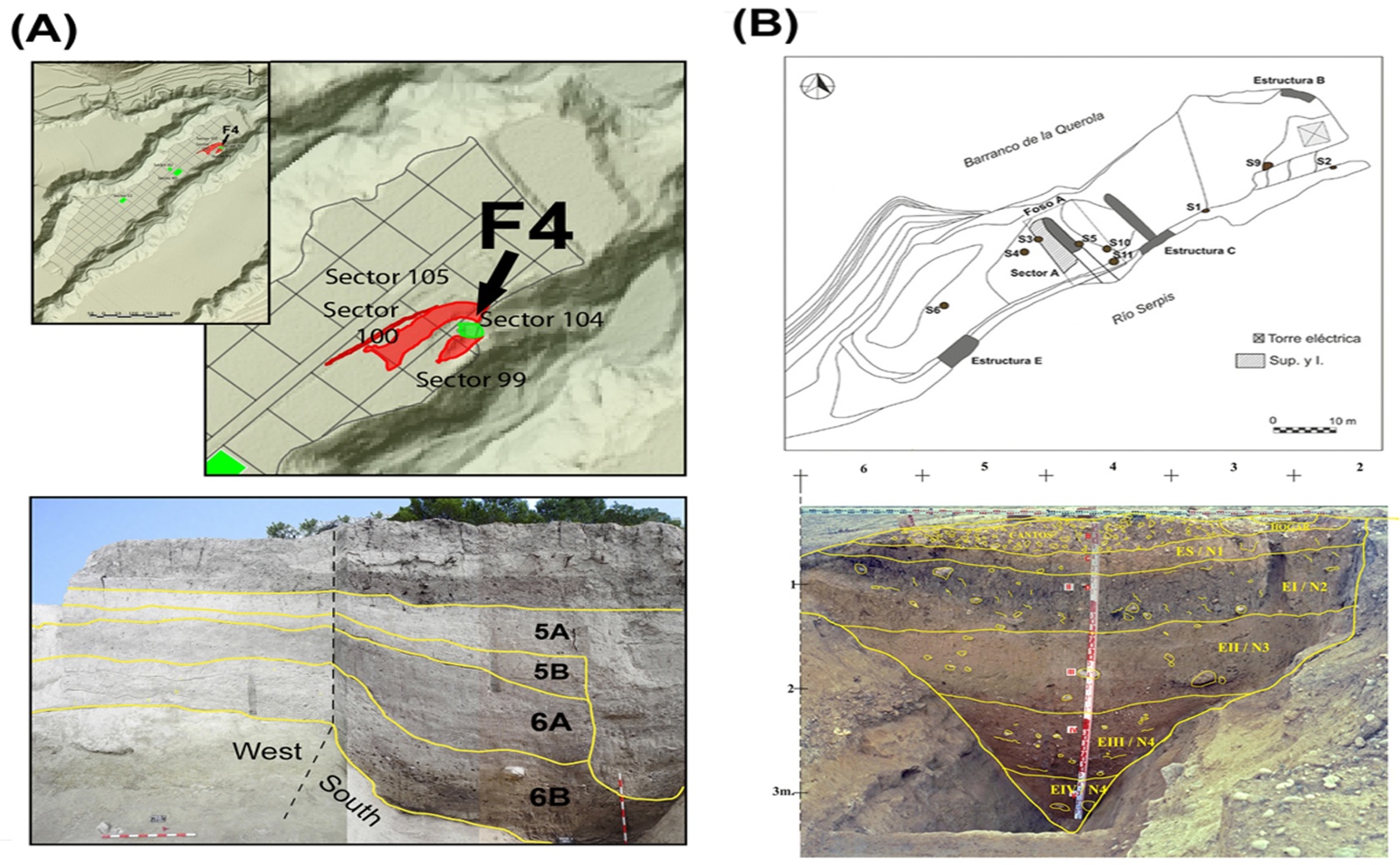
Excavations at Mas d’Is (a) and Niuet (b) revealed the stratigraphic sequences containing the faunal remains that provided isotopic evidence for compartmentalized landscape management practices during the Neolithic.
Key Findings
- In the Serpis Valley, ancient animal bones reveal that Neolithic communities managed two distinct types of herds: some grazed on common C3 plants, while others fed on C4 wetland plants
- This dual strategy suggests a sophisticated system where C3-fed animals were integrated into farming, possibly for traction, while C4-fed animals likely grazed in communal marshlands
AgricultureEcologyAnimal Science
References
Main Study
1) Isotopes, herds, and landscape management practices: New insights on early farming communities in the Serpis Valley (Eastern Iberian Peninsula)
Published 27th June, 2025
https://doi.org/10.1371/journal.pone.0325137
Related Studies
2) Complexities of nitrogen isotope biogeochemistry in plant-soil systems: implications for the study of ancient agricultural and animal management practices.
3) Carbon isotope discrimination by plants follows latitudinal and altitudinal trends.
4) Isotopic values of plants in relation to water availability in the Eastern Mediterranean region.
5) Reconstruction of human subsistence and husbandry strategies from the Iberian Early Neolithic: A stable isotope approach.
Related Articles
 6th July, 2024 | Jim Crocker