Boosting mung bean harvests and root growth with natural fertilizers

Jenn Hoskins
22nd November, 2025

Boosting mung bean harvests and root growth with natural fertilizers

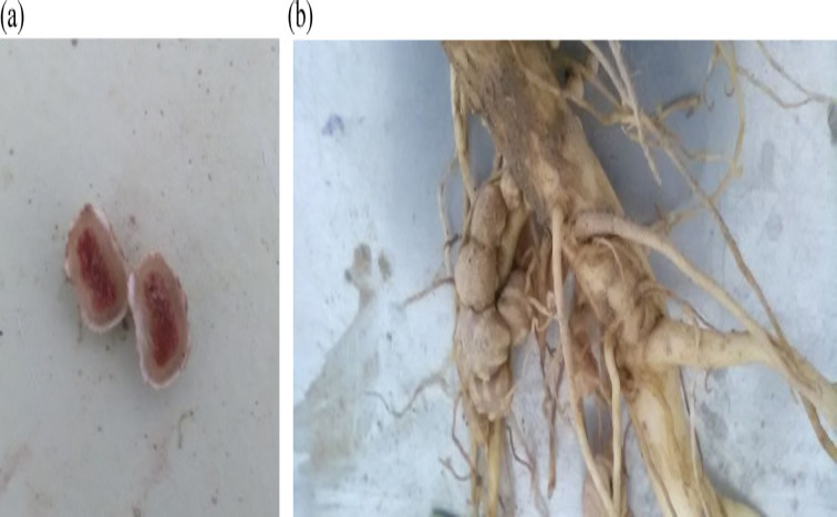
(a) A close-up view of active nitrogen-fixing nodules on mung bean roots, and (b) A detailed view of the nodules’ positioning along the root.

Image adapted from: Yousefi et al. / CC BY (Source)

Key Findings

  • This Iranian study investigated mung bean growth with different fertilizers, finding solutions to reduce reliance on chemical nitrogen
  • While urea fertilizer yielded the highest biomass and grain, a microbial consortium significantly improved yield and boosted root nodulation by 62%, enhancing natural nitrogen fixation
  • The study highlights that combining multiple beneficial bacteria (a consortium) is a promising sustainable alternative to fully replace chemical fertilizers for mung bean production
Legume crops like mung beans are vital for both food and soil health, but traditional farming relies heavily on chemical fertilizers, which can be costly and environmentally damaging. Researchers at the University of Hohenheim conducted a study[1] to investigate whether biofertilizers – mixtures of beneficial bacteria – could offer a sustainable alternative to these chemicals, specifically for mung bean production. The study focused on two varieties of mung bean, assessing how different fertilizer treatments affected their growth, yield, and nutrient uptake. The core problem this research addresses is the need to reduce reliance on synthetic nitrogen fertilizers in agriculture. These fertilizers, while effective at boosting crop yields, contribute to environmental problems like water pollution and greenhouse gas emissions. Finding ways to enhance natural processes, such as biological nitrogen fixation, is crucial for sustainable farming practices. This aligns with a long-recognised benefit of legumes, which have been valued for their ability to improve soil fertility for thousands of years[2]. The study involved field trials conducted over two years in Iran, where researchers compared the effects of six different fertilizer treatments: a control group receiving no fertilizer, treatments with bacteria that help fix nitrogen (FLNF), solubilize phosphorus (PSB), and solubilize potassium (KSB), a combination of all three bacterial types (a consortium), and urea – a common chemical nitrogen fertilizer. They then measured various aspects of plant growth, including yield, biomass (total plant weight), root development, and the number of nodules on the roots. Nodules are small structures where bacteria convert atmospheric nitrogen into a form plants can use. The results showed that urea consistently produced the highest biomass and grain yield, increasing yield by 46% and biomass by 41% compared to the control group. However, the microbial consortium also significantly improved yield – by 32% – and, importantly, dramatically increased root nodulation by 62%. This suggests the consortium was effectively enhancing the plant’s natural ability to fix nitrogen from the air. This finding builds on earlier work demonstrating the significant role of plant growth promoting rhizobacteria (PGPRs) in alleviating abiotic stresses and enhancing plant growth[3]. The researchers also observed that the different mung bean varieties responded differently to the various fertilizers, highlighting the importance of considering genotype-specific responses. The study’s focus on root characteristics is particularly noteworthy. A positive correlation was found between nodulation and yield, reinforcing the idea that enhanced biological nitrogen fixation is key to improved productivity. The consortium treatment uniquely maximized root nodulation and inoculation percentage, indicating a stronger symbiotic relationship between the plant and the nitrogen-fixing bacteria. This is consistent with the idea that stimulated plant growth by these bacteria is the result of multiple mechanisms working together[3]. The research also acknowledges the progress made in the production and commercialization of microbial inoculants[4], making them a more accessible and cost-effective option for farmers. While urea provided the highest yields in this study, the microbial consortium offered a substantial yield increase while simultaneously promoting a more sustainable approach to nitrogen management. The consortium’s ability to enhance biological nitrogen fixation is particularly valuable, as it reduces the need for synthetic nitrogen fertilizers. The findings suggest that multi-strain biofertilizers, like the consortium used in this study, have the potential to maintain or even improve mung bean productivity while lessening the environmental impact of chemical fertilizers. This research contributes to the growing body of evidence supporting the use of PGPRs as a viable strategy for sustainable agriculture[3]. The study also touches on the concept of the “Additive Hypothesis”[5], suggesting that the consortium’s effectiveness stems from the combined action of multiple beneficial mechanisms.

AgricultureSustainabilityPlant Science

References

Main Study

1) Optimizing mung bean productivity and root morphology with biofertilizers for sustainable farming

Published 18th November, 2025

https://doi.org/10.1038/s41598-025-28815-8


Related Studies

2) Effectiveness of nitrogen fixation in rhizobia.

https://doi.org/10.1111/1751-7915.13517


3) Use of plant growth promoting rhizobacteria (PGPRs) with multiple plant growth promoting traits in stress agriculture: Action mechanisms and future prospects.

https://doi.org/10.1016/j.ecoenv.2018.03.013


4) Microbial inoculants: reviewing the past, discussing the present and previewing an outstanding future for the use of beneficial bacteria in agriculture.

https://doi.org/10.1186/s13568-019-0932-0


5) Azospirillum-plant relationships: physiological, molecular, agricultural, and environmental advances (1997-2003).

Journal: Canadian journal of microbiology, Issue: Vol 50, Issue 8, Aug 2004


Related Articles

An unhandled error has occurred. Reload 🗙