Smart Fertilizer Boosts Corn Health in Wet and Dry Conditions

Jenn Hoskins
6th July, 2025

Smart Fertilizer Boosts Corn Health in Wet and Dry Conditions

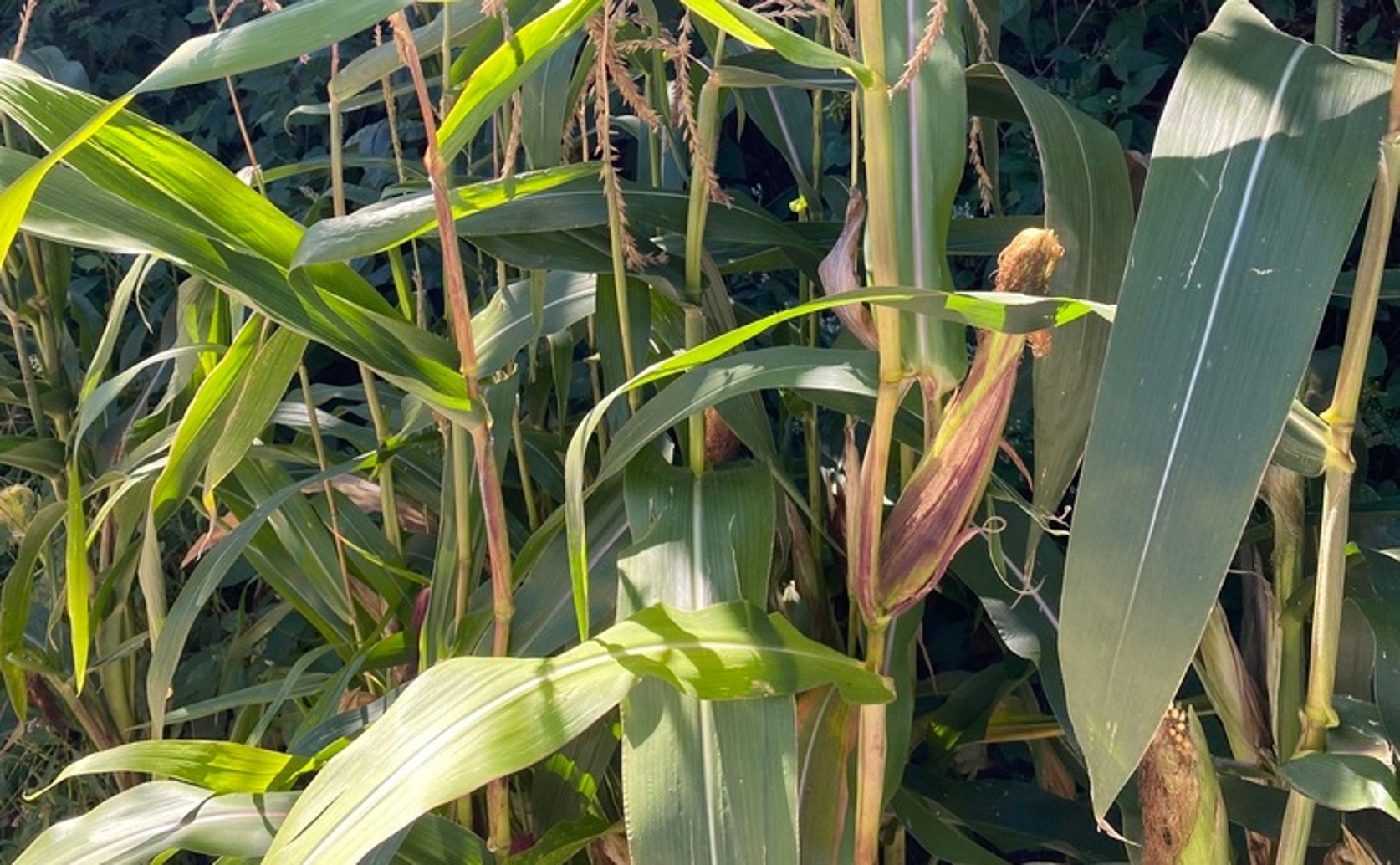
Maize (Zea mays)

Photo adapted from: Mason Heberling / CC BY (Source)

Key Findings

  • Research in Dharwad, India, revealed that precisely applying nitrogen to maize based on leaf greenness (SPAD) led to the highest yields, reaching over 9500 kg per hectare
  • Monitoring maize leaf greenness with a SPAD meter accurately predicts final grain yield across various growth stages and water conditions, making nitrogen use more efficient
  • This real-time nitrogen management strategy helps farmers reduce fertilizer waste, lower costs, and minimize environmental pollution, promoting sustainable agriculture
Feeding a global population projected to reach 9.8 billion by 2050 presents an immense challenge, particularly as humanity already relies on soils for 98.8% of its food[2]. This increasing demand places unprecedented pressure on agricultural systems, leading to the intensification of farming practices. However, current methods often result in the unsustainable degradation of soils, manifesting as loss of organic matter, erosion, contamination, and crucially, the over-application of fertilizers[2]. Such degradation diminishes the long-term capacity of soils to provide essential services, including future food production, and carries significant economic and environmental costs. It is therefore imperative that agricultural strategies move towards sustainable intensification, optimizing resource use to minimize environmental harm while maximizing yields. One key nutrient for crop growth is nitrogen, and its efficient management is vital for maximizing crop yield. Traditional approaches to nitrogen application can be inefficient, leading to wasted fertilizer, increased costs for farmers, and environmental pollution through runoff and greenhouse gas emissions. Precision agriculture offers a solution by tailoring nutrient application to the specific needs of the crop in real-time, minimizing waste and maximizing uptake. Recent research conducted by UAS, Dharwad, has explored the effectiveness of real-time monitoring tools for managing nitrogen in maize, a staple cereal crop used for food, feed, and biofuels[1]. This study focused on understanding how the greenness of maize leaves, an indicator of its nitrogen status, correlates with final grain yield under different water availability conditions. The research utilized two primary tools: the SPAD chlorophyll meter and the Green Seeker sensor. A SPAD chlorophyll meter is a hand-held device that measures the relative amount of chlorophyll in a plant leaf. Chlorophyll, the green pigment in plants, is crucial for photosynthesis and directly reflects the plant's nitrogen content. Green Seeker, on the other hand, is a type of canopy reflectance sensor. These sensors work by emitting light onto the plant canopy and measuring the light reflected back. The way light is reflected at different wavelengths provides information about the plant's health, biomass, and nutrient status, including nitrogen. The UAS, Dharwad study was conducted over two years (2020–2021) using a strip plot design, comparing maize growth under rainfed (relying solely on natural rainfall) and irrigated conditions. Eight different precision nitrogen management strategies were implemented. These strategies included applying nitrogen based on a "sufficiency index" measured by the SPAD meter, and a "response index" measured by the Green Seeker. A nitrogen sufficiency index means that fertilizer is applied to maintain the plant's nitrogen level at an optimal point, rather than applying a fixed amount. This approach ensures the plant has enough nitrogen without over-application. Similarly, a response index guides application based on how the plant is responding to existing nitrogen levels. The findings from this two-year study were significant. As expected, irrigated maize produced substantially higher grain yields (6347 kilograms per hectare) compared to rainfed maize (5262 kilograms per hectare). Crucially, the highest yield recorded (9508.2 kilograms per hectare) was achieved when nitrogen was applied to maintain a SPAD sufficiency index of 96–100%. This indicates that precise, real-time monitoring can lead to optimal yields. The study also investigated the relationship between SPAD readings and grain yield. It found a very strong correlation, particularly during the reproductive stages of maize growth (VT, or tasseling, and R4, or dough stage), under rainfed conditions, with high R² values of 0.99 and 0.98. An R² value close to 1 indicates a very strong relationship, meaning that the SPAD readings are highly predictive of the final yield. Under irrigated conditions, strong correlations (R² values ranging from 0.95 to 0.96) were observed across both earlier vegetative stages (V10, V12) and the reproductive stages (VT, R4). This suggests that SPAD-based monitoring is effective across various growth phases and water regimes. Multivariate analysis further identified specific critical growth stages where nitrogen management had the most impact on yield in both rainfed and irrigated environments. These findings align with and expand upon earlier research highlighting the potential of proximal sensing tools like chlorophyll meters and canopy reflectance sensors for optimizing crop nitrogen status in cereals[3]. Previous studies have shown that these tools can increase fertilizer nitrogen use efficiency by reducing the overall amount of nitrogen applied[3]. For instance, research on rice nitrogen diagnosis using sensors like RapidSCAN also demonstrated the effectiveness of calculating a nitrogen sufficiency index for precision management, contributing to sustainable intensification of agriculture[4]. The UAS, Dharwad study provides concrete, robust data for maize, a crop for which fewer detailed studies existed, especially concerning the combined use of SPAD and Green Seeker under varying water conditions. The implications of this research are profound. By providing a clear methodology for SPAD-based nitrogen management, the study offers a practical pathway to enhance maize yields while simultaneously improving resource efficiency. This directly addresses the critical need to reduce the over-application of fertilizers, a major contributor to soil degradation and environmental harm[2]. The ability to precisely apply nitrogen based on real-time plant needs means less waste, lower costs for farmers, and a reduced environmental footprint. Furthermore, the strong correlations found between SPAD readings and yield lay the groundwork for developing more sophisticated, automated monitoring tools for real-time crop management, moving agriculture towards a more sustainable and equitable future. This research underscores the importance of considering soil health and efficient resource use as integral components of the broader Water-Food-Energy nexus, advocating for its expansion to a Water-Soil-Food-Energy nexus[2].

AgricultureSustainabilityPlant Science

References

Main Study

1) SPAD dynamics in maize crop with precision nitrogen management under rain-fed and irrigated conditions

Published 2nd July, 2025

https://doi.org/10.1038/s41598-025-05255-y


Related Studies

2) Soil and the intensification of agriculture for global food security.

https://doi.org/10.1016/j.envint.2019.105078


3) Using Hand-Held Chlorophyll Meters and Canopy Reflectance Sensors for Fertilizer Nitrogen Management in Cereals in Small Farms in Developing Countries.

https://doi.org/10.3390/s20041127


4) Evaluating different approaches to non-destructive nitrogen status diagnosis of rice using portable RapidSCAN active canopy sensor.

https://doi.org/10.1038/s41598-017-14597-1


Related Articles

An unhandled error has occurred. Reload 🗙