How Farming Spread in the Western Mediterranean Using Machine Learning

Greg Howard
16th January, 2025

How Farming Spread in the Western Mediterranean Using Machine Learning

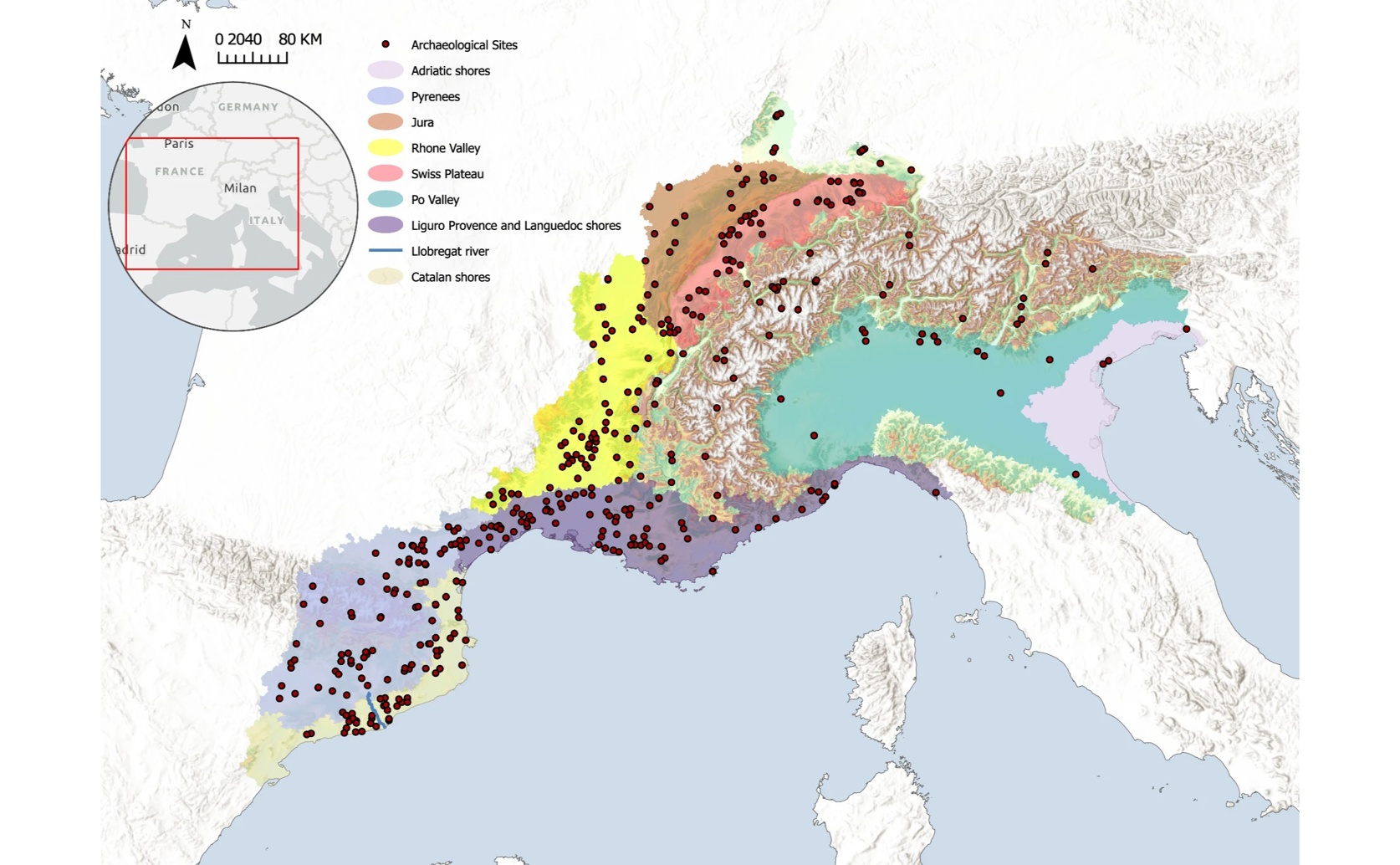
The study analyzes numerous Neolithic archaeological sites across the ecologically diverse Western Mediterranean to model how environmental and climatic factors influenced the spread of early agriculture.

Image adapted from: Castiello et al. / CC BY (Source)

Key Findings

  • The study by the University of Lausanne examined how environmental and climatic factors influenced early Neolithic farming in the Western Mediterranean
  • Researchers found that climate variability significantly affected where early farmers settled and how they distributed their crops
  • Different types of crop cultivation were identified, showing how early farmers adapted their practices to changing climatic conditions
The arrival of the first Neolithic farmers in the Western Mediterranean from the East marked a significant shift in human settlement and agricultural practices. These early farmers established coastal settlements and eventually migrated to new environments, adapting to various ecological and climatic conditions. A recent study conducted by the University of Lausanne[1] aims to understand the extent to which environmental and climatic factors influenced these early farming practices and settlement patterns. The study compiled data from multiple sources, including archaeobotanical information, radiocarbon dates, and paleoclimatic models. By applying a machine learning approach, the researchers investigated the impact of ecological and climatic constraints on the first Neolithic humans and their crops. This innovative approach allowed the researchers to calculate the pace of farming spread in the Western Mediterranean, model potential settlement areas, and identify distinct types of crop cultivation under varying climatic conditions from 5900 to 2300 cal. BC. One of the significant findings of this study is the identification of sensitive parameters for successful agricultural practices. The researchers found that climate variability had a considerable influence on human distribution and settlement locations. By analyzing the data, they were able to discriminate between different types of crop cultivation that were adapted to the changing climatic conditions of the period. This study builds on previous research that has explored various aspects of early farming practices in Europe. For instance, earlier studies have shown that insect pests significantly affected standing and stored crops, leading to considerable yield reductions[2]. Early farmers were aware of these damages and implemented various strategies to manage pests, including the use of repellent or trap plants. This awareness and management of pests likely played a role in the successful establishment of Neolithic farming communities in the Western Mediterranean. Additionally, the domestication and spread of crops such as the opium poppy (Papaver somniferum) have been studied extensively. Research has shown that the opium poppy was likely domesticated in the Western Mediterranean and spread to central and northern Europe[3]. This process of domestication and spread was complex, involving mixed populations of wild and domestic seeds. The new study sheds light on how climatic conditions may have influenced the spread and cultivation of such crops, providing a more comprehensive understanding of early agricultural practices. The findings of this study also align with research on the early diffusion of the opium poppy, which suggests that the plant was present in the Mediterranean from at least the middle of the sixth millennium BCE[4]. The early introduction and cultivation of opium poppy in the Western Mediterranean and its subsequent spread to other regions highlight the adaptability and resilience of early farming communities in the face of changing environmental conditions. In summary, the recent study by the University of Lausanne provides valuable insights into the role of ecological and climatic factors in shaping the agricultural practices and settlement patterns of the first Neolithic farmers in the Western Mediterranean. By integrating data from multiple sources and applying advanced analytical techniques, the researchers have enhanced our understanding of how early farming communities adapted to their environments and successfully established themselves in new regions. This study not only contributes to our knowledge of Neolithic farming practices but also highlights the importance of considering environmental and climatic factors in the study of early human history.

AgricultureEnvironmentSustainability

References

Main Study

1) Understanding the spread of agriculture in the Western Mediterranean (6th-3rd millennia BC) with Machine Learning tools.

Published 15th January, 2025

https://doi.org/10.1038/s41467-024-55541-y


Related Studies

2) Insect Pests of Pulse Crops and their Management in Neolithic Europe.

https://doi.org/10.1080/14614103.2020.1713602


3) A morphometric approach to track opium poppy domestication.

https://doi.org/10.1038/s41598-021-88964-4


4) Direct dating reveals the early history of opium poppy in western Europe.

https://doi.org/10.1038/s41598-020-76924-3


Related Articles

An unhandled error has occurred. Reload 🗙