Immune Stress Markers Reveal Distinct Patterns in Malaria and Typhoid Patients

Greg Howard
2nd March, 2025

Immune Stress Markers Reveal Distinct Patterns in Malaria and Typhoid Patients

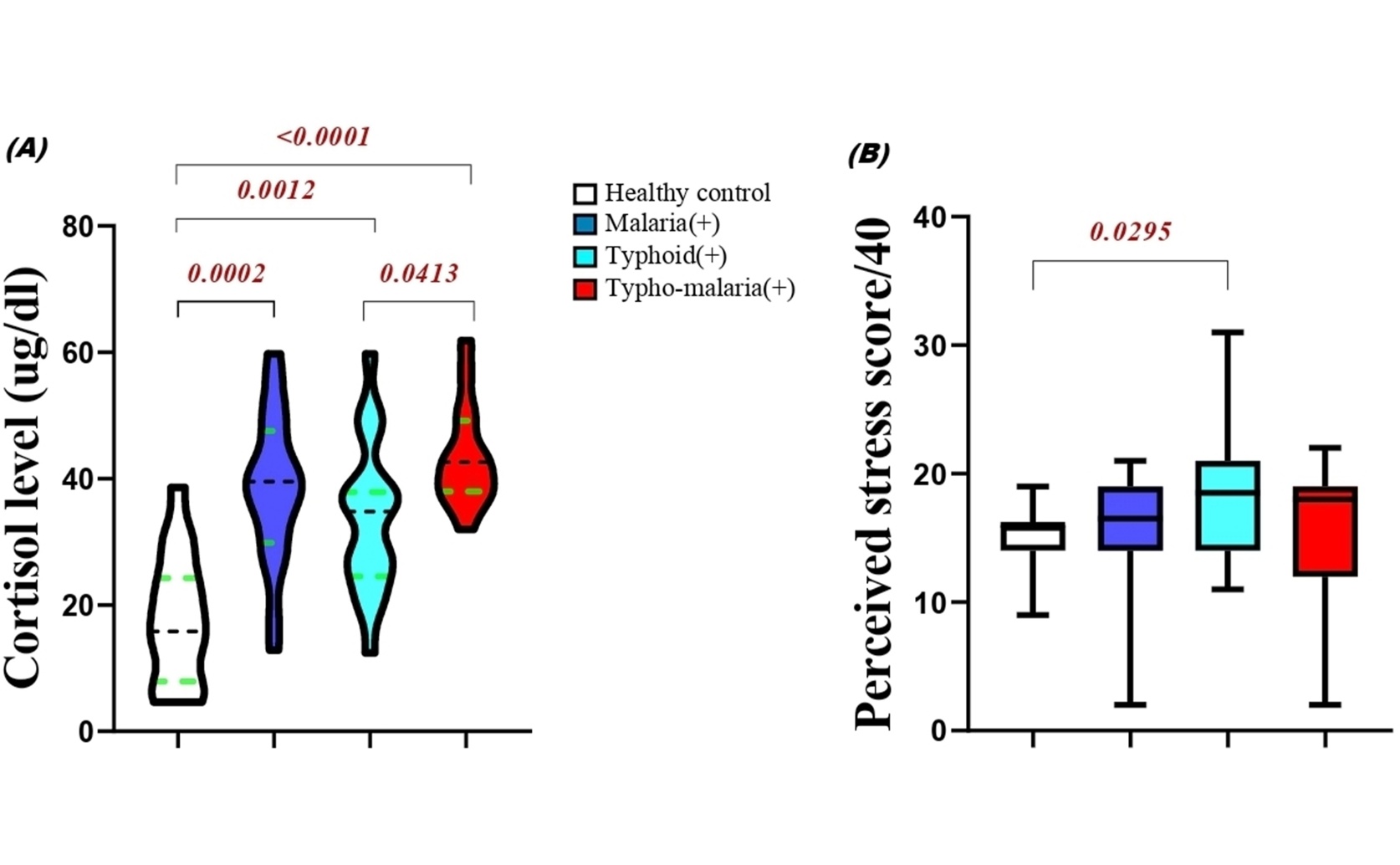
Comparison of cortisol levels (A) and perceived stress score (B) in the study groups.

Image adapted from: Eric et al. / CC BY (Source)

Key Findings

  • In Cameroon, patients with both malaria and typhoid have over twice the stress hormone levels compared to healthy individuals
  • These co-infected patients also show higher levels of inflammation markers, making the illnesses harder to combat
  • Managing stress may help improve immune responses and treatment outcomes for those suffering from both diseases
Malaria and typhoid fever are two of the most pressing infectious diseases affecting millions worldwide, particularly in regions like Cameroon. Both diseases can lead to severe health complications and even death if not properly managed. Understanding how the body responds to these infections, especially the role of stress and inflammation, is crucial for developing better treatment strategies. A recent study conducted by researchers at the University of Yaoundé 1 in Cameroon[1] explored the immune responses in patients suffering from malaria, typhoid fever, or both. The researchers aimed to shed light on how stress-related inflammatory markers influence the body’s ability to fight these infections. The study involved 55 patients diagnosed with malaria and/or typhoid fever who sought treatment at the Obala District Hospital in Yaoundé. Additionally, 15 healthy individuals served as a control group. Blood samples were taken from all participants to measure levels of cortisol, a hormone associated with stress, and various inflammatory cytokines using specialized laboratory techniques called ELISA kits. To assess the psychological stress experienced by the patients over the past month, the researchers used a questionnaire known as the Perceived Stress Scale (PSS). One of the key findings was that cortisol levels were significantly higher in all patient groups compared to the healthy controls. This increase was most pronounced in patients co-infected with both malaria and typhoid fever, showing a 2.5-fold rise in cortisol levels. Elevated cortisol indicates that the body is under significant stress, which can impact immune function. Cytokines are proteins that play a vital role in the immune system by signaling between cells. The study found that certain cytokines, including IL-1β, IL-2, TNF-α, and IFN-γ, were elevated in patients with both malaria and typhoid fever. Specifically, IL-6 levels were notably higher in co-infected patients, while IL-10 levels were reduced compared to those with only one infection. The ratio of TNF-α to IL-10 was also significantly higher in the co-infected group, suggesting a more intense inflammatory response. These findings align with earlier research indicating that inflammatory cytokines are crucial in the body’s response to malaria. A systematic review and meta-analysis[2] highlighted that higher levels of IL-6 are associated with severe malaria, making it a potential marker for the disease’s severity. Additionally, another study[3] emphasized the complexity of cytokine responses in malaria, especially when co-infections are present. The current study builds on this by showing how co-infections with typhoid fever further alter cytokine profiles, potentially complicating the immune response. The research also explored the relationship between psychological stress and immune response. Higher perceived stress scores were correlated with increased levels of certain cytokines like IL-2, IFN-γ, and IL-6 in co-infected patients. This suggests that stress may exacerbate the inflammatory response, potentially hindering the body’s ability to effectively combat the infections. Interestingly, while IL-4 and IL-10 are generally considered anti-inflammatory, their levels did not show significant correlations with stress in co-infected individuals, except for IL-6. Understanding the interplay between stress and immune response is essential. Previous studies have shown that stress can influence the production of cytokines[4], which are critical in managing infections. By demonstrating a link between stress and heightened inflammatory responses in malaria and typhoid fever, this study highlights the need for comprehensive treatment approaches that address both physical and psychological aspects of illness. The researchers used a robust methodology to ensure the reliability of their findings. By measuring both hormonal and cytokine levels alongside assessing psychological stress, they provided a comprehensive view of the patients' health. The use of ELISA kits allowed for precise quantification of the immune markers, while the PSS questionnaire offered insights into the patients' mental state. One limitation of the study was the high variability in cytokine levels among participants, which is common in such research due to individual differences in immune responses. Despite this, the significant trends observed provide valuable information for future studies and potential clinical applications. The study suggests that managing stress could be an important component in treating patients with malaria and typhoid fever. By reducing stress, it may be possible to modulate the immune response, potentially leading to better health outcomes. Furthermore, the elevated cytokine levels in co-infected patients indicate that these individuals may require more intensive monitoring and treatment to manage the heightened inflammatory response. Future research should focus on exploring the sensitivity and specificity of cytokine levels as biomarkers for disease severity and treatment efficacy. Additionally, investigating interventions that can reduce stress among infected patients might offer new avenues for enhancing immune function and recovery. In conclusion, the study from the University of Yaoundé 1 provides significant insights into how stress and immune responses interact in the context of malaria and typhoid fever. By building on previous research[2][3], it underscores the importance of a holistic approach to managing these diseases, considering both biological and psychological factors. This comprehensive understanding could pave the way for more effective treatments and better health outcomes for those affected by these debilitating infections.

MedicineHealthBiochem

References

Main Study

1) Stress-mediating inflammatory cytokine profiling reveals unique patterns in malaria and typhoid fever patients

Published 27th February, 2025

https://doi.org/10.1371/journal.pone.0306585


Related Studies

2) Increased interleukin-6 levels associated with malaria infection and disease severity: a systematic review and meta-analysis.

https://doi.org/10.1038/s41598-022-09848-9


3) Distinct cytokine profiles in malaria coinfections: A systematic review.

https://doi.org/10.1371/journal.pntd.0011061


4) TNF-mediated inflammatory disease.

Journal: The Journal of pathology, Issue: Vol 214, Issue 2, Jan 2008


Related Articles

An unhandled error has occurred. Reload 🗙