Cell Wall Changes and Bubble Formation Linked in Tuberculosis Bacteria

Jenn Hoskins
18th February, 2025

Cell Wall Changes and Bubble Formation Linked in Tuberculosis Bacteria

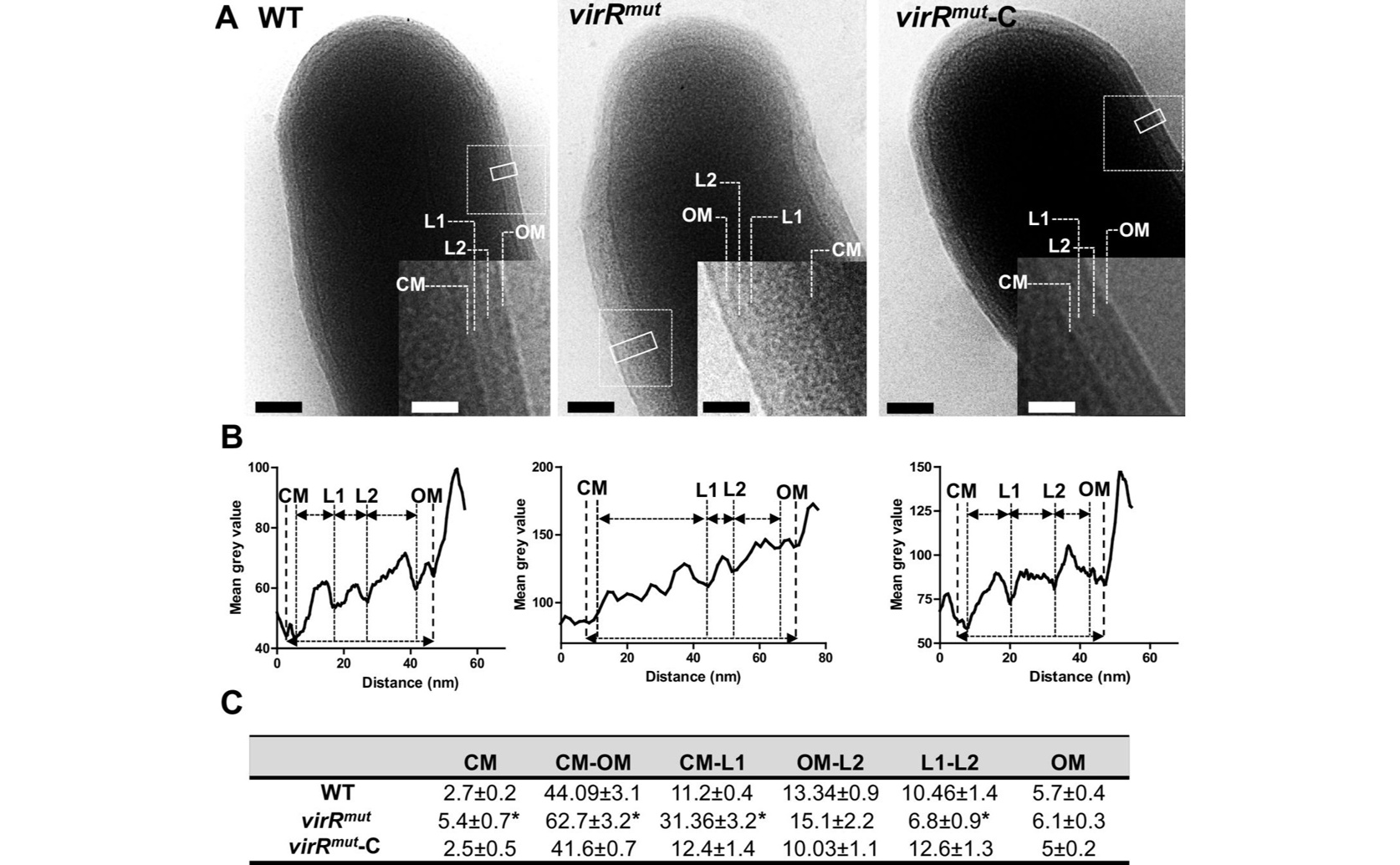
Cryo-electron microscopy reveals that the absence of the VirR protein in Mycobacterium tuberculosis causes a significant thickening of the cell envelope (a–c), a structural defect linked to the increased production of extracellular vesicles that is central to this study.

Image adapted from: Salgueiro-Toledo et al. / CC BY (Source)

Key Findings

  • Researchers at Universidad Autónoma de Madrid discovered that disrupting the VirR gene weakens tuberculosis bacteria and reduces its ability to cause disease
  • The altered bacteria release more tiny particles that interfere with the immune system, helping them evade immune attacks
  • These findings highlight new targets for developing treatments that can better fight tuberculosis by weakening the bacteria’s defenses
Tuberculosis, caused by the bacterium Mycobacterium tuberculosis (Mtb), remains a major global health challenge. Understanding how Mtb interacts with the host's immune system is crucial for developing better treatments. A recent study conducted by researchers at Universidad Autónoma de Madrid[1] sheds light on the mechanisms Mtb uses to survive and evade the immune response. Mtb survives inside the lungs by infecting macrophages, a type of immune cell responsible for engulfing and destroying pathogens. To evade the immune system, Mtb releases molecules that interfere with the normal functions of these macrophages. Previous research has shown that Mtb releases extracellular vesicles (EVs), which are small particles that can carry bacterial components to other cells, potentially disrupting immune responses[2]. Additionally, it was found that these vesicles can inhibit the activation of CD4+ T cells, which are vital for orchestrating the immune response, by transferring bacterial molecules that induce a state of non-responsiveness in these T cells[3]. The main study aimed to delve deeper into how Mtb produces these EVs and the role of a specific gene, virR, in this process. VirR is related to another gene, cei, which was previously identified as important for maintaining the integrity of Mtb's cell envelope—the protective outer layer of the bacterium[4]. The researchers created a mutant strain of Mtb where the virR gene was disrupted. This mutant strain exhibited a weakened ability to cause disease in mice and showed increased release of EVs compared to the normal bacteria. Using a combination of genetic analysis, protein profiling, microscopy, and biochemical techniques, the team discovered that VirR plays a crucial role in maintaining the proper structure and permeability of Mtb's cell envelope. When VirR is not functioning correctly, the cell envelope becomes compromised, leading to increased release of EVs. These vesicles carry bacterial molecules that can interfere with the host's immune cells, aiding the bacterium in evading the immune response. The study also highlighted that VirR likely interacts with other proteins involved in linking key components of the cell envelope, such as peptidoglycan and arabinogalactan. This interaction is essential for maintaining the strength and integrity of the cell envelope, which is vital for the bacterium's survival and virulence. By uncovering the role of VirR in EV production and cell envelope maintenance, the research provides new insights into how Mtb adapts and survives within the host. This knowledge opens up potential avenues for developing therapies that target these mechanisms, potentially weakening the bacterium and making it more susceptible to the immune system and existing antibiotics. Furthermore, the findings build upon previous studies by demonstrating that disrupting specific genes involved in cell envelope integrity can significantly affect the bacterium's ability to produce EVs and cause disease[2][3][4]. This integrative approach underscores the complex interplay between bacterial genetics and host immune responses in tuberculosis infection. In conclusion, the study from Universidad Autónoma de Madrid advances our understanding of Mtb's strategies for immune evasion by elucidating the role of the VirR gene in maintaining cell envelope integrity and regulating the production of extracellular vesicles. Targeting such bacterial mechanisms holds promise for developing more effective treatments against tuberculosis.

MedicineHealthBiochem

References

Main Study

1) Maintenance of cell wall remodeling and vesicle production are connected in Mycobacterium tuberculosis.

Published 17th February, 2025

https://doi.org/10.7554/eLife.94982


Related Studies

2) Bacterial Membrane Vesicles Mediate the Release of Mycobacterium tuberculosis Lipoglycans and Lipoproteins from Infected Macrophages.

https://doi.org/10.4049/jimmunol.1402894


3) Mycobacterium tuberculosis Membrane Vesicles Inhibit T Cell Activation.

https://doi.org/10.4049/jimmunol.1601199


4) Mycobacterium tuberculosis Rv2700 Contributes to Cell Envelope Integrity and Virulence.

https://doi.org/10.1128/JB.00228-19


Related Articles

An unhandled error has occurred. Reload 🗙