Evaluating Antiviral and Antioxidant Effects of Natural Compounds on COVID-19

Jim Crocker
30th November, 2024

Evaluating Antiviral and Antioxidant Effects of Natural Compounds on COVID-19

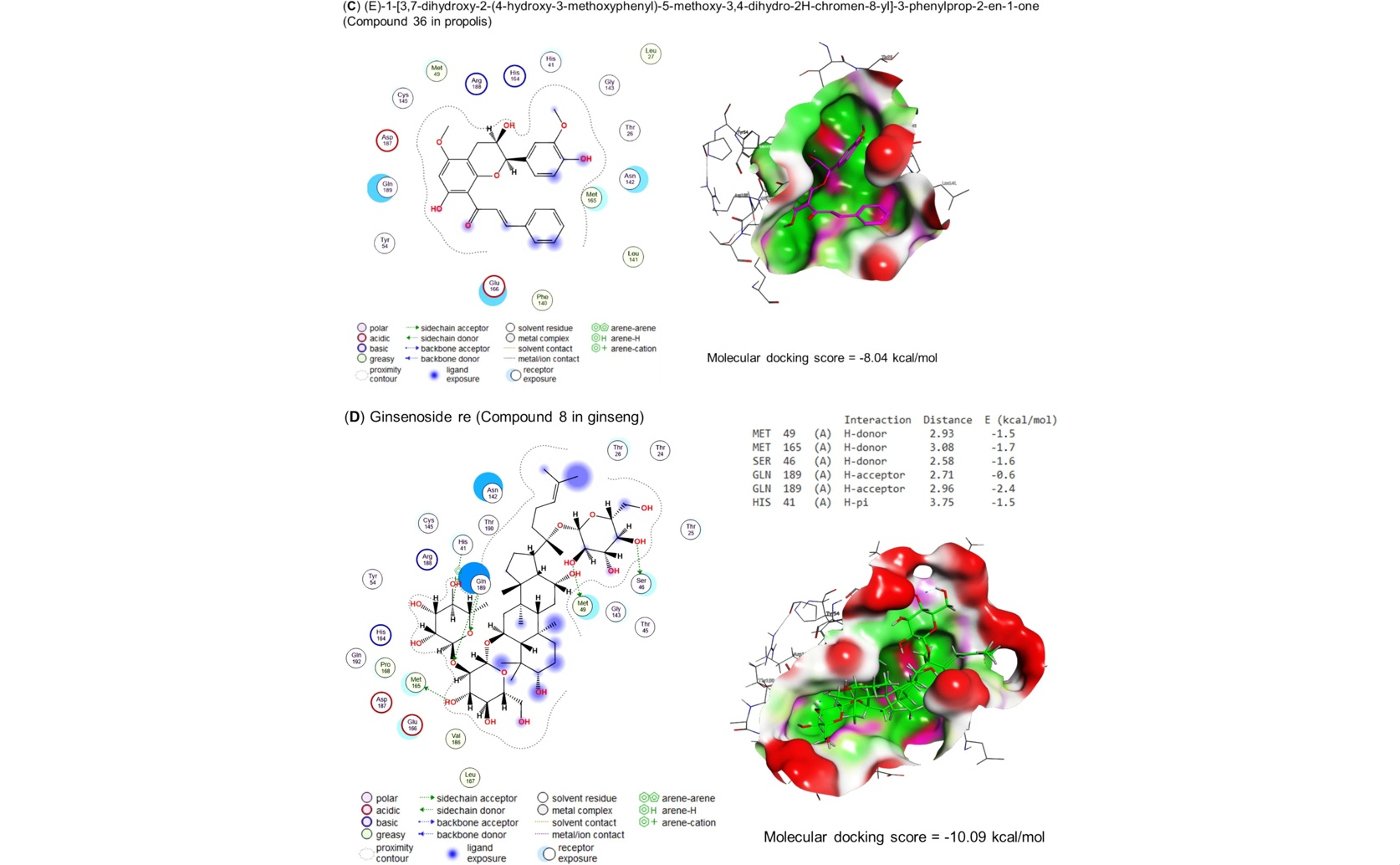
Molecular docking simulations support the study's antiviral findings by predicting that all four compounds (a–d) can effectively bind to the SARS-CoV-2 main protease, a key enzyme for viral replication, with ginseng demonstrating the strongest potential for inhibition.

Image adapted from: balawi et al. / CC BY (Source)

Key Findings

  • The University of Tabuk study found that natural compounds like propolis, curcumin, quercetin, and ginseng can inhibit SARS-CoV-2
  • These compounds were non-toxic to cells and showed strong antiviral activity by reducing virus replication
  • Propolis exhibited the highest antioxidant activity, enhancing its potential as a potent natural antiviral agent
The COVID-19 pandemic has underscored the critical need for effective preventive and therapeutic drugs to combat viral diseases. The University of Tabuk recently conducted a study[1] to assess the antiviral effects of four natural compounds—propolis, curcumin, quercetin, and ginseng—commonly used in traditional medicine to treat SARS-CoV-2 infection. This study builds on earlier research that highlights the potential of natural products in managing viral infections and modulating immune responses[2][3][4][5]. The study employed several assays, including cytotoxicity, dose-dependent, and plaque reduction assays, to evaluate the effects of these compounds on Vero CCL-81 cells. The cytotoxicity assay results indicated that the compounds were well tolerated by the cells, confirming their non-toxic nature. Quantification of cytokines was also performed to understand the immune response modulation by these compounds. Additionally, in silico analysis was used to evaluate the molecular interactions of the compounds with viral proteins. The findings revealed that these natural compounds could disrupt the viral replication cycle either by directly inhibiting the virus or by stimulating the immune system. For instance, propolis exhibited the highest antioxidant activity among the tested compounds, as demonstrated by ABTS, FRAP, and CUPRAC assays. These assays measure the antioxidant capacity of substances, with propolis showing significant values—1250.40 ± 17.10 μmol Trolox eq/g for ABTS, 1200.55 ± 15.90 μmol Fe2⁺ eq/g for FRAP, and 1150.80 ± 14.20 μmol Trolox eq/g for CUPRAC at 1000 µg/mL. This high antioxidant activity highlights propolis's potential as a potent natural antioxidant. The plaque reduction assay results further supported the antiviral potential of these compounds. The assay showed a reduction in the size and number of plaques, indicating that the compounds could inhibit the virus replication cycle. This is particularly significant as it aligns with previous findings that natural products can modulate immune responses and exhibit antiviral properties[2][3][4][5]. Molecular docking analysis was also performed to understand the mechanism behind the antiviral effects of these compounds. The analysis revealed that propolis, curcumin, quercetin, and ginseng likely inhibit the protease activity, spike protein S1, and RNA polymerase of SARS-CoV-2. Notably, propolis was found to reduce the virus titer by 100% after post-infection, indicating its strong antiviral potential. These findings are consistent with earlier studies that have explored the antiviral and immunomodulatory properties of natural products. For example, polyphenols have been shown to block the binding of SARS-CoV-2 spike protein to the host cell receptor ACE2, thereby preventing viral entry and replication[2]. Similarly, ginseng has been reported to alleviate pro-inflammatory chemokines and cytokines, which are crucial in managing respiratory infections[4]. Bee products, including propolis, have also been recognized for their antiviral activities and potential as alternative therapies against viral infections[5]. The University of Tabuk study adds to the growing body of evidence supporting the use of natural compounds in combating viral infections. By demonstrating the antiviral effects of propolis, curcumin, quercetin, and ginseng, this study highlights the potential of these compounds as preventive and therapeutic agents against SARS-CoV-2. The findings also emphasize the importance of further research to explore the efficacy and safety of these natural products in clinical settings. In conclusion, the study underscores the potential of natural compounds in treating and preventing viral infections. By leveraging the antiviral and immunomodulatory properties of propolis, curcumin, quercetin, and ginseng, it is possible to develop effective strategies to mitigate the impact of emerging viral diseases. This research paves the way for future studies to validate these findings and explore the clinical applications of these natural compounds in managing viral infections.

MedicineHealthBiochem

References

Main Study

1) Assessing multi-target antiviral and antioxidant activities of natural compounds against SARS-CoV-2: an integrated in vitro and in silico study.

Published 27th November, 2024

https://doi.org/10.1186/s40643-024-00822-z


Related Studies

2) Natural Immunomodulators Treat the Cytokine Storm in SARS-CoV-2.

https://doi.org/10.34172/apb.2023.006


3) Can natural products modulate cytokine storm in SARS-CoV2 patients?

https://doi.org/10.1016/j.btre.2022.e00749


4) Pharmacological Efficacy of Ginseng against Respiratory Tract Infections.

https://doi.org/10.3390/molecules26134095


5) General Nutritional Profile of Bee Products and Their Potential Antiviral Properties against Mammalian Viruses.

https://doi.org/10.3390/nu14173579


Related Articles

An unhandled error has occurred. Reload 🗙