Gut bacteria differences linked to malaria infection risk in wild birds

Greg Howard
17th February, 2026

Gut bacteria differences linked to malaria infection risk in wild birds

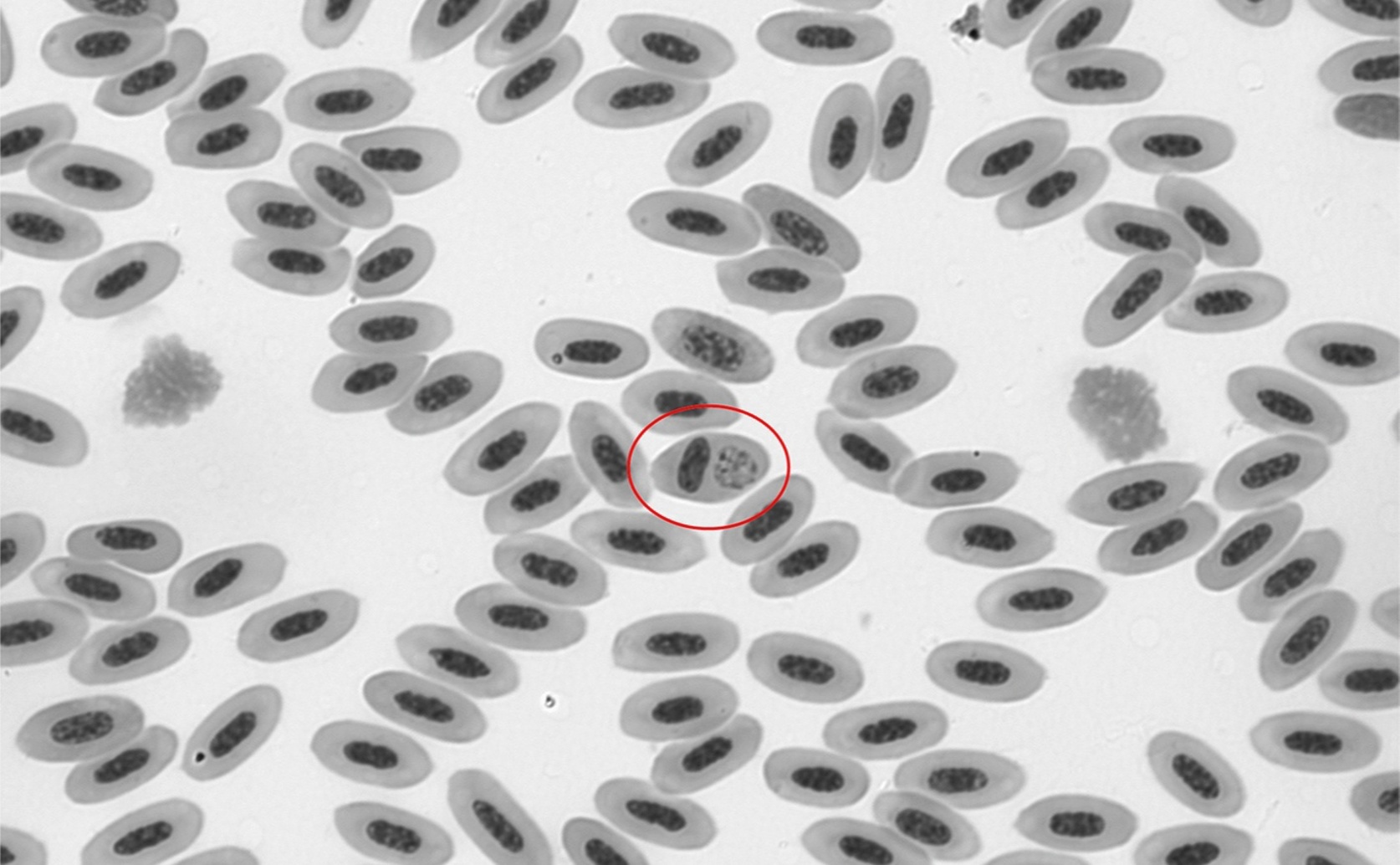
This microscopic view confirms infection by the avian malaria parasite, Plasmodium relictum GRW04, in the red blood cells of an Oregon Junco, which formed the basis for comparing the gut microbiomes of infected and uninfected birds.

Image adapted from: Amaya-Mejia et al. / CC BY (Source)

Key Findings

  • In wild Juncos, malaria infection was linked to changes in gut bacteria composition
  • Infected birds showed reduced diversity in their gut microbiota, a sign of potential gut imbalance
  • Several specific bacterial groups, including Muribaculaceae and Acidobacteriales, were less common in infected birds, suggesting the parasite impacts these bacteria
The gut microbiota – the community of microorganisms living in the digestive tract – plays a crucial role in host health, influencing everything from nutrient absorption to immune function. Understanding how this community interacts with infections, particularly parasitic ones, is vital for developing effective preventative and treatment strategies. Parasites can disrupt the delicate balance of the gut microbiota, but the precise nature of these changes and their consequences are often unclear. A recent study conducted by researchers at UCLA and San Francisco State University[1] investigated the gut microbiota of wild birds infected with the malaria parasite Plasmodium relictum to determine if infection alters the bacterial community composition. The study focused on the Oregon Junco, a common bird species. Researchers compared the gut bacteria of eight infected birds with those of eight uninfected birds. The analysis revealed a significant difference in the diversity of the gut microbiota between the two groups. Specifically, infected birds exhibited lower alpha diversity, meaning they had fewer different types of bacteria present in their gut compared to their healthy counterparts. This reduction in diversity is often considered a hallmark of an unhealthy gut, a state known as dysbiosis. Further analysis, using beta diversity metrics, showed that the changes in bacterial composition weren't due to a few dominant species shifting, but rather a turnover in the abundance of rare bacterial taxa. Several specific bacterial groups were found to be less abundant in infected birds, including Muribaculaceae, Acidobacteriales, Pseudomonas, and Escherichia-Shingella. These findings suggest that the parasite specifically targets or indirectly impacts these bacterial groups. To understand how these changes affect the overall structure of the gut community, the researchers examined co-occurrence networks. These networks illustrate the relationships between different bacterial species – which species tend to occur together and which do not. The microbiota of infected birds showed fewer connections within the network and lacked key hub taxa – bacterial species that have many connections and play a central role in maintaining community structure. This simplification of the network suggests that the gut community in infected birds is less resilient and potentially more vulnerable to further disruption. These results align with the broader understanding of the Bacteroidetes phylum's role in animal gut health[2]. Bacteroidetes are known for their ability to degrade complex carbohydrates and proteins, and their genomes are highly adaptable, often acquiring new genes through lateral gene transfer to better process the diet. A less diverse microbiota, as seen in the infected birds, might indicate a reduced capacity to efficiently process food and extract nutrients. The study’s finding of compositional turnover among rare taxa is also noteworthy, as these less-studied bacteria could play important roles in gut function. The impact of gut microbiota on host energy metabolism is also relevant here[3]. The fermentation of dietary fibers by gut bacteria produces short-chain fatty acids (SCFAs), which have numerous beneficial effects on the host. A disrupted microbiota, with reduced diversity and altered composition, could lead to decreased SCFA production, potentially impacting the bird’s energy levels and overall health. Interestingly, the study's findings also relate to the benefits observed with probiotic supplementation in poultry[4]. The pre-encapsulation method used in that study improved the survival and function of probiotics, leading to positive effects on growth, antioxidant activity, and immune function. The parasite-mediated changes observed in the Junco microbiota could be seen as the opposite of these beneficial effects – a disruption of the gut community that weakens the host’s defenses. While the current study doesn't directly identify the mechanisms driving these changes, the observed patterns strongly suggest that Plasmodium relictum actively alters the gut microbiota composition, potentially leading to dysbiosis. Further research is needed to determine whether these changes correlate with specific alterations in gut microbiota functions and whether they contribute to detrimental effects on the host’s health. Understanding these links could pave the way for targeted interventions, such as dietary modifications or probiotic supplementation, to mitigate the negative impacts of parasitic infections.

HealthGeneticsEcology

References

Main Study

1) Microbial community composition variation in relation to malaria infections in Junco hyemalis

Published 13th February, 2026

https://doi.org/10.1371/journal.pone.0340635


Related Studies

2) Environmental and gut bacteroidetes: the food connection.

https://doi.org/10.3389/fmicb.2011.00093


3) The role of short-chain fatty acids in the interplay between diet, gut microbiota, and host energy metabolism.

https://doi.org/10.1194/jlr.R036012


4) Effects of pre-encapsulated and pro-encapsulated Enterococcus faecalis on growth performance, blood characteristics, and cecal microflora in broiler chickens.

https://doi.org/10.3382/ps/pev262


Related Articles

An unhandled error has occurred. Reload 🗙