
Retrotransposed DNA sequences in Psalidodon fishes drive genome evolution
Jenn Hoskins
3rd January, 2026


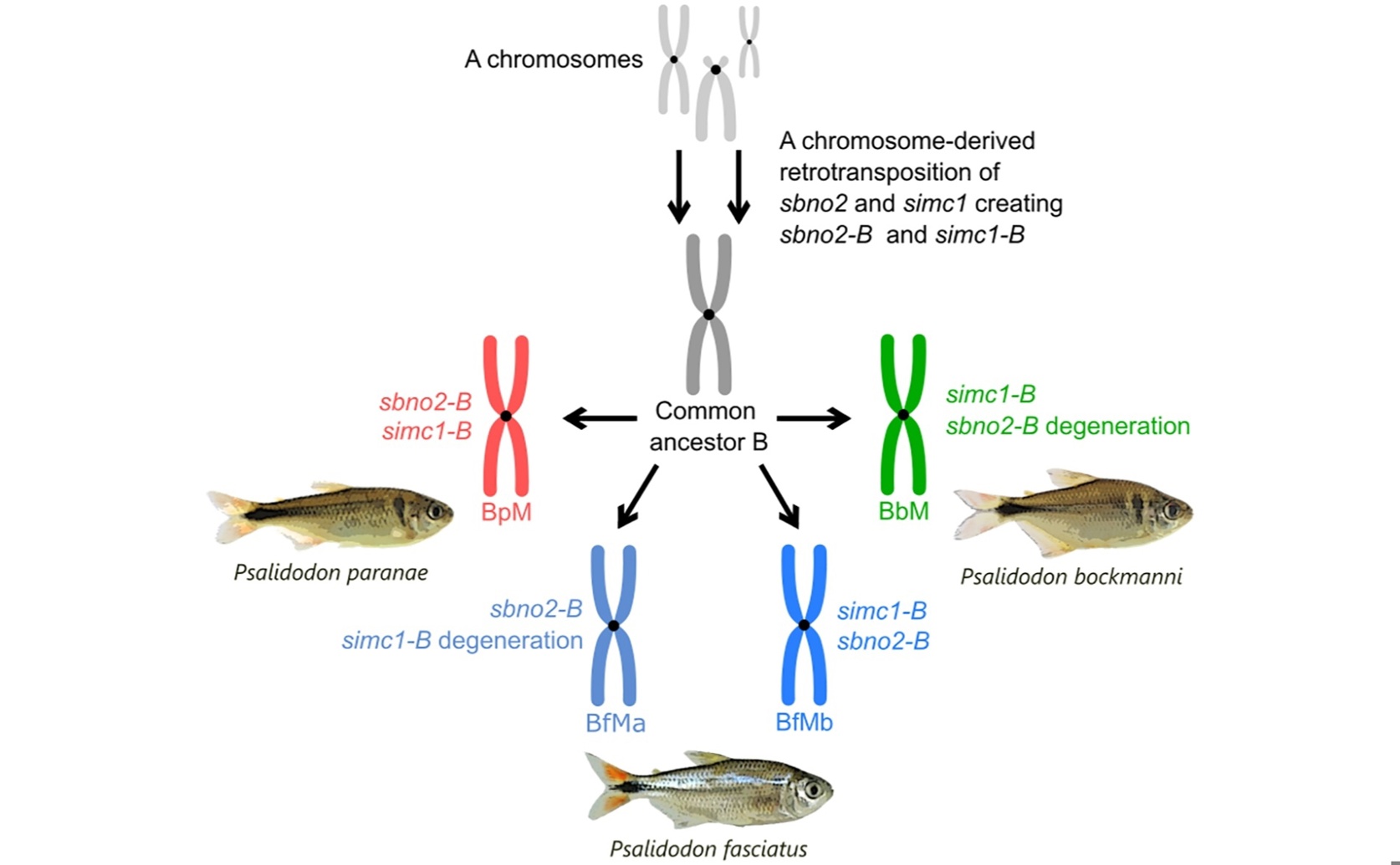
The proposed evolutionary history from the study suggests the sbno2-B and simc1-B pseudogenes were acquired on a common ancestral B chromosome in the fish genus Psalidodon and maintained through speciation, followed by independent loss in two separate lineages.
Key Findings
- Psalidodon fish species carry extra chromosomes, called B chromosomes, which contain fragmented copies of genes from their regular chromosomes
- These gene fragments, called pseudogenes (sbno2-B and simc1-B), originated from a common ancestor and have been maintained across different Psalidodon species
- The presence of one B chromosome reduces the expression of the original sbno2 and simc1 genes, potentially helping the B chromosome to be inherited across generations
References
Main Study
1) B chromosome retrotransposed sequences persist through speciation, contributing to genomic and regulatory innovations in the fish genus Psalidodon (Characiformes, Acestrorhamphidae)
Published 2nd January, 2026
https://doi.org/10.1371/journal.pone.0340085
Related Studies
2) B Chromosomes - A Matter of Chromosome Drive.
3) Selfish genetic elements, genetic conflict, and evolutionary innovation.
4) The life history of retrocopies illuminates the evolution of new mammalian genes.
5) Burst of young retrogenes and independent retrogene formation in mammals.
Related Articles
 16th April, 2024 | Greg Howard