
Tracking Sandfly Spread and Evolution with Climate and Genetic Tools
Jim Crocker
28th March, 2025


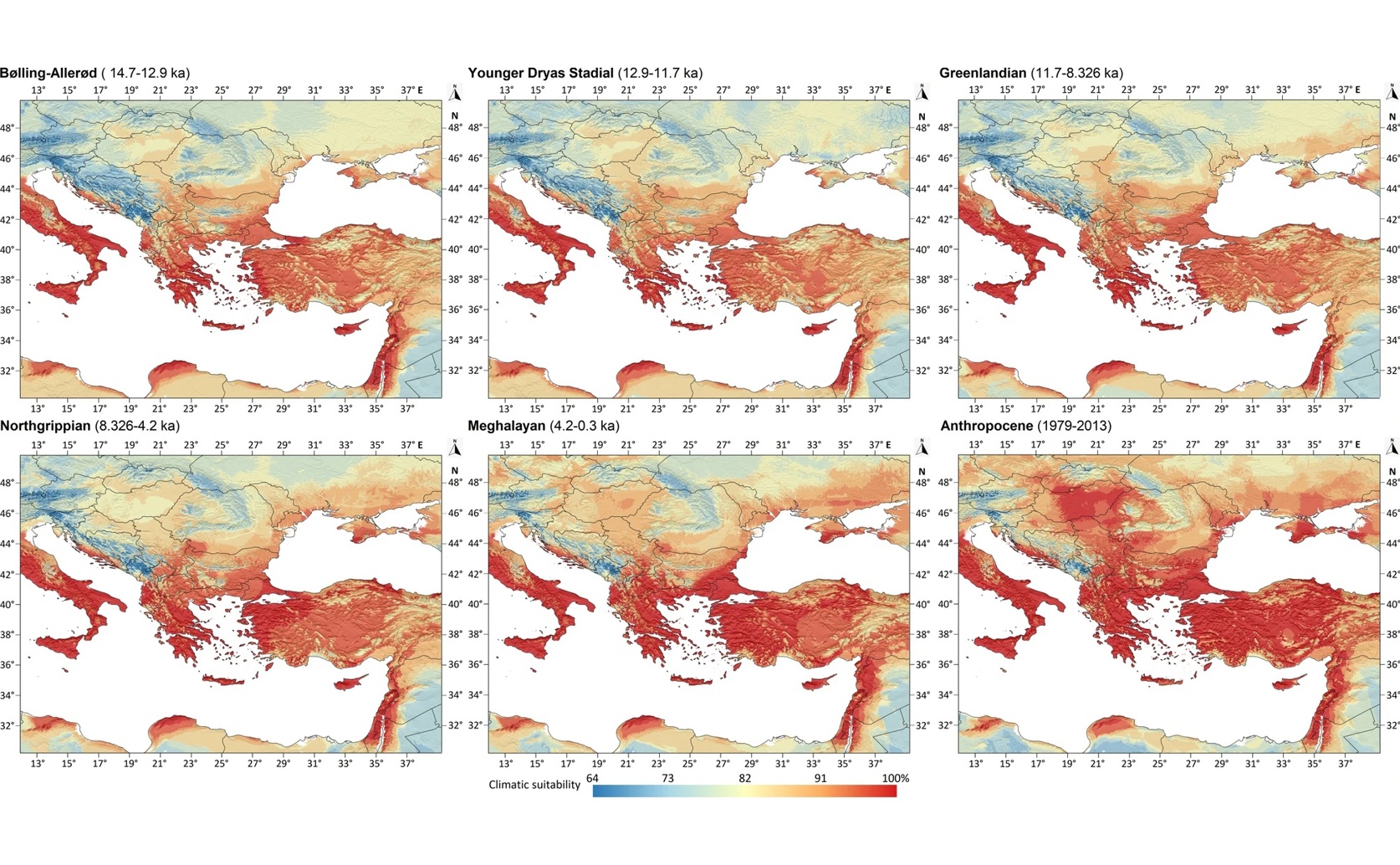
Climate models support a recent post-glacial expansion for the sand fly Phlebotomus simici, showing its suitable habitat remained largely restricted after the last ice age before expanding significantly northward through the Holocene and into the current Anthropocene era.
Key Findings
- In Austria, researchers identified three distinct genetic groups of Phlebotomus simici sand flies, highlighting their adaptability to different climates
- These separate lineages demonstrate that Ph. simici is expanding into new regions previously considered unsuitable for their presence
- Climate models predict further spread of these sand flies, raising concerns for the potential increase in leishmaniasis cases
References
Main Study
1) Combining phylogeography and climate models to track the diversification and spread of Phlebotomus simici
Published 25th March, 2025
https://doi.org/10.1038/s41598-025-94601-1
Related Studies
2) Sand flies: Basic information on the vectors of leishmaniasis and their interactions with Leishmania parasites.
3) Chinese phlebotomine sandflies of subgenus Adlerius nitzulescu, 1931 (Diptera: Psychodidae) and the identity of Phlebotomus sichuanensis Leng & Yin, 1983. Part I--Taxonomical study and geographical distribution.
Journal: Parasite (Paris, France), Issue: Vol 8, Issue 1, Mar 2001
4) Revision of the species composition and distribution of Turkish sand flies using DNA barcodes.
Related Articles
 11th April, 2024 | Greg Howard