Genetic analysis reveals details about a rare mold and its drug resistance

Jenn Hoskins
18th February, 2026

Genetic analysis reveals details about a rare mold and its drug resistance

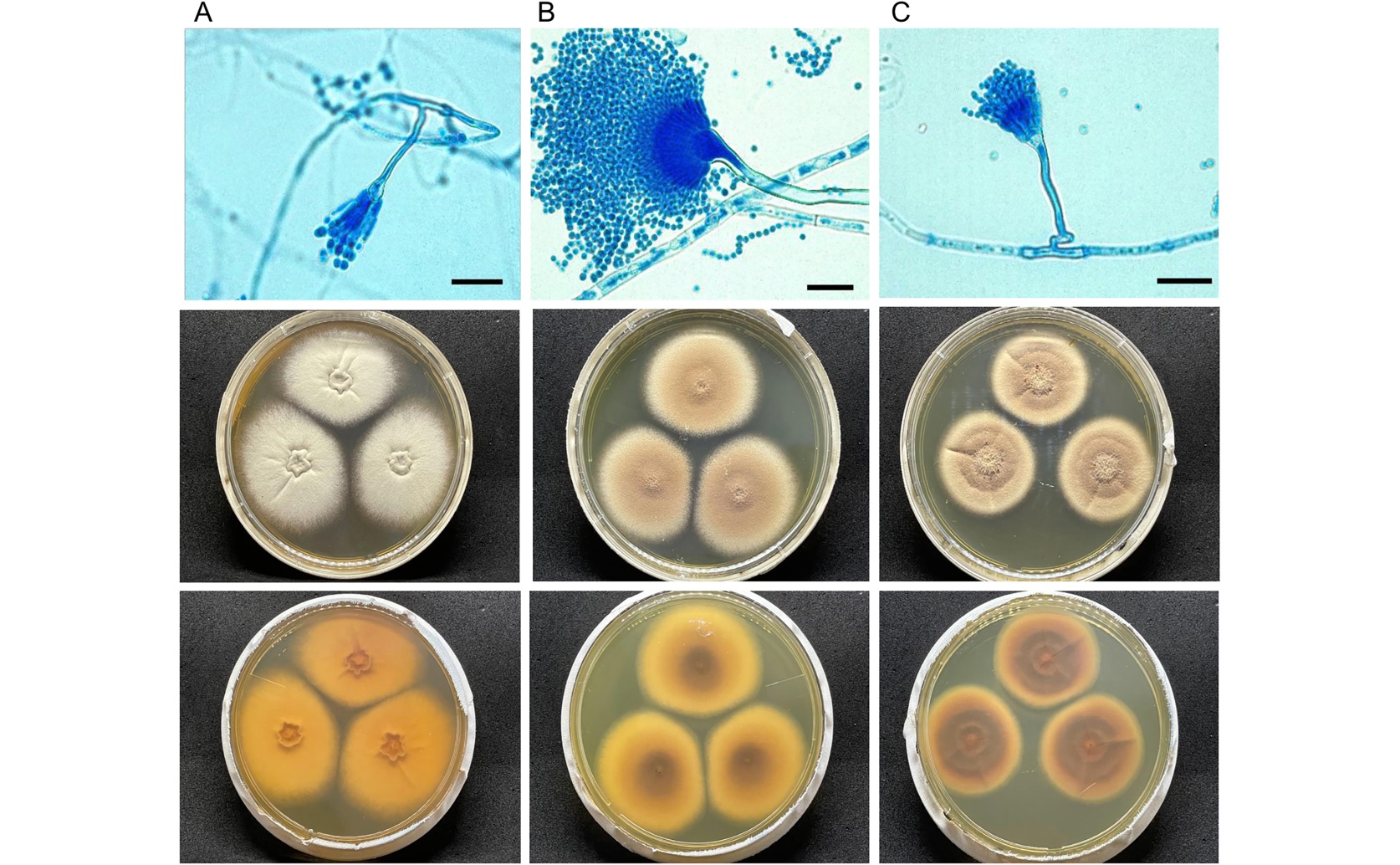
The lighter-colored Aspergillus hortae isolate (A) shows a distinct morphology compared to more pigmented isolates (B, C), a trait linked in this study to a genetic mutation and lower resistance to an antifungal drug.

Image adapted from: Marin-Carvajal et al. / CC BY (Source)

Key Findings

  • In Colombia, researchers studied Aspergillus hortae isolates initially misidentified as A. terreus, revealing the importance of accurate fungal identification
  • A. hortae isolates showed resistance to the antifungal drug amphotericin B, while remaining susceptible to azole drugs like voriconazole
  • A mutation in the MelA gene, linked to melanin production, was found in one isolate and may correlate with increased susceptibility to amphotericin B
Aspergillus fungi are common in the environment and play a vital role in breaking down organic matter. However, some species can cause infections in humans, particularly those with weakened immune systems. Identifying these species accurately is crucial for effective treatment. The Aspergillus terreus complex is a group of fungi that has historically been difficult to differentiate, leading to potential misdiagnosis and inappropriate use of antifungal medications.[2] Recent advances in genetic techniques have revealed that Aspergillus terreus is actually a collection of several distinct, yet closely related, cryptic species – species that appear very similar but are genetically different. Researchers at UdeA and the Federal University of Goiás[1] investigated three clinical isolates of Aspergillus hortae from patients in Colombia that were initially incorrectly identified as A. terreus. Aspergillus hortae belongs to the Terrei section of the Aspergillus genus, a group known to be important in organic matter recycling but whose clinical significance is still being investigated. The study aimed to properly characterize these isolates, determine their genetic identity, and assess their susceptibility to common antifungal drugs. The team began by examining the physical characteristics (morphology) of the fungi when grown at different temperatures – 26°C (room temperature) and 37°C (human body temperature). This confirmed that the isolates could grow at higher temperatures, a trait that distinguishes them from some other Aspergillus species. More importantly, whole-genome sequencing – determining the complete genetic code of each isolate – allowed for a precise identification and revealed how different these isolates were from the previously established reference genome of A. terreus. Antifungal susceptibility testing, using a standard method called EUCAST broth microdilution, showed that these A. hortae isolates were intrinsically resistant to amphotericin B, a commonly used antifungal drug. The minimum inhibitory concentration (MIC) – the lowest concentration of the drug needed to stop fungal growth – was between 2 and 4 mg/L, indicating a significant level of resistance. Conversely, the isolates were susceptible to azole drugs, with MIC values ranging from 0.25 to 1 mg/L. Interestingly, one isolate with the lowest amphotericin B MIC (2 mg/L) was found to have a specific mutation in a gene called MelA. This gene is involved in melanin production, and the M769K mutation suggests a potential link between melanin production and resistance to amphotericin B. While the exact mechanism is not fully understood, this finding provides a clue as to how resistance develops in these fungi. This study builds on previous work that highlighted the diversity within the Aspergillus terreus complex[3]. The research demonstrates that clinical isolates initially identified as A. terreus can, in fact, be different species, like A. hortae, with distinct antifungal susceptibility profiles. This is particularly important because the Terrei section can exhibit varying levels of antifungal resistance[3], and accurate identification is critical for choosing the most effective treatment. The finding of intrinsic amphotericin B resistance in these A. hortae isolates suggests that treatment protocols may need to be adjusted for patients infected with this species. Furthermore, the identification of the MelA mutation provides a potential target for further research into the mechanisms of antifungal resistance.[2] provides a useful updated species list for the Aspergillus genus, and the techniques described within are useful for identifying species and tracking their prevalence.

GeneticsBiochemMycology

References

Main Study

1) Whole-genome sequencing, phenotypic characterization, and antifungal susceptibility profiles of three Aspergillus hortae clinical isolates from Colombia

Published 17th February, 2026

https://doi.org/10.1371/journal.pone.0342479


Related Studies

2) Phylogeny, identification and nomenclature of the genus Aspergillus.

https://doi.org/10.1016/j.simyco.2014.07.004


3) Species Identification and In Vitro Antifungal Susceptibility of Aspergillus terreus Species Complex Clinical Isolates from a French Multicenter Study.

https://doi.org/10.1128/AAC.02315-17


Related Articles

An unhandled error has occurred. Reload 🗙