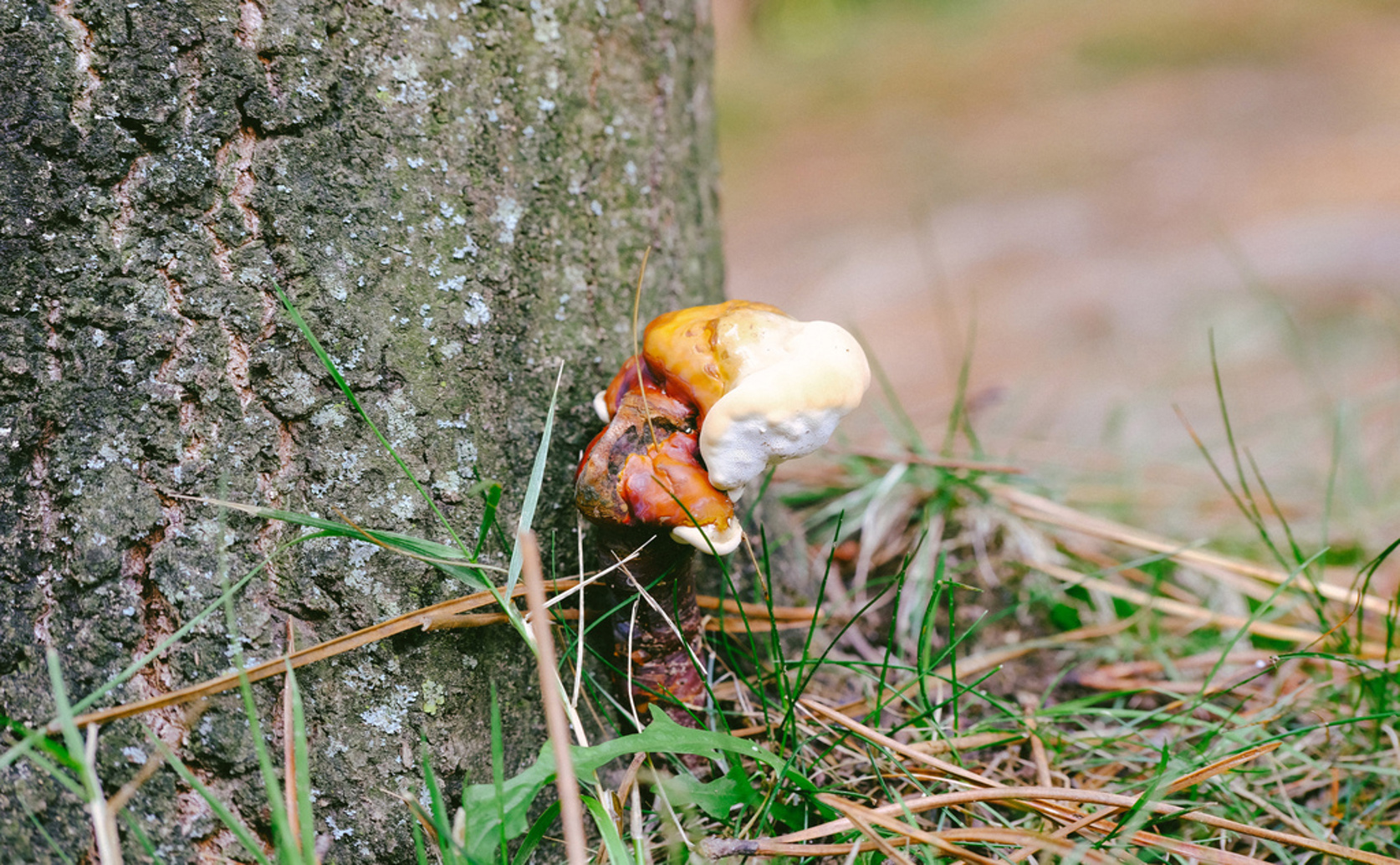
Boosting health benefits of reishi mushroom through optimized growing conditions

Jim Crocker
1st February, 2026

Boosting health benefits of reishi mushroom through optimized growing conditions

Ganoderma lucidum

Photo adapted from: Bruno Peixoto / CC BY (Source)

Key Findings

  • Researchers in China investigated a method to grow Ganoderma lucidum mushrooms in liquid, rather than on solid surfaces, to improve production efficiency
  • A medium containing 300g/L potato extract, 25g/L sucrose, and 7.5g/L corn flour optimized growth, yielding 7.51g/L of fungal material
  • Mycelia grown in this optimized medium had higher levels of crude ash and fiber, and significantly increased production of valuable compounds triterpenoids and polysaccharides
Ganoderma lucidum, a mushroom long used in traditional Chinese medicine, is gaining recognition for its potential health benefits. However, widespread use is hampered by limited availability and the high cost of production. Researchers at Ningde Normal University and Fujian Agriculture and Forestry University recently investigated a method to improve the efficiency and economy of cultivating this fungus, focusing on a process called submerged fermentation[1]. Submerged fermentation involves growing the fungus in a liquid medium, rather than on a solid surface. This method can yield larger quantities of fungal material, known as mycelia, and allows for better control of the growing conditions. A key challenge is formulating a medium that supports robust growth and maximizes the production of valuable compounds. Traditionally, the cultivation of Ganoderma relies on fruiting bodies, but as noted in earlier work[2], industrial submerged fermentation of Ganoderma mycelia is a promising avenue for increasing biomass and bioactive metabolite production. The study began by testing different carbon sources, finding that sucrose was the most effective for promoting mycelial growth. Further experimentation revealed that adding corn flour to the medium also significantly boosted growth, with an optimal concentration of 7.0 grams per liter. These initial “one-variable-at-a-time” experiments helped identify key ingredients. The researchers then employed a more sophisticated technique called response surface methodology to fine-tune the medium’s composition. This statistical approach allowed them to determine the ideal combination of ingredients – 300 grams per liter of potato extract, 25 grams per liter of sucrose, and 7.5 grams per liter of corn flour. Using this optimized medium, the mycelial yield reached 7.51 grams per liter. Importantly, the mycelia grown in this medium had higher levels of crude ash (10.43%) and fiber (10.51%) compared to mycelia grown in a standard, nutrient-rich (NR) medium. While protein content and amino acid levels were lower, the levels of key bioactive compounds were significantly increased. Specifically, the optimized medium resulted in 32.24 milligrams per gram of triterpenoids and 3.42% intracellular polysaccharides, exceeding the 20.35 mg/g triterpenoids and 2.03% intracellular polysaccharides achieved with the NR medium. These findings are significant because triterpenoids and polysaccharides are considered the primary active components responsible for the medicinal properties of Ganoderma lucidum[2][3]. The intracellular polysaccharides in particular have shown immunological activity[4], and the ability to increase their yield is crucial for potential therapeutic applications. Previous research has focused on optimizing fermentation conditions to boost polysaccharide production, such as through pH and oxygen control[2], and this study builds upon that work by focusing on the medium’s composition. Furthermore, the broth remaining after mycelial cultivation was found to be free of chemicals, suggesting it could be safely used in food products. This is a valuable benefit, as it maximizes the utilization of the entire fermentation process and reduces waste. The study highlights the potential for using food-grade ingredients to create a medium that supports both high mycelial yield and the production of valuable bioactive compounds, making the industrial fermentation of Ganoderma lucidum more economically viable. The findings also align with the broader goal of developing effective medicines from Ganoderma, addressing the challenges of mass production identified in earlier reviews[3]. The optimized aeration rate control process developed in a separate study[5] could further enhance the production of triterpenoids and sterols when combined with this new medium, potentially leading to even greater yields of these valuable compounds.

NutritionPlant ScienceMycology

References

Main Study

1) Optimization of a natural fermentative medium for submerged mycelial culture of Ganoderma lucidum and the nutritional and bioactive composition of the cultured food-grade mycelia

Published 29th January, 2026

https://doi.org/10.1371/journal.pone.0337539


Related Studies

2) From nutraceutical to clinical trial: frontiers in Ganoderma development.

https://doi.org/10.1007/s00253-018-9326-5


3) Ganoderma - a therapeutic fungal biofactory.

Journal: Phytochemistry, Issue: Vol 67, Issue 18, Sep 2006


4) Optimization of Ganoderma lucidum Polysaccharides Fermentation Process for Large-Scale Production.

https://doi.org/10.1007/s12010-019-02968-5


5) Development and Optimization of the Triterpenoid and Sterol Production Process with Lingzhi or Reishi Medicinal Mushroom, Ganoderma lucidum Strain G0017 (Agaricomycetes), in Liquid Submerged Fermentation at Large Scale.

https://doi.org/10.1615/IntJMedMushrooms.2021037830


Related Articles

An unhandled error has occurred. Reload 🗙