Local plants used for food offer clues to improve nutrition and food security

Jenn Hoskins
8th February, 2026

Local plants used for food offer clues to improve nutrition and food security

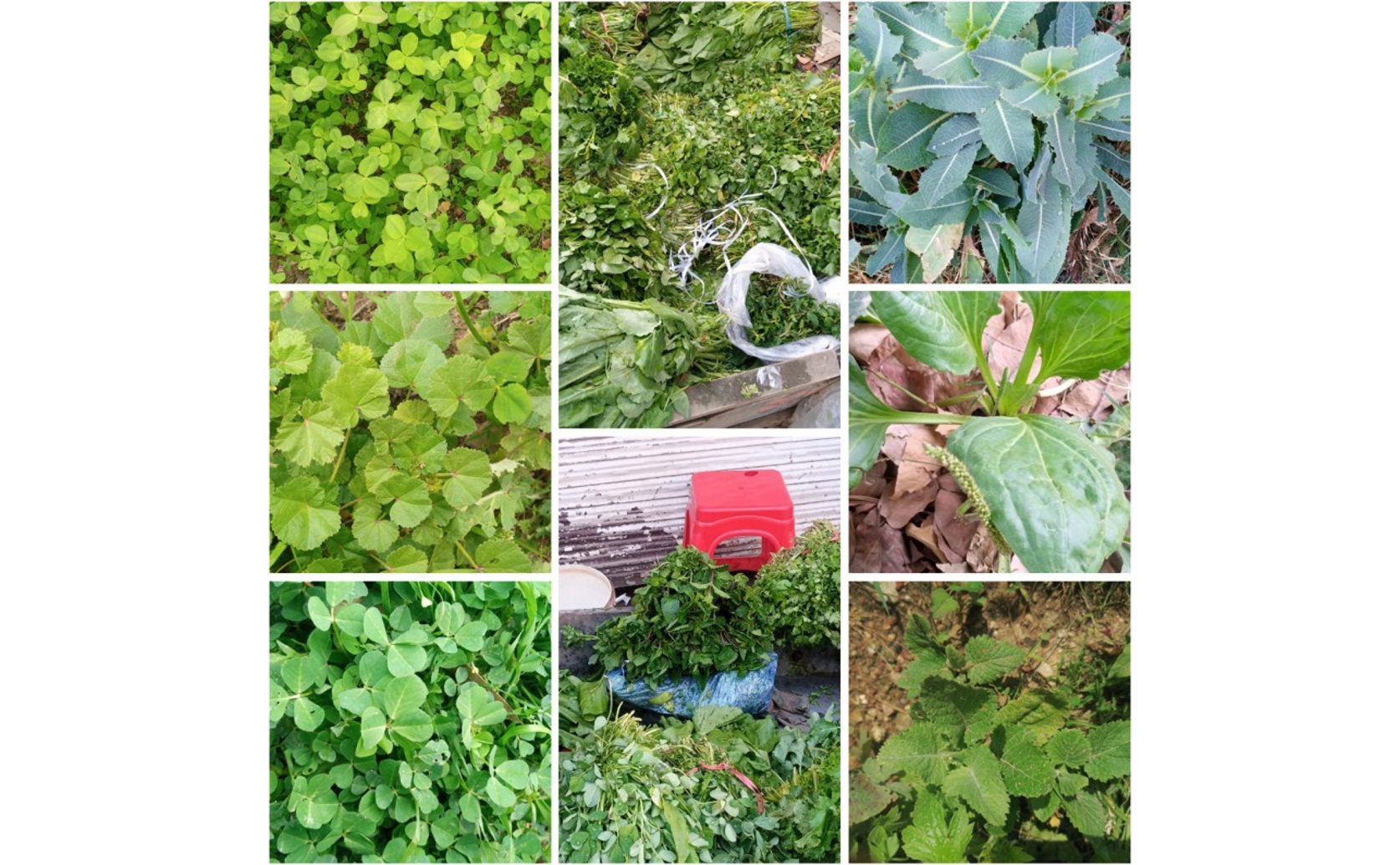
This figure from the study showcases several important wild plants, including Trifolium repens, Nasturtium officinale, Lactuca abietina, Malva neglecta, Cardamine hirsuta, Plantago ovata, Medicago polymorpha, and Urtica urens, that are traditionally collected and consumed as vegetables, highlighting their vital role in the food security and culinary heritage of communities in Pakistan's Swat Valley.

Image adapted from: Ali et al. / CC BY (Source)

Key Findings

  • Swat Valley, Pakistan relies on a diverse range of 175 wild edible plants for food, income, and cultural practices
  • Berberis lycium, Chenopodium album, and Berberis vulgaris are the most culturally significant plants, frequently used in diets and traditional remedies
  • Wild plants face threats from overharvesting and climate change, requiring conservation efforts to protect food security and traditional knowledge
Wild edible plants are increasingly recognized as important resources for communities worldwide, providing food, income, and cultural value. However, detailed documentation of these plants and the knowledge surrounding their use is often lacking, particularly in regions like Pakistan where reliance on these resources is significant. A recent study by researchers at University of Swat, NUMS[1], focused on the Swat Valley to address this gap, aiming to comprehensively document the wild edible plants used by local communities and assess their importance for food security and cultural heritage. The Swat Valley was chosen as a study site due to its rich biodiversity and the economic vulnerabilities of many of its inhabitants, who often depend on wild plants to supplement their diets and livelihoods. The research team conducted field surveys over a four-year period (2018-2022), interviewing 160 people – both men and women of varying ages – across 20 villages in six different administrative areas of the Swat District. Information was gathered through questionnaires, detailed interviews, and direct observation of plant use. The study wasn’t simply about listing plants; it aimed to understand how these plants were used, why they were important, and who was using them. The results revealed a remarkable diversity of 175 wild edible plant species, belonging to 72 plant families. Herbs were the most common type of plant used (62.3%), followed by shrubs and trees. The most frequently utilized plant parts were young shoots (41.7%), fruits (30.6%), and leaves (13.9%). These plants weren’t just eaten directly; they were incorporated into various food preparations including vegetables (37%), fruits (39%), raw foods (14%), teas and flavourings (5%), sauces (2%), and oils (2%). To quantify the importance of these plants, the researchers used several ‘ethnobotanical indices’. Use Value (UV) measures the overall range of uses a plant has across the community, while Relative Frequency of Citation (RFC) indicates how often a plant is mentioned by informants. Berberis lycium consistently ranked as the most culturally significant species, followed closely by Chenopodium album and Berberis vulgaris. This finding aligns with earlier ethnobotanical surveys conducted in the Lesser Himalayas of Pakistan[2], which also highlighted Rosaceae as a dominant plant family and Morus species as particularly important. Interestingly, the study also assessed the ‘novelty’ of plant uses – identifying plants and applications that haven’t been previously documented in Pakistan. A significant proportion of the species (55%) were considered to have ‘low novelty’, meaning they are well-known and widely reported. However, a substantial number (22%) were classified as ‘high novelty’, indicating unique or previously unknown uses. This underscores the importance of documenting traditional knowledge before it is lost. The economic contribution of these plants was also investigated. Twenty-seven species were found to be sold in local markets, providing income ranging from $0.09 to $1.74 per kilogram. This highlights the potential of wild edible plants to contribute to local economies and livelihoods. Similar findings were reported in the Thakht-e-Sulamian hills[3], where wild food plants were found to be important for food sovereignty and small-scale market circuits. However, the study also identified conservation concerns. Several species, including Abies pindrow and Mentha royleana, were classified as ‘Endangered’, while others like Thymus linearis and Morus alba were considered ‘Vulnerable’. This emphasizes the need for sustainable management practices to protect these valuable resources. The decline in folk knowledge attached to these plants, noted in the Ishkoman and Yasin valleys[4], further stresses the urgency of conservation efforts. The University of Swat, NUMS research team recommends a combination of strategies, including promoting sustainable harvesting, encouraging cultivation of important species, and implementing policies to protect wild plant populations. These steps are crucial for ensuring the continued availability of these vital resources and preserving the cultural heritage associated with them.

HerbsNutritionEcology

References

Main Study

1) Traditional knowledge and utilization of wild edible plants in Swat district, Pakistan: implications for nutrition and food security

Published 4th February, 2026

https://doi.org/10.1186/s13002-026-00850-3


Related Studies

2) Ethnobotanical survey of medicinally important wild edible fruits species used by tribal communities of Lesser Himalayas-Pakistan.

https://doi.org/10.1016/j.jep.2013.04.050


3) Folk knowledge of wild food plants among the tribal communities of Thakht-e-Sulaiman Hills, North-West Pakistan.

https://doi.org/10.1186/s13002-016-0090-2


4) Shared but Threatened: The Heritage of Wild Food Plant Gathering among Different Linguistic and Religious Groups in the Ishkoman and Yasin Valleys, North Pakistan.

https://doi.org/10.3390/foods9050601


Related Articles

An unhandled error has occurred. Reload 🗙