How Herbal Medicine May Ease COPD Symptoms via Gut Health and Cellular Effects

Jenn Hoskins
23rd August, 2025

How Herbal Medicine May Ease COPD Symptoms via Gut Health and Cellular Effects

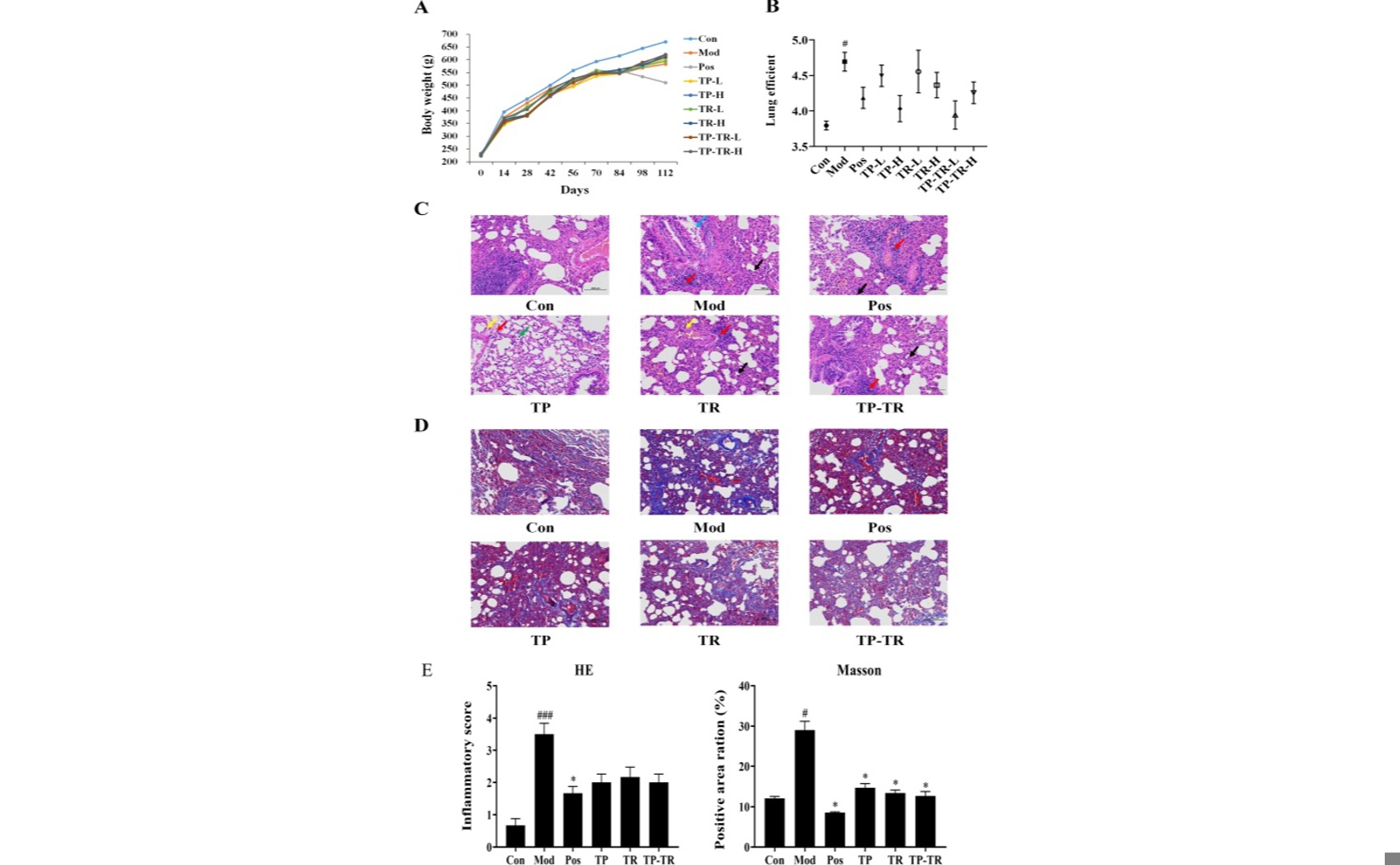
Treatment with the Trichosanthis Pericarpium – Trichosanthis Radix (TP-TR) herbal pair significantly mitigated COPD progression in rats by restoring body weight (a) and lung coefficient (b), while markedly reducing pulmonary inflammation (c) and fibrosis (d–e).

Image adapted from: Zhao et al. / CC BY (Source)

Key Findings

  • In rats with COPD, TP-TR, a traditional Chinese medicine herbal pair, improved lung function and reduced inflammation
  • TP-TR treatment altered the gut microbiome composition, increasing beneficial bacteria like Lactobacillus
  • TP-TR modulated amino acid metabolism in both the gut and lungs, impacting pathways linked to COPD symptoms
Chronic Obstructive Pulmonary Disease (COPD) is a widespread lung condition that makes breathing increasingly difficult. Traditionally, COPD has been linked heavily to smoking[2], but it’s becoming clearer that it’s not simply a result of one cause. Instead, it appears to be a complex condition developing over a lifetime through various interactions between a person’s genes and their environment[2]. This means factors beyond smoking – like air pollution and occupational hazards – play a significant role, and the timing of exposure throughout life matters. This evolving understanding highlights the need to look beyond single causes and consider the whole picture of an individual’s health history. Researchers at Nanjing University of Chinese Medicine & Hong Kong Baptist University have been investigating a traditional herbal remedy, a combination of Trichosanthis Pericarpium – Trichosanthis Radix (TP-TR), derived from the plant Trichosanthes kirilowii Maxim, to see if it can alleviate COPD symptoms. This herbal pair has long been used in traditional Chinese medicine for lung heat and cough, but the precise way it works hasn't been fully understood.[1] aimed to clarify the mechanisms behind its effectiveness, specifically focusing on the gut-lung axis – the two-way communication between the gut microbiome (the community of microorganisms in the intestines) and the lungs. The study began by creating a COPD model in rats, mimicking the condition to allow for controlled experimentation. The researchers then administered TP-TR to these rats and observed significant improvements in their lung function and reduced inflammation. To understand how TP-TR was achieving this, they analyzed the composition of the gut microbiome using a technique called 16S rRNA sequencing. This method identifies the different types of bacteria present in the gut. The analysis revealed that TP-TR altered the balance of gut bacteria, increasing levels of beneficial bacteria like Lactobacillus and g_Novosphingobium. Simultaneously, they examined the rats’ serum (the liquid part of blood) and lung tissue, identifying the metabolites – small molecules produced during metabolism – present in each. Using UPLC-MS/MS, a sophisticated analytical technique, they found that TP-TR treatment led to changes in metabolic pathways, particularly those involving amino acids. Amino acids are the building blocks of proteins and play crucial roles in many bodily functions. The researchers found that amino acid metabolic pathways were consistently altered in both the gut microbiome analysis and the metabolite analysis of the rats’ serum and lungs. Further, more detailed analysis confirmed specific changes in the levels of different amino acids. To confirm these findings, the researchers created cells mimicking the inflammatory conditions seen in COPD. They then exposed these cells to TP-TR and its key components – cucurbitacin B, cynaroside, glutamine, guanine, and apigenin – and observed alterations in amino acid content. This demonstrated that TP-TR and its components directly impacted amino acid metabolism within cells. This study suggests a novel mechanism by which TP-TR alleviates COPD symptoms: by modulating the gut microbiota composition and regulating amino acid metabolism along the gut-lung axis. This is significant because it moves away from a purely lung-focused view of COPD and acknowledges the importance of the gut microbiome in disease progression. The findings align with the broader understanding of COPD as a syndrome resulting from complex gene-environment interactions over a lifespan[2]. As highlighted in the Global Burden of Disease Study[3], COPD remains a major public health problem, and preventative strategies focusing on factors like smoking cessation and air quality are crucial. The research from Nanjing University of Chinese Medicine & Hong Kong Baptist University offers a potential therapeutic avenue by targeting the gut-lung axis, potentially offering a new approach to managing this complex condition.

HerbsMedicineNutrition

References

Main Study

1) Investigating the Trichosanthis Pericarpium - Trichosanthis Radix herbal pair’s role in alleviating COPD through gut microbiota function, metabolomics analysis and cell validation experiment

Published 22nd August, 2025

https://doi.org/10.1371/journal.pone.0330621


Related Studies

2) Pathogenesis of chronic obstructive pulmonary disease: understanding the contributions of gene-environment interactions across the lifespan.

https://doi.org/10.1016/S2213-2600(21)00555-5


3) Burden of chronic obstructive pulmonary disease and its attributable risk factors in 204 countries and territories, 1990-2019: results from the Global Burden of Disease Study 2019.

https://doi.org/10.1136/bmj-2021-069679


Related Articles

An unhandled error has occurred. Reload 🗙