Olive Oil Helps Protect Lungs in Newborn Intestinal Disease: Effects on Proteins

Jenn Hoskins
17th April, 2025

Olive Oil Helps Protect Lungs in Newborn Intestinal Disease: Effects on Proteins

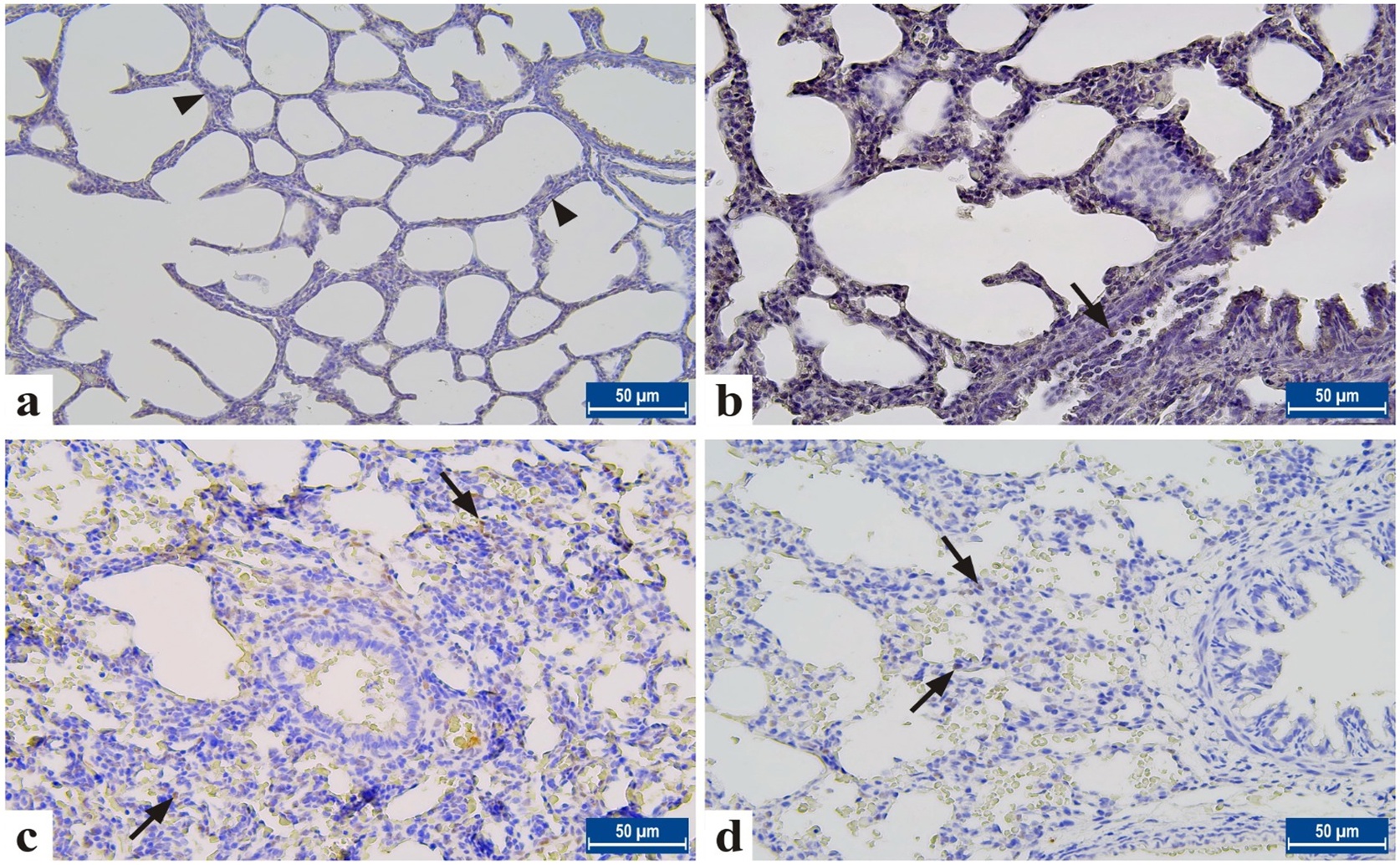
Treatment with extra virgin olive oil demonstrates a protective effect against necrotizing enterocolitis-induced lung injury by significantly reducing apoptotic Caspase-3 positive cells in lung tissue (d) compared to the elevated levels in the untreated NE group (c) and baseline levels in the control group (b).

Image adapted from: Tuşat et al. / CC BY (Source)

Key Findings

  • Researchers at Aksaray University found that extra virgin olive oil helped protect the lungs of newborn rats suffering from necrotizing enterocolitis (NEC)
  • Olive oil treatment reduced harmful inflammation and oxidative stress in the lungs
  • The study suggests olive oil could be a promising treatment to prevent lung damage in affected premature infants
Necrotizing enterocolitis (NEC) is a serious condition that primarily affects premature infants, leading to inflammation and damage in the intestines. This condition not only impacts the digestive system but is also linked to lung damage, which can complicate the health of affected newborns. Researchers at Aksaray University aimed to investigate whether extra virgin olive oil (EO), rich in polyphenols, could mitigate lung injury related to NEC. In their study, the researchers divided neonatal rats into three groups: a control group, a group induced with NEC, and a group treated with EO after NEC induction[1]. NEC was triggered in the rats through a combination of hypoxia (lack of oxygen), hyperoxia (excess oxygen), hypothermia (low body temperature), and formula feeding. The treatment group received EO via an orogastric probe for three days. After the treatment period, the researchers examined both intestinal and lung tissues for various markers of inflammation and damage. The results showed that the rats with NEC had significantly higher levels of Transforming Growth Factor Beta-1 (TGFβ1) and Malondialdehyde (MDA) in their lungs compared to the control group. These markers are associated with inflammation and oxidative stress, respectively. However, the group treated with EO showed a substantial decrease in both TGFβ1 and MDA levels compared to the untreated NEC group. Additionally, the EO-treated rats exhibited reduced histopathological damage in their lung tissues and lower levels of Caspase-3, an enzyme involved in apoptosis (cell death). These findings build upon previous research that has explored the impact of NEC on various organs. For instance, a study by Aksaray University demonstrated that NEC can cause secondary injuries in the colon, terminal ileum, lung, liver, and kidney, with varying degrees and timelines of damage and repair[2]. Another study from the same institution highlighted the role of the immune receptor TLR4 in NEC-associated lung injury, suggesting that blocking this receptor could prevent lung damage[3]. The current study complements these findings by showing that EO can reduce key inflammatory and oxidative markers, potentially offering a protective effect against lung injury in NEC. Furthermore, earlier research has shown that extra virgin olive oil can have beneficial effects in reducing inflammation and oxidative stress. For example, a study found that EVOO treatment in NEC-induced rats led to lower levels of inflammatory cytokines such as IL1β and IL6, as well as reduced oxidative stress markers[4]. The current study extends these observations by specifically linking EO treatment to decreased TGFβ1 and MDA levels in lung tissue, thereby highlighting its potential therapeutic role in preventing lung damage associated with NEC. The mechanisms by which EO exerts its protective effects may involve its rich polyphenol content, which is known for its antioxidant properties. By reducing oxidative stress and inflammation, EO helps in protecting lung tissues from the damaging effects of NEC. This aligns with findings from other studies that have emphasized the importance of managing oxidative stress and inflammation in treating NEC and its complications[5]. In conclusion, the research conducted by Aksaray University provides valuable insights into the potential use of extra virgin olive oil as a therapeutic agent for preventing lung injury in neonatal rats with NEC. By lowering key inflammatory and oxidative markers, EO shows promise in mitigating the adverse effects of NEC on the lungs. These findings not only enhance our understanding of NEC-related complications but also pave the way for developing new treatments to improve outcomes for premature infants suffering from this debilitating condition.

MedicineNutritionBiochem

References

Main Study

1) Extra virgin olive oil mitigates lung injury in necrotizing enterocolitis: Effects on TGFβ1, Caspase-3, and MDA in a neonatal rat model

Published 15th April, 2025

https://doi.org/10.1371/journal.pone.0320938


Related Studies

2) Intestinal tract and parenteral multi-organ sequential pathological injury caused by necrotizing enterocolitis.

https://doi.org/10.1186/s12887-020-02304-5


3) Pulmonary Epithelial TLR4 Activation Leads to Lung Injury in Neonatal Necrotizing Enterocolitis.

https://doi.org/10.4049/jimmunol.1600618


4) Evaluation of the protective and therapeutic effects of extra virgin olive oil rich in phenol in experimental model of neonatal necrotizing enterocolitis by clinical disease score, ınflammation, apoptosis, and oxidative stress markers.

https://doi.org/10.1007/s00383-024-05669-1


5) The Role of TGF-β/SMAD Signaling in Hepatocellular Carcinoma: from Mechanism to Therapy and Prognosis.

https://doi.org/10.7150/ijbs.89568


Related Articles

An unhandled error has occurred. Reload 🗙