Measuring Tissue Stiffness Using Sound: Research on Gel Models

Jenn Hoskins
15th April, 2025

Measuring Tissue Stiffness Using Sound: Research on Gel Models

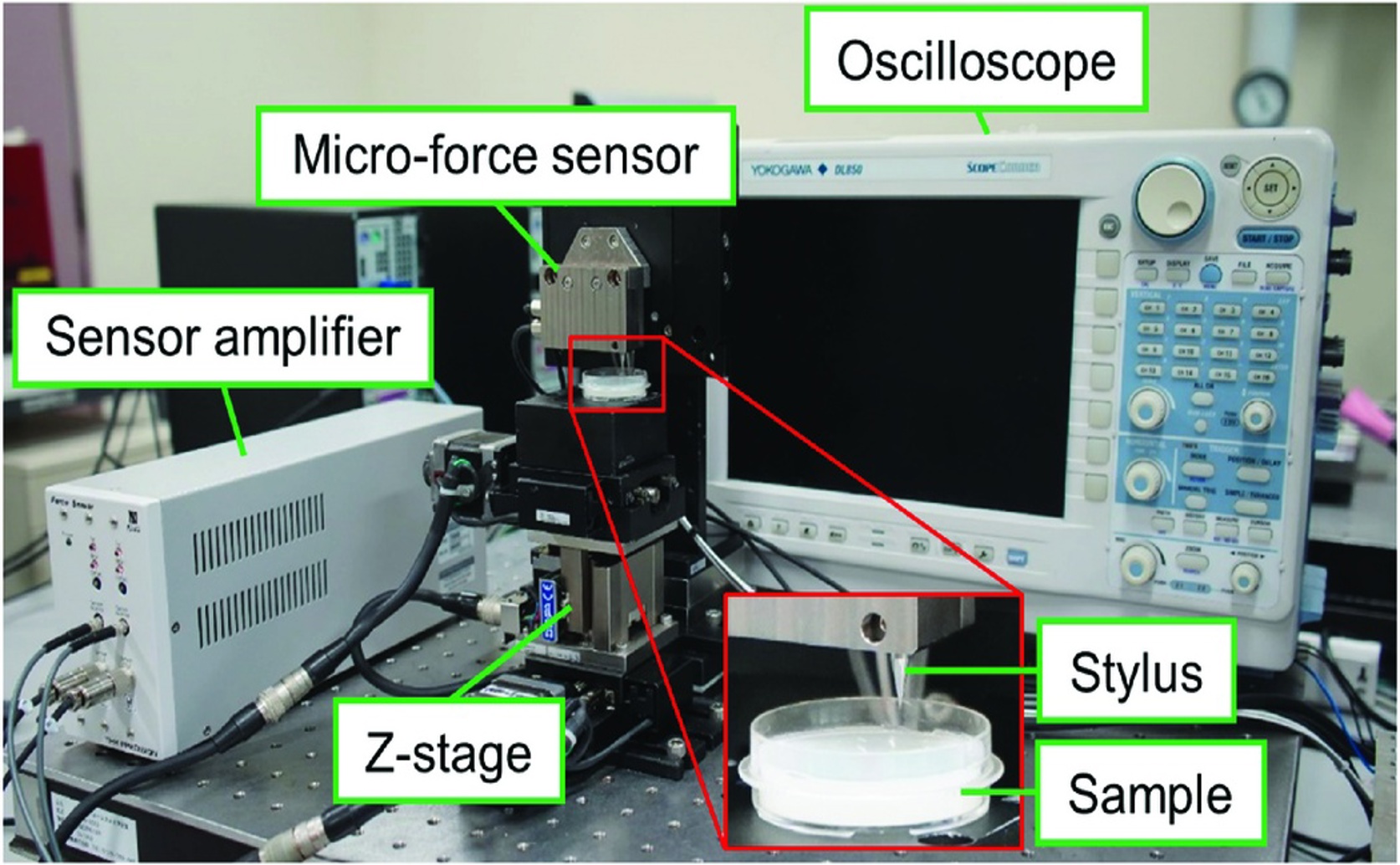
A custom-made indentation tester was used to measure the Young's modulus of the agar samples, providing the essential mechanical data needed to establish an empirical relationship with acoustic impedance.

Image adapted from: Morodomi et al. / CC BY (Source)

Key Findings

  • Researchers at Nagoya Institute of Technology and Gdańsk University developed a new sound-based method to measure tissue stiffness, an important indicator of diseases
  • They discovered a strong link between acoustic measurements and tissue stiffness, creating a formula that accurately estimates how stiff tissues are
  • This innovative approach offers a simpler, non-invasive alternative to traditional methods, potentially improving the diagnosis of conditions like liver fibrosis and cancer
Understanding the mechanical properties of biological tissues is crucial for diagnosing various diseases. Changes in how stiff or flexible tissues are can indicate underlying health issues, making these properties valuable biomarkers. Researchers at the Nagoya Institute of Technology and Gdańsk University of Technology conducted a study to develop a reliable way to estimate one such mechanical property, known as Young’s modulus, using a technique called scanning acoustic microscopy[1]. Young’s modulus is a measure of a material’s stiffness, indicating how much it will deform under a certain amount of force. In biological tissues, variations in Young’s modulus can signal different disease states. For instance, liver fibrosis, a condition where excessive scar tissue builds up in the liver, increases the liver’s stiffness[2]. Traditional methods to measure these mechanical properties often involve complex and time-consuming processes. Atomic force microscopy (AFM) has been a popular tool in this field, allowing scientists to probe the mechanical characteristics of tissues at a microscopic level[3]. However, AFM can be limited by its complexity and the need for specialized equipment. The new study aimed to find a simpler and more efficient way to estimate Young’s modulus by using acoustic impedance, a property that describes how sound waves travel through a material. Scanning acoustic microscopy measures this acoustic impedance by sending sound waves into the tissue and analyzing how they are absorbed and reflected. The researchers prepared agar samples, a substance with mechanical properties similar to biological tissues, at various concentrations ranging from 5% to 20%. By adjusting the concentration of agar, they could simulate different tissue stiffness levels. Using scanning acoustic microscopy, the team measured the acoustic impedance of each agar sample. They also performed indentation testing, a method where a small, controlled force is applied to the sample to determine its Young’s modulus. The results showed that both acoustic impedance and Young’s modulus increased as the agar concentration rose, indicating that denser samples were stiffer. Interestingly, when the researchers tried to apply existing theoretical models to describe the relationship between acoustic impedance and Young’s modulus, they found that these models did not accurately fit their data. This discrepancy suggested that the current understanding was incomplete and that a new approach was needed. To address this, the team developed an empirical formula specifically tailored to their observations. The formula they proposed is E = 9.2835×10⁻⁶Z² - 21.6347×10⁶, where E represents Young’s modulus in Pascals and Z denotes acoustic impedance in Newton-seconds per cubic meter. This equation provided a much better fit for their data compared to the theoretical models. The significance of this finding lies in its potential application to real biological tissues. By using this empirical formula, it may become possible to accurately estimate the stiffness of tissues based solely on acoustic impedance measurements. This advancement could enhance diagnostic techniques, making it easier to detect conditions like liver fibrosis or cancer, where tissue stiffness plays a key role[2]. Additionally, this method could complement existing techniques like AFM, offering an alternative approach that might be more accessible in some clinical settings. The study builds on previous research in tissue mechanobiology, which explores how mechanical and biochemical factors interact to influence tissue development and disease[3]. For example, understanding tissue mechanics has been essential in studying how cells respond to their physical environment and how diseases alter these responses. Furthermore, advancements in biomechanical testing methods, such as the 3D-printed clamping system for soft tissue testing, have improved the accuracy and consistency of mechanical measurements[4]. The new empirical formula complements these advancements by providing a straightforward way to relate acoustic measurements to tissue stiffness. One of the key challenges in measuring tissue mechanics is ensuring accurate and standardized testing conditions. The use of scanning acoustic microscopy, combined with the newly developed formula, offers a promising solution. It allows for the non-destructive evaluation of tissue properties, which is particularly important for preserving samples for further analysis or for use in clinical diagnostics. Moreover, the ability to estimate Young’s modulus quickly and reliably can facilitate large-scale studies and high-throughput testing, advancing our understanding of various diseases. In summary, the research by the Nagoya Institute of Technology and Gdańsk University of Technology presents a significant step forward in tissue mechanobiology. By establishing an empirical relationship between acoustic impedance and Young’s modulus, the study provides a practical tool for assessing tissue stiffness. This development not only enhances diagnostic capabilities but also supports ongoing research into the mechanical aspects of tissue health and disease. As the field continues to evolve, such innovations will be essential in bridging the gap between mechanical measurements and clinical applications, ultimately contributing to better health outcomes.

MedicineBiotechBiochem

References

Main Study

1) Empirical estimation of Young’s modulus for biological tissue mimics using acoustic impedance measurements: A study on agar gel tissue phantoms

Published 14th April, 2025

https://doi.org/10.1371/journal.pone.0320705


Related Studies

2) Elastic modulus measurements of human liver and correlation with pathology.

Journal: Ultrasound in medicine & biology, Issue: Vol 28, Issue 4, Apr 2002


3) Atomic force microscopy-mediated mechanobiological profiling of complex human tissues.

https://doi.org/10.1016/j.biomaterials.2023.122389


4) Standardized tensile testing of soft tissue using a 3D printed clamping system.

https://doi.org/10.1016/j.ohx.2020.e00159


Related Articles

An unhandled error has occurred. Reload 🗙