Sweet Wormwood Tea: What Makes It Effective Against Malaria?

Jenn Hoskins
23rd August, 2025

Sweet Wormwood Tea: What Makes It Effective Against Malaria?

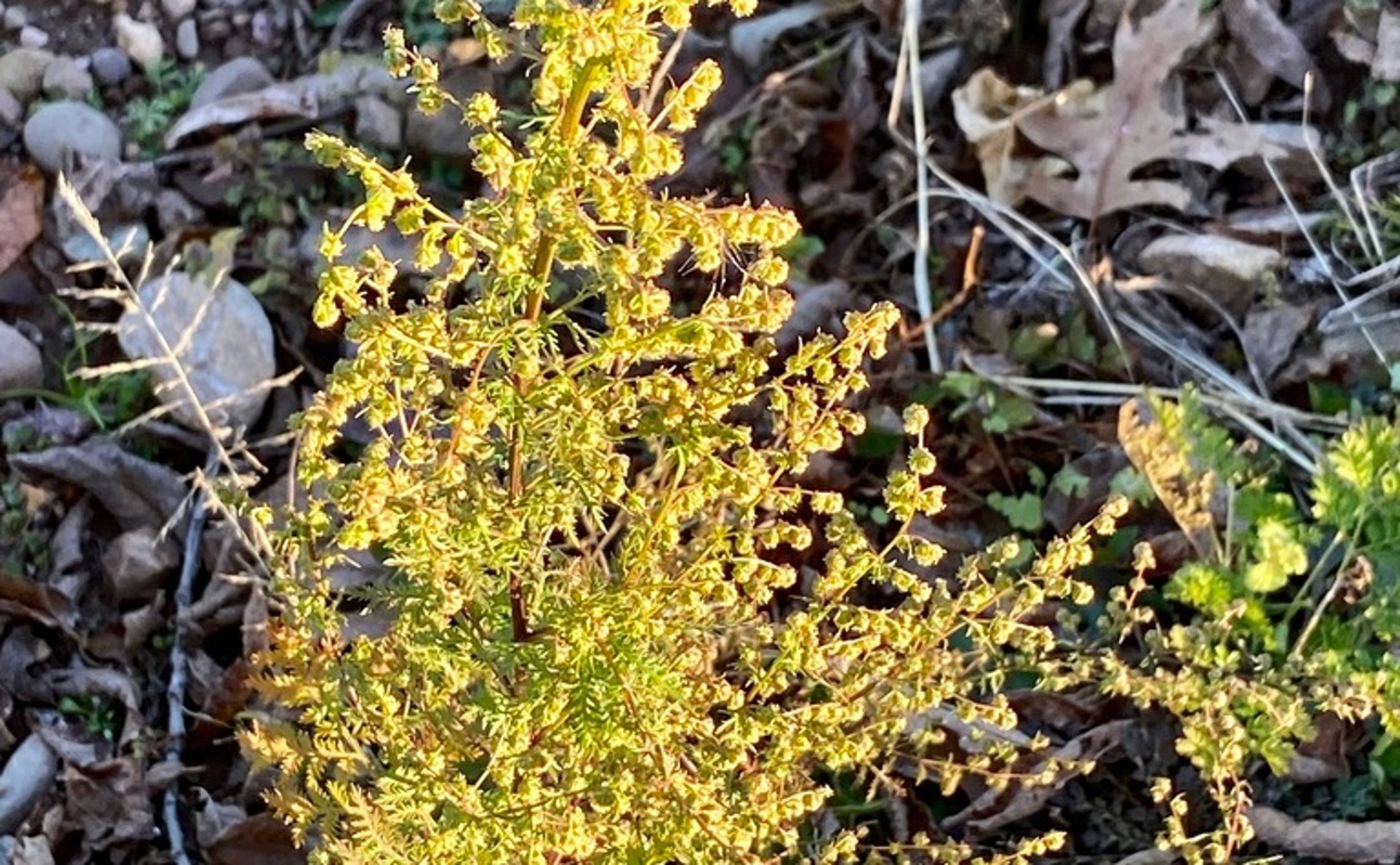
Sweet annie (Artemisia annua)

Photo adapted from: Sandy Wolkenberg / CC BY (Source)

Key Findings

  • This study, conducted in Benin and France, found significant variation in artemisinin levels within Artemisia annua teas, ranging from 0.3 to 15.7 mg/L
  • Artimisinin content decreased over time during storage, with losses of 24%, 33%, and 48% observed after one year for plants from specific Beninese locations
  • While artemisinin concentration correlated with antiplasmodial activity, other compounds in the tea also influenced its overall effectiveness, suggesting a complex interplay of bioactive molecules
Malaria remains a significant global health challenge, particularly in regions with limited access to conventional healthcare. Artemisia annua, a plant containing the potent antimalarial compound artemisinin, has long been used in traditional medicine as a fever remedy[2]. More recently, the use of teas brewed from Artemisia annua leaves has emerged as a potential strategy for self-treatment in remote areas, but the effectiveness of these teas can be variable. A study conducted by researchers at Université Paul Sabatier-Toulouse 3, Université d’Abomey Calavi, Institut de Chimie de Toulouse, Université de Toulouse, Université Paris Cité, AP-HP Hôpital Bichat, Université de Paris Cité, and Freie Universität Berlin[1] investigated the composition of A. annua teas sourced from Benin and France, and their subsequent antimalarial activity. The core issue is inconsistency. While A. annua is known to contain artemisinin, the amount present can fluctuate based on a variety of factors. Previous research has demonstrated the impact of geographical location on the chemical composition of medicinal plants, specifically with Terminalia albida[3], showing that plants from different areas in Guinea exhibited varying antimalarial effects due to differences in their chemical profiles. This highlights that simply identifying a plant as Artemisia annua isn’t enough; the specific chemical makeup of the plant material is crucial. The study involved preparing teas from plants grown in a single location in southern France and ten different plantations across Benin. Researchers then precisely measured the artemisinin content in each tea using a sophisticated technique called liquid chromatography-mass spectrometry. This method allows for the accurate identification and quantification of individual compounds within a complex mixture. They then tested the teas’ ability to inhibit the growth of Plasmodium falciparum, the parasite responsible for malaria, using a laboratory technique called an isotopic microtest. This test provided an IC50 value – the concentration of tea needed to inhibit 50% of parasite growth – and was used to calculate the artemisinin concentration corresponding to this effect. The results revealed substantial variation in artemisinin levels. Teas made from plants grown in France contained as little as 0.3 mg/L of artemisinin, while those from Benin boasted levels up to 15.7 mg/L. Furthermore, the study found that artemisinin content decreased over time during storage, with losses of 33%, 48%, and 24% observed after one year for plants from three different Beninese localities. This finding is critical, as it suggests that the potency of A. annua teas can diminish significantly if not used promptly. Interestingly, the study also showed a positive correlation between artemisinin concentration and antiplasmodial activity. However, the teas didn’t perform exactly as expected based on artemisinin levels alone. Comparing the IC50 values of the teas to the IC50 of pure artemisinin indicated that other compounds present in the tea were influencing the overall effect, either enhancing or reducing its potency. Metabolomic analysis, a comprehensive assessment of all the chemical compounds present, identified unknown alkaloids that correlated with antiplasmodial activity. This suggests that the effectiveness of A. annua tea isn’t solely dependent on artemisinin, but a complex interplay of various compounds. This builds upon earlier work[2] which showed that simple tea preparation methods could extract a significant portion of artemisinin from A. annua. The current study goes further by demonstrating the variability in artemisinin content and identifying other potential bioactive compounds contributing to the tea’s efficacy. Similar to the findings with Capparis sicula, where different collection zones yielded varying levels of phenols, flavonoids, and glucosinolates[4], this research underscores the importance of characterizing the chemical fingerprint of A. annua plants from different growing regions. The researchers conclude that A. annua teas warrant further investigation to pinpoint these other metabolites of interest and determine their precise role in antimalarial activity, in relation to artemisinin. This deeper understanding could lead to the development of more effective and consistent A. annua-based treatments for malaria, especially in resource-limited settings.

HerbsMedicineBiochem

References

Main Study

1) Comparison of the composition and antiplasmodial activity of Artemisia annua teas using an untargeted metabolomic approach

Published 22nd August, 2025

https://doi.org/10.1371/journal.pone.0330682


Related Studies

2) The potential of Artemisia annua L. as a locally produced remedy for malaria in the tropics: agricultural, chemical and clinical aspects.

Journal: Journal of ethnopharmacology, Issue: Vol 73, Issue 3, Dec 2000


3) Variation in chemical composition and antimalarial activities of two samples of Terminalia albida collected from separate sites in Guinea.

https://doi.org/10.1186/s12906-021-03231-3


4) The influence of collection zone on glucosinolates, polyphenols and flavonoids contents and biological profiles of Capparis sicula ssp. sicula.

https://doi.org/10.1177/1082013210368583


Related Articles

An unhandled error has occurred. Reload 🗙