How Age Affects the Safety and Effectiveness of Herbal Medicine for Stroke

Jenn Hoskins
18th April, 2025

How Age Affects the Safety and Effectiveness of Herbal Medicine for Stroke

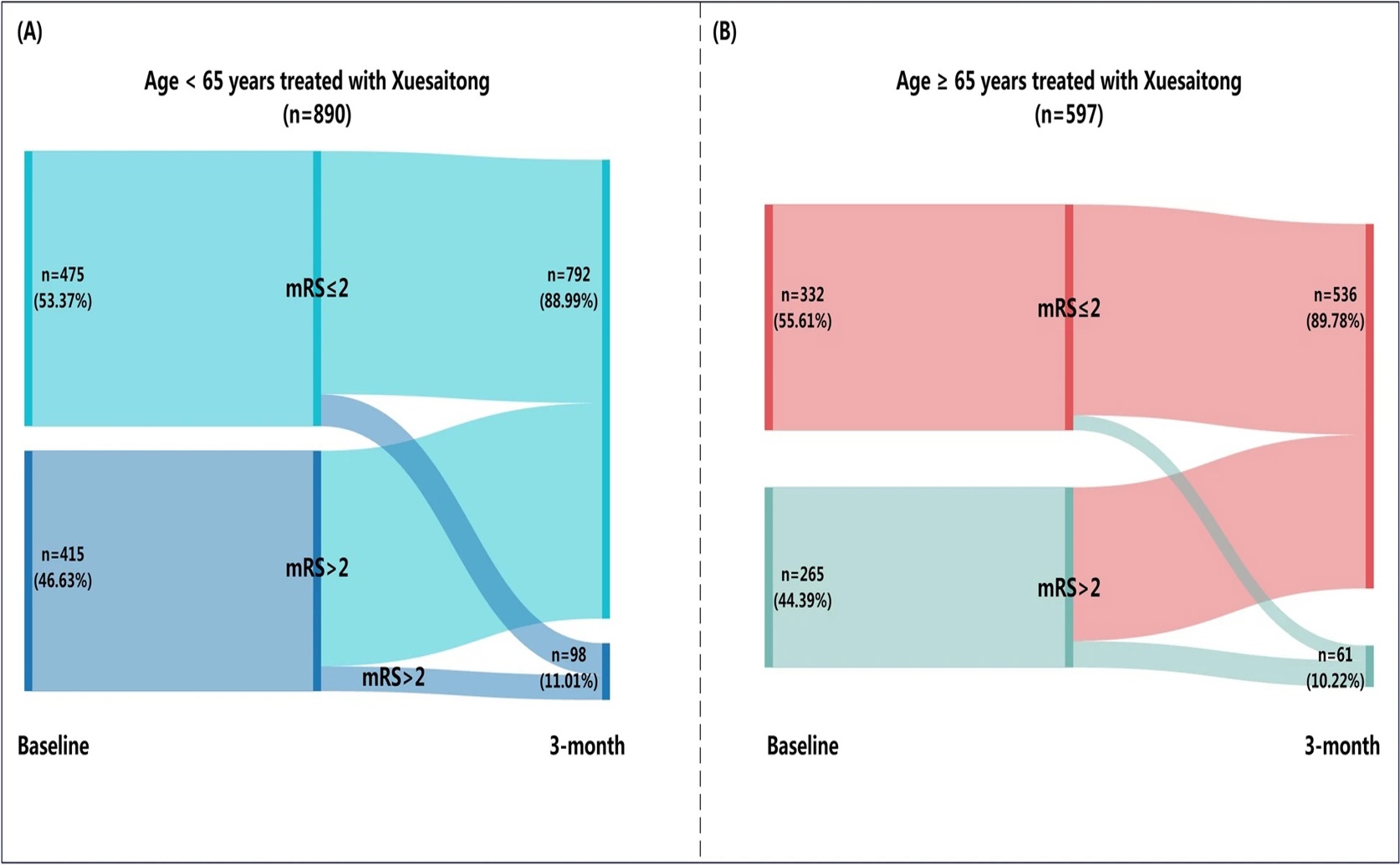
Treatment with Xuesaitong (Panax notoginseng saponins) significantly increased the proportion of acute ischemic stroke patients achieving functional independence within three months, both for those younger than 65 (a) and those 65 or older (b).

Image adapted from: Li et al. / CC BY (Source)

Key Findings

  • *In China, researchers discovered that Xuesaitong capsules help stroke patients regain independence.*
  • *Patients aged 65 and older benefited more from Xuesaitong, showing greater improvements in daily functioning.*
  • *The treatment was safe for all age groups, with no increase in serious side effects.*
Acute ischemic stroke (AIS) is a significant health concern worldwide, especially among older adults. Effective treatments that enhance recovery and ensure safety across different age groups are crucial. A recent study conducted by researchers at Beijing University of Chinese Medicine[1] explored the efficacy and safety of Panax notoginseng saponins, marketed as Xuesaitong soft capsules, in patients with AIS, with a particular focus on how age influences treatment outcomes. The PANDA trial previously demonstrated that Xuesaitong soft capsules significantly improved functional independence in AIS patients compared to a placebo. Building on these findings, the current analysis examined whether age affects the benefits and safety of this treatment. The study included 2,966 patients from 67 medical centers in China, divided into two groups: those under 65 years old and those 65 years or older. This division is important as earlier research has shown that older adults often have different risk factors and stroke characteristics compared to younger individuals[2]. The primary goal was to assess functional independence three months after treatment, measured by the modified Rankin Scale (mRS), where scores of 0 to 2 indicate good outcomes. The analysis revealed that age significantly influenced the likelihood of achieving functional independence. Notably, patients aged 65 and older experienced a greater improvement in functional outcomes when treated with Xuesaitong compared to those under 65. This suggests that older adults, who typically have a higher prevalence of hypertension and atrial fibrillation[2], may derive more substantial benefits from this treatment. Safety was another critical aspect of the study. The researchers monitored serious adverse events (SAEs) over three months and found no significant differences between the treatment and placebo groups in both age categories. This indicates that Xuesaitong is generally safe for AIS patients regardless of their age. Previous studies have highlighted the importance of considering frailty and other health factors in older stroke patients[3][4]. The current study supports these findings by demonstrating that even older patients, who may have more complex health profiles, can safely benefit from Xuesaitong treatment. Frailty, a condition characterized by decreased strength and resilience, is a known predictor of poor outcomes after a stroke[3][4]. The present study's findings that older adults benefit more from Xuesaitong could be particularly relevant for managing frailty-related risks. By improving functional independence, Xuesaitong may help mitigate some of the adverse effects associated with frailty, aiding in better recovery and quality of life for older stroke patients. The methodology of the study involved rigorous statistical analyses, including multivariable logistic and Cox regression models, to account for various factors that could influence outcomes. This approach ensures that the observed benefits are truly attributable to the treatment rather than other confounding variables. The large sample size and multi-center participation enhance the reliability and generalizability of the results. Integrating these findings with previous research, it becomes evident that addressing age-specific factors is essential in stroke treatment. Older adults often present with different stroke subtypes and risk profiles[2], and treatments like Xuesaitong that are effective across age groups can play a vital role in comprehensive stroke care. Additionally, considering the impact of frailty and physical function markers, as highlighted in earlier studies[3][4], can further optimize treatment strategies for elderly patients. In conclusion, the study by Beijing University of Chinese Medicine provides valuable insights into the use of Panax notoginseng saponins for AIS patients. It highlights that older adults not only benefit significantly from Xuesaitong in achieving functional independence but also do so without an increased risk of serious adverse events. These findings reinforce the importance of age-specific treatment approaches and support the integration of Xuesaitong into stroke management protocols, particularly for the growing elderly population. As the prevalence of AIS increases with aging populations, such studies are crucial in guiding effective and safe therapeutic decisions.

HerbsMedicineHealth

References

Main Study

1) Effect of age on the efficacy and safety of Panax notoginseng saponins in acute ischemic stroke: a prespecified secondary analysis of the PANDA study

Published 15th April, 2025

https://doi.org/10.1186/s13020-025-01101-5


Related Studies

2) Acute ischemic stroke and transient ischemic attack in the very old--risk factor profile and stroke subtype between patients older than 80 years and patients aged less than 80 years.

Journal: European journal of neurology, Issue: Vol 14, Issue 8, Aug 2007


3) Factors Associated With Ischemic Stroke Survival and Recovery in Older Adults.

https://doi.org/10.1161/STROKEAHA.117.016726


4) Premorbid frailty predicts short- and long-term outcomes of reperfusion treatment in acute stroke.

https://doi.org/10.1007/s00415-022-10966-7


Related Articles

An unhandled error has occurred. Reload 🗙