Silymarin and Fat Content in Different Milk Thistle Varieties

Jim Crocker
18th September, 2025

Silymarin and Fat Content in Different Milk Thistle Varieties

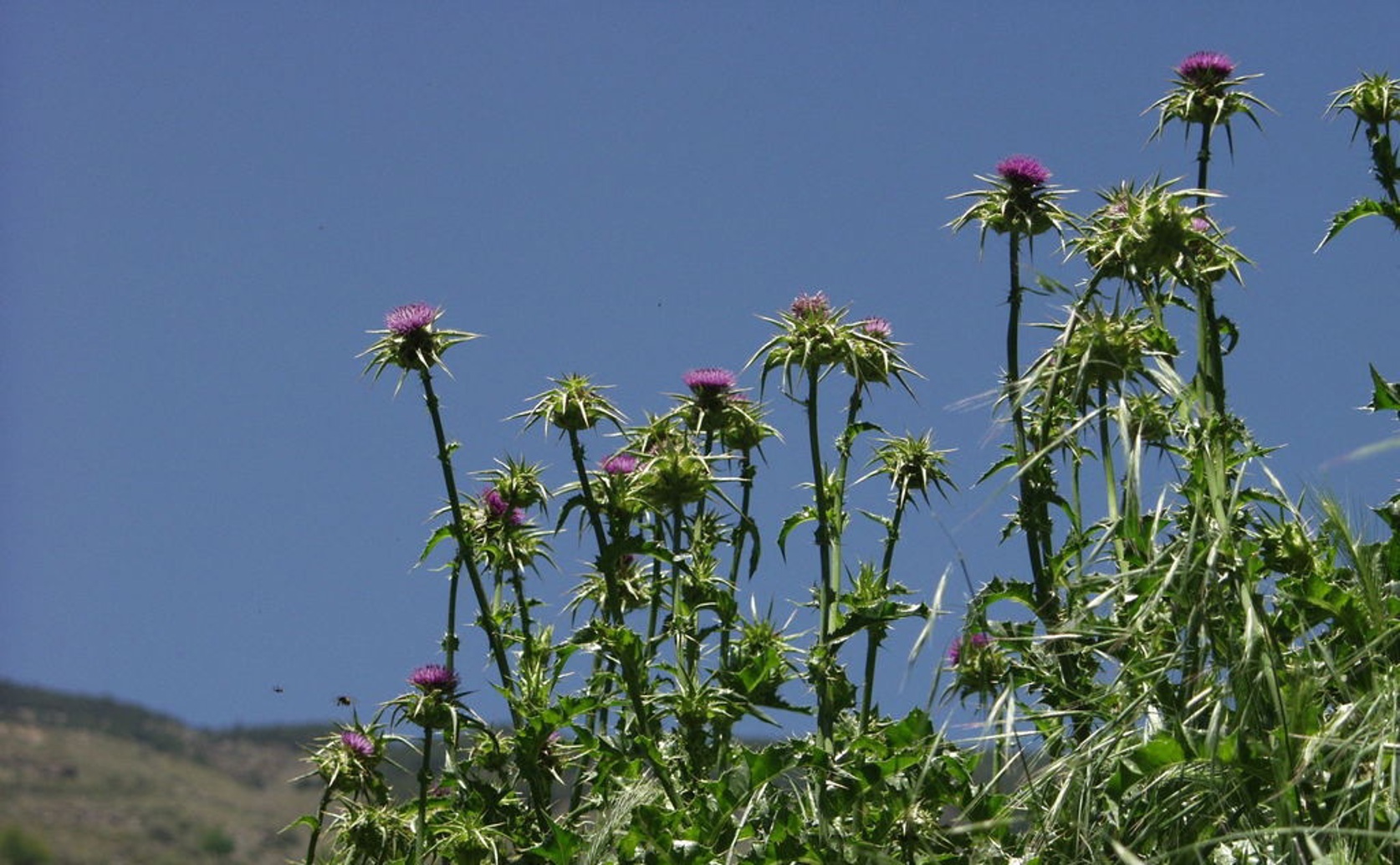
Milk thistle (Silybum marianum)

Photographer: Ina Siebert

Key Findings

  • Czech researchers analyzed four milk thistle varieties – Silma, Silyb, Mirel, and Moravia 55 – to assess their potential for use in medicine or nutrition
  • Silymarin content varied significantly between varieties, with Silma and Silyb showing the highest levels, suggesting they are best for pharmaceutical uses
  • Mirel variety exhibited the highest oil content and a favorable fatty acid profile, making it suitable for food applications and potentially beneficial for cardiovascular health
Milk thistle, scientifically known as Silybum marianum, has a long history of use, particularly for supporting liver health. Traditionally, various parts of the plant have been employed to address liver disorders[2]. Modern research has focused on silymarin, a complex of compounds found within the plant’s seeds, as the primary active ingredient responsible for many of its beneficial effects[3][4]. While widely used as a dietary supplement, understanding the nuances of different milk thistle varieties and their chemical compositions is crucial for optimizing its therapeutic potential. A recent study conducted by researchers at the Czech Academy of Sciences[1] investigated the phytochemical differences between four distinct milk thistle varieties – Silma, Silyb, Mirel, and Moravia 55 – with the aim of identifying those best suited for pharmaceutical or nutritional use. The core of the research revolved around quantifying two key components: the silymarin complex and the oil content within the seeds. Silymarin isn’t a single molecule, but rather a mixture of several flavonolignans, with silybin being the most prominent and active[3][4]. The study used a technique called high-performance liquid chromatography (HPLC-DAD) to precisely measure the levels of these individual compounds after extracting them from the seeds using ultrasound assistance. This method allows for the separation and identification of each flavonolignan, providing a detailed ‘fingerprint’ of the silymarin composition of each variety. Alongside silymarin, the oil content of milk thistle seeds is also of interest due to its potential health benefits. The researchers employed pressurized liquid extraction (PLE) to efficiently extract the oil from the seeds, followed by gas chromatography with flame ionization detection (GC-FID) to analyze the types of fatty acids present. Fatty acids are the building blocks of fats and oils, and their composition significantly impacts the oil’s nutritional value and potential health effects. The findings revealed substantial variation between the four milk thistle varieties. Total silymarin content ranged from 12.69 to 20.28 mg per gram of dry seed weight, highlighting a considerable difference in potency. Within the silymarin complex, silychristin, silybin A, and silybin B were consistently the most abundant compounds. Oil content also varied significantly, ranging from 22.81% to 26.25%, with the Mirel variety exhibiting the highest yield. Importantly, the fatty acid profiles showed a high proportion of unsaturated fats (79.30–83.30%), which are generally considered healthier than saturated fats. Linoleic and oleic acids were the most prevalent unsaturated fatty acids. To make sense of this complex data, the researchers utilized statistical methods – Principal Component Analysis and hierarchical cluster analysis – to identify patterns and group the varieties based on their phytochemical similarities. These analyses help to visually represent the relationships between the different genotypes and pinpoint those with distinct chemical profiles. These results build upon earlier research establishing the broad range of pharmacological activities associated with Silybum marianum[3][4]. Studies have demonstrated its antimicrobial, anticancer, and neuroprotective properties, alongside its well-known hepatoprotective effects. The variability in silymarin content observed in this study underscores the importance of selecting the right variety for specific applications. For instance, a variety with a higher overall silymarin concentration might be preferred for pharmaceutical use, while one with a specific fatty acid profile could be more suitable for nutritional products. The findings also support the idea of targeted cultivation practices, where growers could focus on optimizing conditions to enhance the production of desired phytochemicals within specific milk thistle genotypes.

HerbsNutritionPlant Science

References

Main Study

1) Silymarin and Fatty Acid Profiles of Milk Thistle (Silybum marianum L.) Genotypes

Published 15th September, 2025

https://doi.org/10.1007/s11130-025-01400-0


Related Studies

2) The food plant Silybum marianum (L.) Gaertn.: Phytochemistry, Ethnopharmacology and clinical evidence.

https://doi.org/10.1016/j.jep.2020.113303


3) Health Benefits of Silybum marianum: Phytochemistry, Pharmacology, and Applications.

https://doi.org/10.1021/acs.jafc.0c04791


4) A review of the botany, phytochemistry, pharmacology, synthetic biology and comprehensive utilization of Silybum marianum.

https://doi.org/10.3389/fphar.2024.1417655


Related Articles

An unhandled error has occurred. Reload 🗙