Sleepy Morning Plant Extracts Show Promise as a Water Disinfectant

Jenn Hoskins
8th September, 2025

Sleepy Morning Plant Extracts Show Promise as a Water Disinfectant

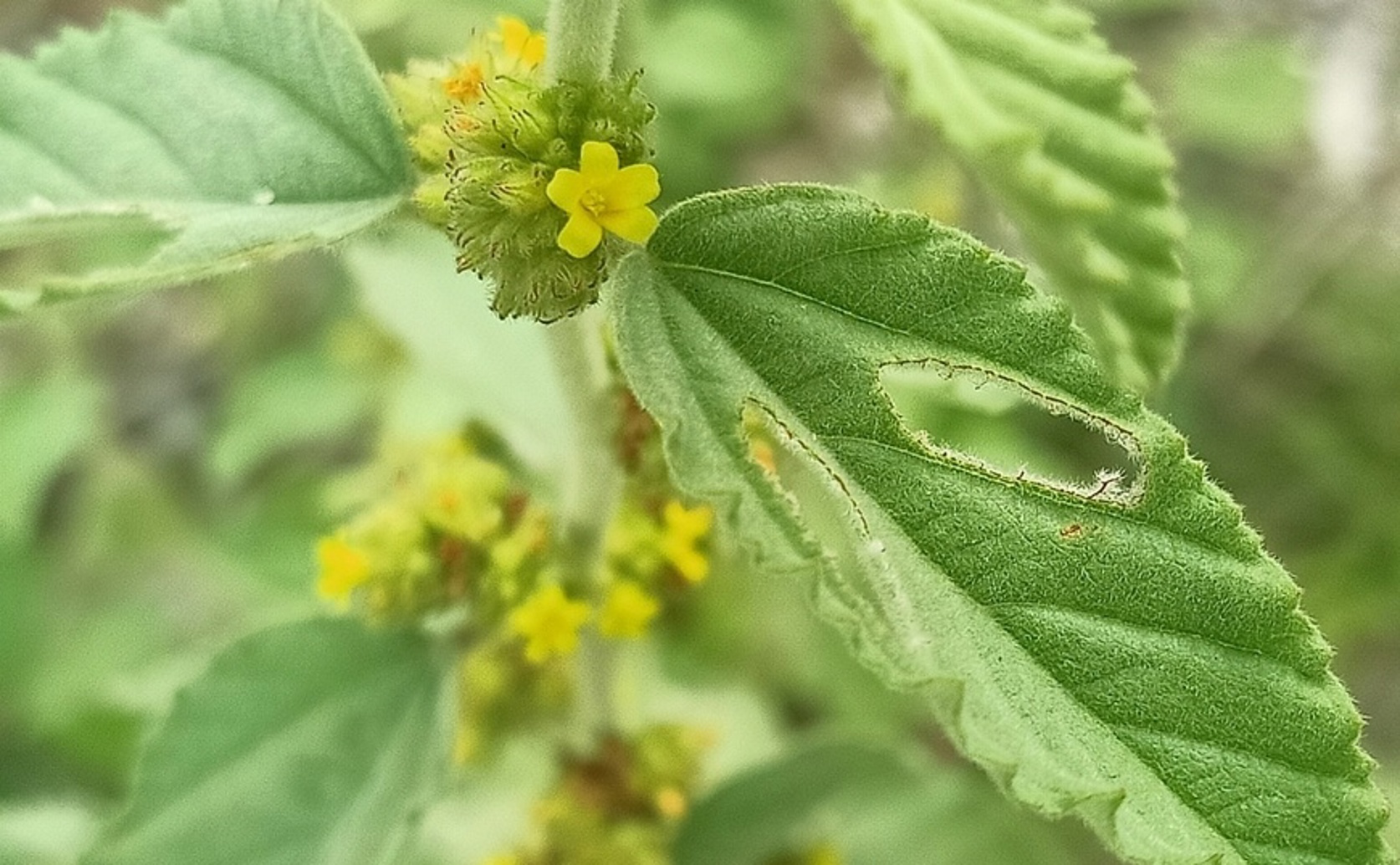
Sleepy Morning (Waltheria indica)

Photo adapted from: Ong Jyh Seng / CC BY SA (Source)

Key Findings

  • In rural Tanzania, extracts from Waltheria indica plant roots can effectively reduce harmful bacteria in shallow well water, a common source of drinking water
  • Soaked Waltheria indica root extract was most effective, eliminating approximately 94% of E. coli and 93% of total coliforms within 12 hours
  • The extracts contain bioactive compounds like vanillin and lupeol, identified through LC-MS/MS, which contribute to their antibacterial properties without significantly altering water pH or TDS levels
Waterborne diseases represent a significant global health challenge, particularly in developing countries where access to safe drinking water is limited. Over 3.4 million deaths annually are attributed to illnesses caused by contaminated water sources. Traditional water disinfection methods can be expensive and inaccessible in rural areas, creating a need for affordable and locally sourced solutions. Researchers at NM-AIST & Universidad Autonoma de Chihuahua[1] investigated the potential of Waltheria indica plant root extracts as a natural disinfectant for shallow well water in rural Tanzania. The study focused on Waltheria indica, a plant commonly found in Tanzania, and its ability to eliminate harmful bacteria from drinking water. Shallow wells are frequently used as water sources in these regions, but are often prone to contamination with pathogens like Escherichia coli and total coliforms. These bacteria can cause diarrheal diseases and other waterborne illnesses, disproportionately affecting vulnerable populations. The research aimed to determine if extracts from the plant’s roots could effectively remove these contaminants, providing a low-cost alternative to conventional disinfection techniques. The research team conducted laboratory experiments using three different forms of Waltheria indica root extracts: powdered dried roots, soaked extracts, and boiled extracts. Water samples contaminated with E. coli and total coliforms were collected from shallow wells in the Misungwi district of Tanzania. Each extract form was then applied to these samples at varying concentrations and monitored over time to assess bacterial removal. To understand the chemical basis for this disinfection, they used a technique called Liquid Chromatography tandem Mass Spectrometry (LC-MS/MS) to identify the specific compounds within the plant roots that might be responsible for the antimicrobial effect – a process known as phytochemical profiling. The results demonstrated that all three extract forms successfully reduced the levels of both E. coli and total coliforms. Importantly, the soaked extract proved to be the most effective, achieving approximately 94.3% and 93.8% reduction in E. coli and total coliforms, respectively, within 12 hours. The boiled extract followed with 83.9% and 85.8% reduction, and the powdered form achieved 81.9% and 68.2% reduction. This suggests that the method of extraction influences the concentration and availability of the antimicrobial compounds. The study also monitored key water quality parameters like pH and total dissolved solids (TDS) and found that these were largely unaffected by the treatment, indicating the extracts didn’t negatively impact the water’s basic chemical properties. These findings align with the broader understanding of the impact of water and sanitation infrastructure on public health[2]. Investment in such infrastructure, including access to safe water sources, is crucial for preventing waterborne diseases, particularly among disadvantaged populations. However, the study by NM-AIST & Universidad Autonoma de Chihuahua highlights a potential supplementary approach – utilizing locally available plant resources to improve water quality at the household level. While the Waltheria indica extracts showed promising results, the study also identified an area for improvement. Turbidity, a measure of water cloudiness, remained above acceptable levels after treatment. This suggests that the extracts alone may not be sufficient to fully purify the water, and a pre-treatment step to remove sediment might be necessary. Furthermore, research into the specific compounds responsible for the disinfection, identified via LC-MS/MS, could lead to optimized extraction methods and even the development of standardized disinfection protocols. The need for awareness regarding hygiene practices, as highlighted in studies examining waterborne disease prevalence among the elderly[2], remains critical even with access to disinfection methods.

HerbsMedicinePlant Science

References

Main Study

1) Investigation of Waltheria indica L. (sleepy morning plant) as pathogen killing agent from shallow well water revealed a potential alternative for water disinfection

Published 4th September, 2025

https://doi.org/10.1371/journal.pone.0330987


Related Studies

2) Prevalence and predictors of water-borne diseases among elderly people in India: evidence from Longitudinal Ageing Study in India, 2017-18.

https://doi.org/10.1186/s12889-022-13376-6


Related Articles

An unhandled error has occurred. Reload 🗙