New Herbal Antidandruff Shampoo from Aloe Vera, Holy Basil, and Ashwagandha

Greg Howard
18th October, 2024

New Herbal Antidandruff Shampoo from Aloe Vera, Holy Basil, and Ashwagandha

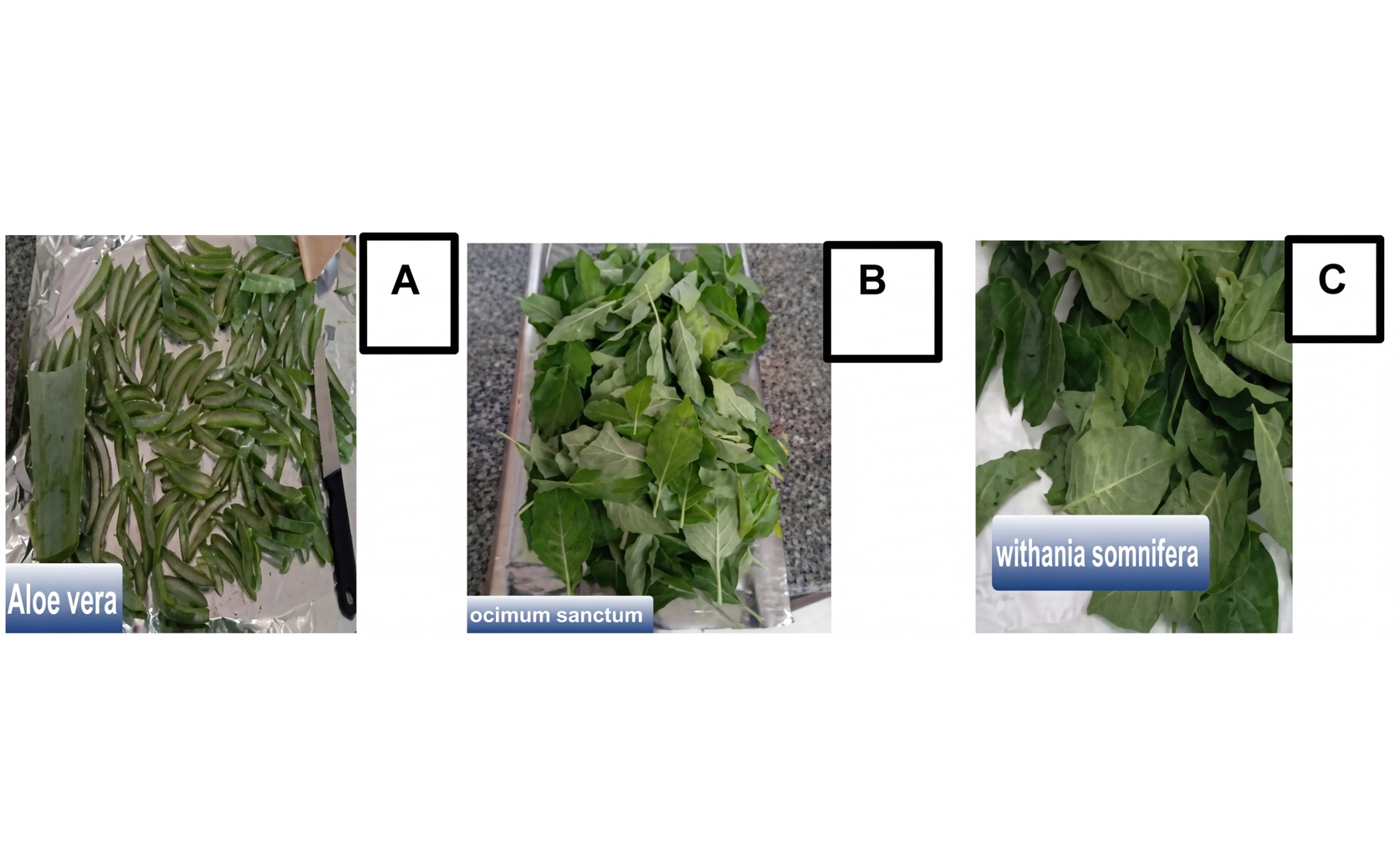
The experimental anti-dandruff shampoo was formulated using synergistic extracts from the leaves of Aloe vera (a), Ocimum sanctum (b), and Withania somnifera (c), which were investigated for their antifungal properties.

Image adapted from: Tessema et al. / CC BY (Source)

Key Findings

  • Researchers at Bahir Dar University developed a natural antidandruff shampoo using Aloe Vera, Ocimum Sanctum, and Withania Somnifera extracts
  • The shampoo formulations showed significant antifungal activity against Malassezia furfur, with the F2 variant being the most effective
  • The study confirmed the presence of bioactive compounds in the herbal extracts, supporting their antifungal properties and overall scalp health benefits
Dandruff, a prevalent scalp condition affecting nearly half of the global population, is primarily caused by the fungus Malassezia furfur. Characterized by excessive scaling, itching, and redness, dandruff presents a significant concern in dermatology. Current treatments often involve synthetic antifungal agents, which can lead to resistance and adverse effects. In a recent study conducted by Bahir Dar University, researchers explored a novel herbal-based antidandruff shampoo formulated from Aloe Vera, Ocimum Sanctum, and Withania Somnifera extracts[1]. The study aimed to develop an effective and natural antidandruff shampoo, leveraging the antifungal properties of these herbal extracts. Aloe Vera, renowned for its medicinal properties, contains polysaccharides with bioactive functions that can enhance skin health[2]. Ocimum Sanctum, or holy basil, has shown significant antifungal activity against Candida strains, including azole-resistant ones, due to its high content of methyl chavicol and linalool[3]. Withania Somnifera, also known as ashwagandha, is traditionally used for its anti-inflammatory and antimicrobial properties. Researchers formulated three different shampoo variants, labeled F1, F2, and F3, using ethanol-extracted oils from the leaves of the aforementioned herbs. These formulations were evaluated for various parameters, including solid content, foamability, viscosity, dirt dispersion, pH, wetting time, and organoleptic properties. Such comprehensive testing ensures that the shampoo is not only effective but also user-friendly. One of the critical aspects of the study was to assess the antifungal activity of the formulated shampoos against Malassezia furfur. This was done using disc diffusion and colony count methods. These methods are standard microbiological techniques used to evaluate the effectiveness of antimicrobial agents. The disc diffusion method involves placing a disc soaked in the shampoo formulation on a culture plate inoculated with the fungus. The zone of inhibition around the disc indicates the antifungal efficacy. The colony count method involves counting the number of fungal colonies before and after treatment to determine the reduction in fungal growth. The results showed that all three formulations exhibited significant antifungal activity, with F2 showing the highest efficacy. This is consistent with previous findings where Ocimum Sanctum's essential oil demonstrated strong antifungal properties[3]. Additionally, Aloe Vera's polysaccharides likely contributed to the overall antifungal activity and enhanced skin health[2]. Furthermore, the study measured the active chemical components responsible for the antidandruff activity using Fourier-transform infrared spectroscopy (FTIR). This technique helps identify the functional groups and molecular structures of the compounds present in the extracts. The presence of specific bioactive compounds corroborates the antifungal properties observed in the formulations. The study also addressed the need for a multifaceted approach to dandruff treatment. Previous research has emphasized the importance of targeting various factors contributing to dandruff, such as sebaceous gland activity and individual skin conditions[4]. By incorporating extracts from multiple herbs with diverse bioactive properties, the formulated shampoo addresses these factors more comprehensively. In conclusion, the study by Bahir Dar University presents a promising natural alternative to synthetic antidandruff treatments. By harnessing the antifungal properties of Aloe Vera, Ocimum Sanctum, and Withania Somnifera, the researchers developed an effective shampoo that not only combats Malassezia furfur but also promotes overall scalp health. This aligns with the growing interest in natural products for treating mucocutaneous infections and highlights the potential of herbal formulations in addressing common dermatological issues[3][4].

HerbsMedicinePlant Science

References

Main Study

1) Experimental dataset on leaf-based extracted antidandruff shampoo derived from Aloe Vera, Ocimum Sanctum, and Withania Somnifera: Advancing Ethiopian local herbs via formulation.

Published 17th October, 2024

https://doi.org/10.1016/j.dib.2024.110937


Related Studies

2) Structural and conformational characterization of linear O-acetyl-glucomannan purified from gel of Aloe barbadensis Miller.

https://doi.org/10.1016/j.ijbiomac.2018.09.005


3) Ocimum sanctum essential oil and its active principles exert their antifungal activity by disrupting ergosterol biosynthesis and membrane integrity.

https://doi.org/10.1016/j.resmic.2010.09.008


4) Clinical efficacy of a gentle anti-dandruff itch-relieving shampoo formulation.

https://doi.org/10.1111/ics.12885


Related Articles

An unhandled error has occurred. Reload 🗙