
Analyzing Health Benefits in Holy Basil with Advanced Imaging and AI Techniques
Greg Howard
3rd October, 2024


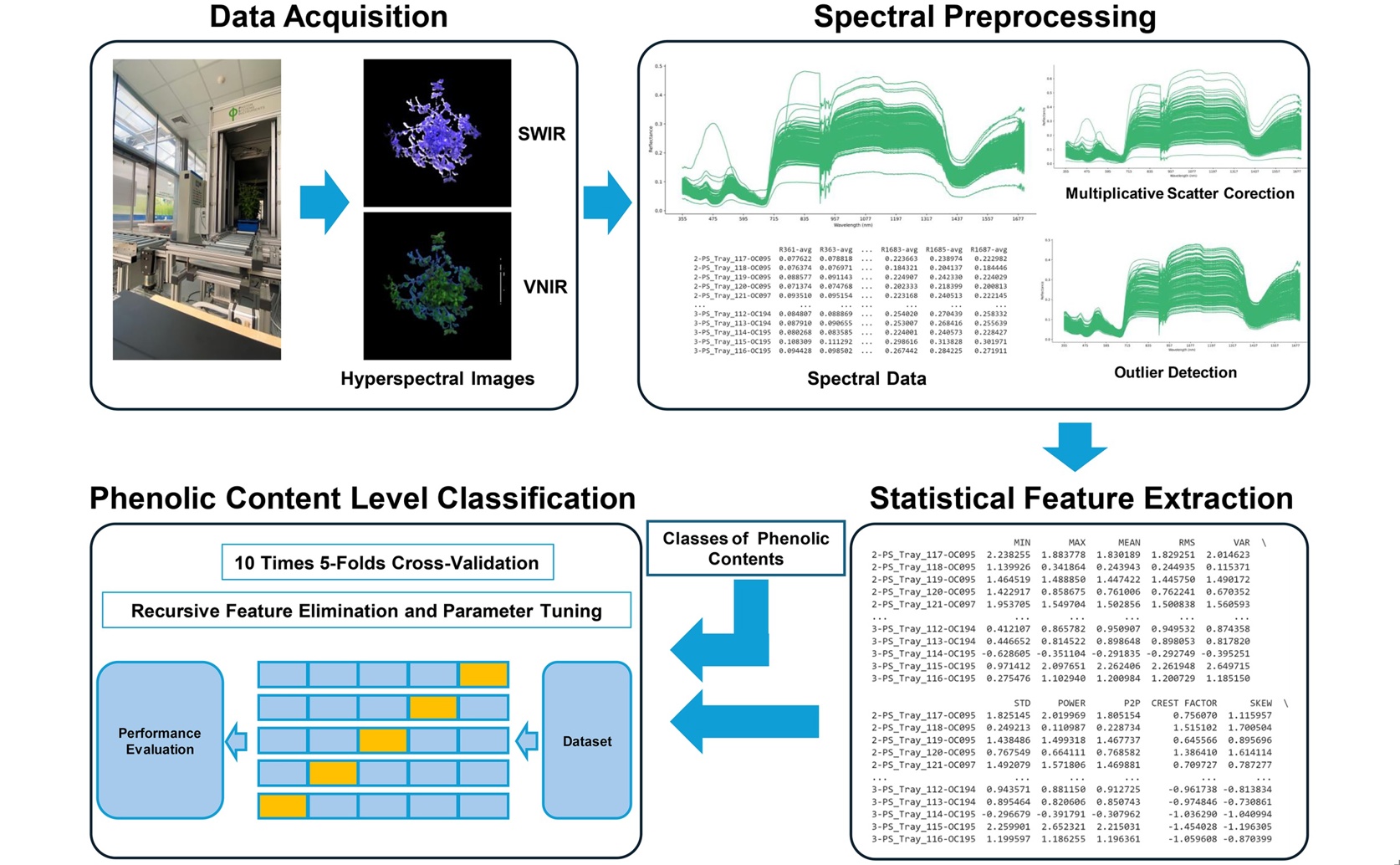
The study's analytical framework illustrates the multi-step process, combining hyperspectral imaging of holy basil (Ocimum tenuiflorum) with machine learning, to create a model for classifying the plant's phenolic content.
Key Findings
- Researchers at King Mongkut's University of Technology North Bangkok used hyperspectral imaging and machine learning to quickly and non-destructively measure phytochemical contents in holy basil
- The study analyzed 26 cultivars of Thai holy basil at different growth stages and developed a neural network model to predict phenolic content levels with high accuracy
- This new method offers a faster and more efficient way to assess antioxidant properties in plants, potentially benefiting natural medicine and plant-based therapeutics
References
Main Study
1) Phenolic content discrimination in Thai holy basil using hyperspectral data analysis and machine learning techniques.
Published 2nd October, 2024
https://doi.org/10.1371/journal.pone.0309132
Related Studies
2) Phytochemical and antioxidant profiling of Ocimum sanctum.
3) Anti-Inflammatory and Antimicrobial Activities of Fermented Ocimum sanctum Linn. Extracts against Skin and Scalp Microorganisms.
4) Antimicrobial Activity of Tulsi (Ocimum tenuiflorum) Essential Oil and Their Major Constituents against Three Species of Bacteria.
5) Antimicrobial efficacy of Tulsi leaf (Ocimum sanctum) extract on periodontal pathogens: An in vitro study.
Related Articles
 15th May, 2024 | Greg Howard