Microalgae boost lettuce growth, color, and harvest in soilless systems

Jim Crocker
21st November, 2025

Microalgae boost lettuce growth, color, and harvest in soilless systems

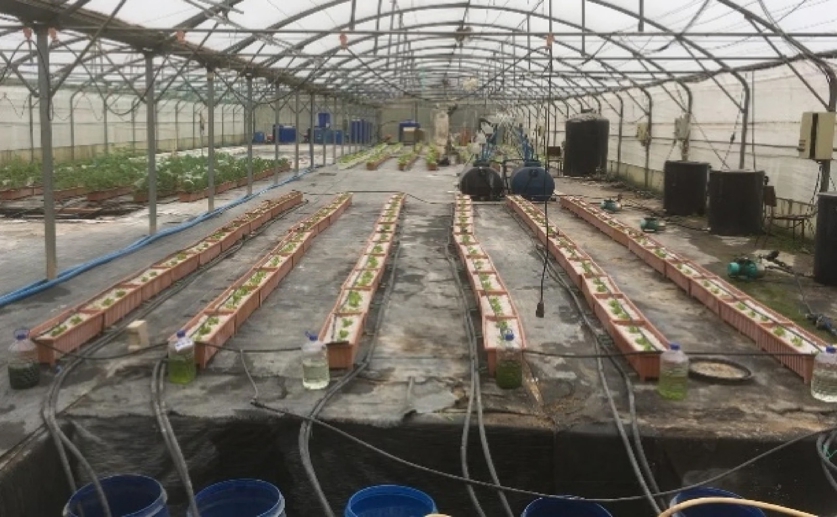
A view of study trial after planting.

Image adapted from: Memeli et al. / CC BY (Source)

Key Findings

  • This study, conducted in Turkey, investigated using live microalgae to improve lettuce growth in a soil-free system
  • Chlorella sp. significantly increased lettuce yield by 18.3% compared to control plants, performing best at a higher concentration (0.775 g/L)
  • While Scenedesmus obliquus also boosted growth, its effect was smaller, with a 2.7% yield increase at a lower concentration (0.0775 g/L)
Modern agriculture constantly seeks ways to improve crop yields and reduce reliance on synthetic fertilizers. Recent research from Ege University[1] explores the potential of using live microalgae – single-celled organisms typically found in aquatic environments – as a natural way to boost plant growth. This approach aligns with a growing interest in ‘biostimulants’, substances that enhance plant performance without directly providing nutrients[2]. The study focused on lettuce, a widely cultivated crop, and investigated the effects of two types of microalgae: Chlorella sp. and Scenedesmus obliquus. Traditionally, algae were thought to live only in water, but recent findings suggest they are also present within plant tissues and soil, functioning as part of the plant microbiome[3]. This discovery has spurred investigation into how algae might directly benefit plant health. Researchers grew lettuce plants in perlite – an inert growing medium – under greenhouse conditions. They then applied suspensions of the microalgae to the base of the plants at three different concentrations: high (0.775 g/L), medium (0.0775 g/L), and low (0.00775 g/L). A control group received no microalgae. The results showed a clear difference in performance between the two types of algae. Chlorella sp. proved particularly effective, significantly increasing both the weight of the lettuce heads and the overall yield. The highest concentration tested (0.775 g/L) resulted in an 18.3% increase in total yield compared to the control group. Scenedesmus obliquus also showed a positive effect, but to a lesser extent, with the medium concentration (0.0775 g/L) yielding a 2.7% increase. To analyze the data, researchers used a technique called heatmap analysis. This visually grouped the different treatments based on their effects on various plant parameters. The analysis clearly separated Chlorella sp. from S. obliquus and the control group, demonstrating that Chlorella sp. was strongly associated with the characteristics of higher yield. This study builds on previous work highlighting the potential of microalgae as a source of plant biostimulants[4][5]. Microalgae are known to produce compounds like cytokinins, gibberellins, and abscisic acid, which are plant hormones that regulate growth and development. These compounds can act as biostimulants, promoting growth and improving stress tolerance. The research also supports the idea that microalgae contribute to soil health by interacting with other microbes and potentially detoxifying harmful chemicals[4]. The findings suggest that applying live microalgae directly to the growing medium can be a viable strategy for enhancing crop production. The optimal concentration appears to be species-specific, with Chlorella sp. performing best at a higher concentration than S. obliquus. While the exact mechanisms behind these effects remain unclear, the study points to the importance of exploring the complex interactions between microalgae and plants. Further research is needed to determine if these results can be replicated in other crops and different growing systems, and to fully understand how microalgae influence plant physiology at a molecular level.

AgricultureNutritionPlant Science

References

Main Study

1) Microalgae enhanced plant growth and yield, and improved leaf color in soilless lettuce

Published 17th November, 2025

https://doi.org/10.1038/s41598-025-24004-9


Related Studies

2) Renewable Sources of Plant Biostimulation: Microalgae as a Sustainable Means to Improve Crop Performance.

https://doi.org/10.3389/fpls.2018.01782


3) Algae as New Kids in the Beneficial Plant Microbiome.

https://doi.org/10.3389/fpls.2021.599742


4) Soil microalgae and cyanobacteria: the biotechnological potential in the maintenance of soil fertility and health.

https://doi.org/10.1080/07388551.2019.1654972


5) Algae biostimulants: A critical look at microalgal biostimulants for sustainable agricultural practices.

https://doi.org/10.1016/j.biotechadv.2021.107754


Related Articles

An unhandled error has occurred. Reload 🗙