Sodium and magnesium levels linked to salt tolerance in faba beans

Jenn Hoskins
18th November, 2025

Sodium and magnesium levels linked to salt tolerance in faba beans

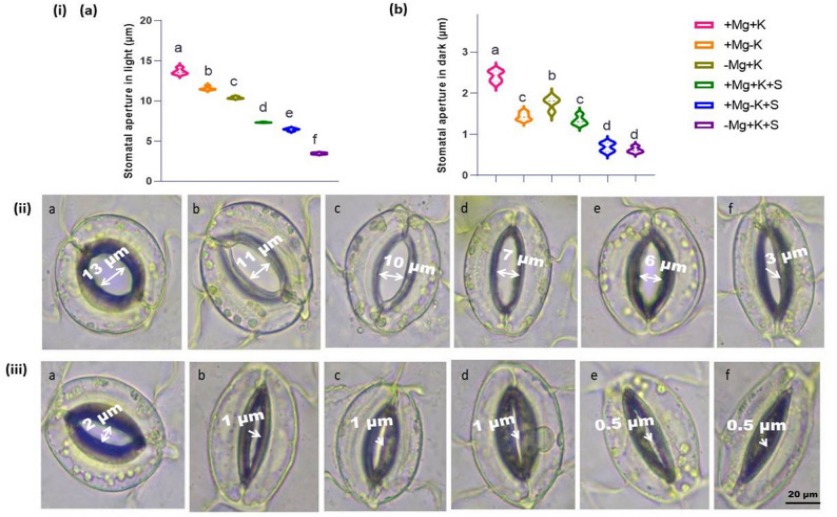
Magnesium deficiency under salt stress significantly restricts stomatal opening in Vicia faba leaves, impacting gas exchange and overall plant growth.

Image adapted from: Parisa et al. / CC BY (Source)

Key Findings

  • This study, conducted on broad bean plants at Kiel University, Germany, found magnesium deficiency harmed plant growth more than potassium deficiency under salt stress
  • Magnesium is crucial for regulating sodium uptake, as salt-stressed plants lacking magnesium accumulated significantly higher levels of sodium in their leaves and roots
  • The research demonstrates magnesium, rather than potassium, plays a key role in maintaining ion balance within plants exposed to salty conditions, impacting stomatal function and overall health
Salt stress is a major problem for agriculture, reducing crop yields worldwide. When salt builds up in the soil, it disrupts a plant’s ability to take up water and essential nutrients. Magnesium and potassium are two nutrients known to be important for plant health, and also for helping plants cope with stress. Researchers at Kiel University[1] recently investigated the roles of magnesium and potassium in how plants manage salt, and which one is more critical for maintaining a healthy balance of ions within the plant under salty conditions. The study focused on broad bean plants (Vicia faba) grown in a controlled hydroponic system – meaning they were grown in nutrient-rich water solutions rather than soil. The plants were subjected to a moderate level of salt stress (50 mM NaCl) after an initial growth period. Crucially, the researchers manipulated the levels of magnesium and potassium available to the plants, creating groups with sufficient or deficient levels of each nutrient. They then measured plant growth, gas exchange (how plants take in carbon dioxide and release oxygen), and the levels of various ions in the plant tissues. The results showed that magnesium deficiency had a more detrimental effect on plant growth and gas exchange than potassium deficiency when the plants were exposed to salt. Plants lacking magnesium showed restricted stomatal movement – stomata are tiny pores on leaves that control gas exchange and water loss. This restriction was linked to a build-up of sugars and chloride ions within the plant. A key finding was the dramatic increase in the ratio of sodium to magnesium (Na+/Mg2+) in both the leaves and roots of magnesium-deficient plants under salt stress – a 17-fold increase in leaves and 14-fold increase in roots compared to plants with sufficient magnesium. This suggests that when magnesium is scarce, sodium accumulates to a much greater extent within the plant when salt is present. The ratio of potassium to magnesium (K+/Mg2+) was also consistently higher in magnesium-deficient plants, even without salt stress, indicating that potassium and magnesium have an ongoing, antagonistic relationship – meaning that an abundance of one can affect the uptake of the other. These findings challenge previous understanding of how plants respond to salt stress. While it’s known that potassium plays a vital role in plant function, including driving cellular expansion and regulating stomata[2], this study demonstrates that magnesium is actually more important for maintaining ion balance under salty conditions. This is because magnesium appears to be crucial for regulating sodium uptake. Earlier research highlighted that plants adapt to salinity through various mechanisms, including excluding sodium or tolerating its accumulation[3]. This study builds on that knowledge by pinpointing magnesium as a key regulator in preventing excessive sodium accumulation. Furthermore, the observation that different salts affect nutrient uptake differently[4] underscores the complexity of plant responses to salinity, and the importance of considering specific ion interactions. The study also supports the idea that potassium homeostasis is vital for stress adaptation[5], but demonstrates that magnesium plays a more fundamental role in maintaining overall ion balance when salt is involved. The research highlights that ensuring adequate magnesium levels is critical for improving plant resilience to salt stress. This has implications for agricultural practices, suggesting that magnesium fertilization could be a valuable strategy for growing crops in saline environments.

AgricultureNutritionPlant Science

References

Main Study

1) Na⁺/Mg²⁺ ratio: a new physiological trait for salt resistance in faba bean (Vicia faba L.)

Published 14th November, 2025

https://doi.org/10.1186/s12870-025-07698-x


Related Studies

2) Regulation of K+ Nutrition in Plants.

https://doi.org/10.3389/fpls.2019.00281


4) Ion uptake in tall fescue as affected by carbonate, chloride, and sulfate salinity.

https://doi.org/10.1371/journal.pone.0091908


5) Potassium in plant physiological adaptation to abiotic stresses.

https://doi.org/10.1016/j.plaphy.2022.07.011


Related Articles

An unhandled error has occurred. Reload 🗙