Growth and Nutrition Responses of Sorghum to Water and Nitrogen Levels

Greg Howard
4th June, 2025

Growth and Nutrition Responses of Sorghum to Water and Nitrogen Levels

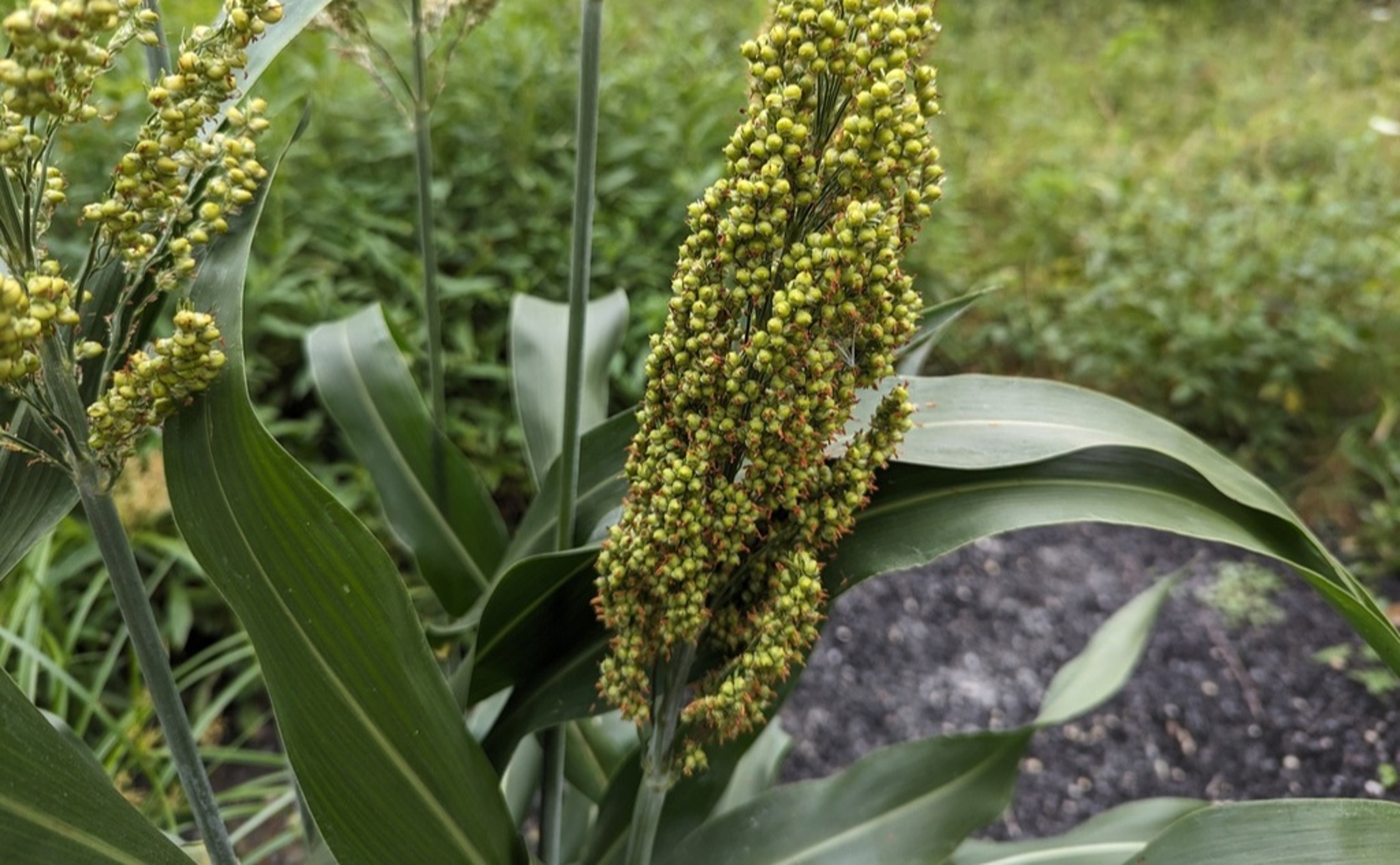
Sorghums (Sorghum bicolor)

Photo adapted from: Ryan Sorrells / CC BY (Source)

Key Findings

  • In Turkey, researchers found that full irrigation (100%) with moderate nitrogen (around 180 kg/ha) produced the best sorghum yield of about 7120 kg/ha
  • Increasing water and nitrogen boosted sorghum growth and protein and mineral levels, though extra nitrogen reduced the oil content
  • These results offer farmers clear tips for balancing water and fertilizer to raise yields and improve grain nutrition for food security
A current study[1] conducted by researchers from the University of Erciyes; University of Canakkale Onsekiz Mart; University of Bilecik Seyh Edebali; Nigde Omer Halis Demir University; and the Graduate University of Advanced Technology (KGUT), examines how different irrigation levels and nitrogen fertilization rates affect both the yield and the nutritional quality of sorghum grains. As global food security challenges increase and environmental sustainability becomes more urgent, understanding how to optimize crop production with the smallest environmental footprint is essential. This research offers practical insights for farmers by linking precise water and fertilizer inputs with higher yields and improved grain quality. The study focused on applying three levels of irrigation—50%, 75%, and 100% of the reference evapotranspiration (calculated using evaporation from a Class-A pan)—paired with four nitrogen doses (0, 90, 180, and 270 kg ha⁻¹). By systematically altering these two factors, the researchers monitored several important parameters in sorghum, including plant height, grain attributes (such as thousand-grain weight, number of grains per panicle, grain weight per panicle), overall grain yield, and key nutritional properties like oil, protein, starch, and mineral content. One primary finding was that increasing both irrigation and nitrogen levels generally improved most growth and yield parameters. For instance, the highest grain yield achieved, 7120 kg ha⁻¹, was recorded at 100% irrigation with 180 kg ha⁻¹ of nitrogen. In addition to yield improvements, finer details of the grain’s nutritional properties were significantly influenced by the treatments. Protein content was highest at the maximum irrigation level combined with the highest nitrogen doses, reaching 11.85%, while oil content, conversely, declined with increased nitrogen fertilization even when irrigation was maximized. This divergence highlights that while some nutritional attributes benefit from higher fertilizer input, others may be adversely affected. Total starch content and phytic acid content—a compound known for its nutrient-binding properties and potential to reduce mineral availability in the diet—both increased with higher irrigation levels and nitrogen doses. At 270 kg ha⁻¹ nitrogen, sorghum attained its maximum starch level at 77.29% and the phytic acid reached 1.83%. It is also notable that the ratio of resistant starch (a form of starch that resists digestion and acts similar to dietary fiber) was higher at lower irrigation levels (50% irrigation) with low nitrogen inputs. This suggests an inverse relationship between overall starch synthesis and the development of resistant starch under the given conditions. The study further highlights that the fatty acid composition of the grain was affected by the treatments. Specifically, linoleic acid, which is one of the essential polyunsaturated fats, increased with higher irrigation, while oleic acid, a monounsaturated fat associated with cardiovascular benefits, increased with nitrogen fertilization. In addition, the concentrations of several important minerals were altered. Higher irrigation elevated levels of potassium, magnesium, iron, phosphorus, and zinc, while levels of calcium and manganese decreased. The pattern indicates that water availability is a key factor in nutrient uptake and partitioning within the plant, and nitrogen levels generally contributed positively to micronutrient content, particularly for magnesium, iron, and zinc when nitrogen input was between 180 and 270 kg ha⁻¹. These nutritional findings are important not only from an agricultural perspective but also for the food industry and nutritional science. They provide a clear framework for managing inputs to achieve specific production and nutritional goals. Similar research on maize[2] has shown that manipulating water and nitrogen fertilization can significantly impact grain composition, including starch properties and phytic acid content. In the maize study[2], certain combinations of reduced irrigation and increased nitrogen produced higher starch and altered amylose–amylopectin ratios, which are key factors in food processing and nutritional quality. Though the crop type is different, both studies point to a delicate balance between water availability, plant growth, and nutrient accumulation—demonstrating that precision agriculture techniques must account for these interactions to optimize crop outcomes. The methodology applied in this sorghum study was straightforward yet effective. By setting controlled irrigation levels relative to environmental conditions measured via a Class-A pan, and by applying graded nitrogen dosages, the researchers created a series of treatment groups that allowed for clear comparisons between different management strategies. Measurements of growth parameters and grain quality were conducted at key developmental stages, ensuring that the results accurately reflected the influence of these treatments under field conditions. The overall conclusion is that for sorghum, an irrigation level corresponding to 100% of the reference evapotranspiration, combined with nitrogen doses between 180 and 270 kg ha⁻¹, is optimal for both maximizing yield and enhancing desirable nutritional characteristics. This information could be particularly useful in regions where water scarcity or soil fertility are limiting factors, providing a tailored approach that helps in synchronizing yield goals and grain quality. By integrating prior findings from studies such as the maize investigation[2], this research contributes to a broader understanding of how irrigation and nitrogen management can be tuned for different crops. The results further emphasize the importance of considering multiple crop quality parameters when developing agricultural practices, promoting a strategy that increases productivity while also addressing nutritional and economic needs.

AgricultureNutritionPlant Science

References

Main Study

1) Morphological and nutritional responses of sorghum to variable irrigation levels and nitrogen doses

Published 2nd June, 2025

https://doi.org/10.1371/journal.pone.0323901


Related Studies

2) Phytic acid content and starch properties of maize (Zea mays L.): Effects of irrigation process and nitrogen fertilizer.

https://doi.org/10.1016/j.foodchem.2019.01.029


Related Articles

An unhandled error has occurred. Reload 🗙