Epigenetic Changes Boost Antifungal Compounds in a Common Mold: A Genomic Study

Jim Crocker
13th September, 2025

Epigenetic Changes Boost Antifungal Compounds in a Common Mold: A Genomic Study

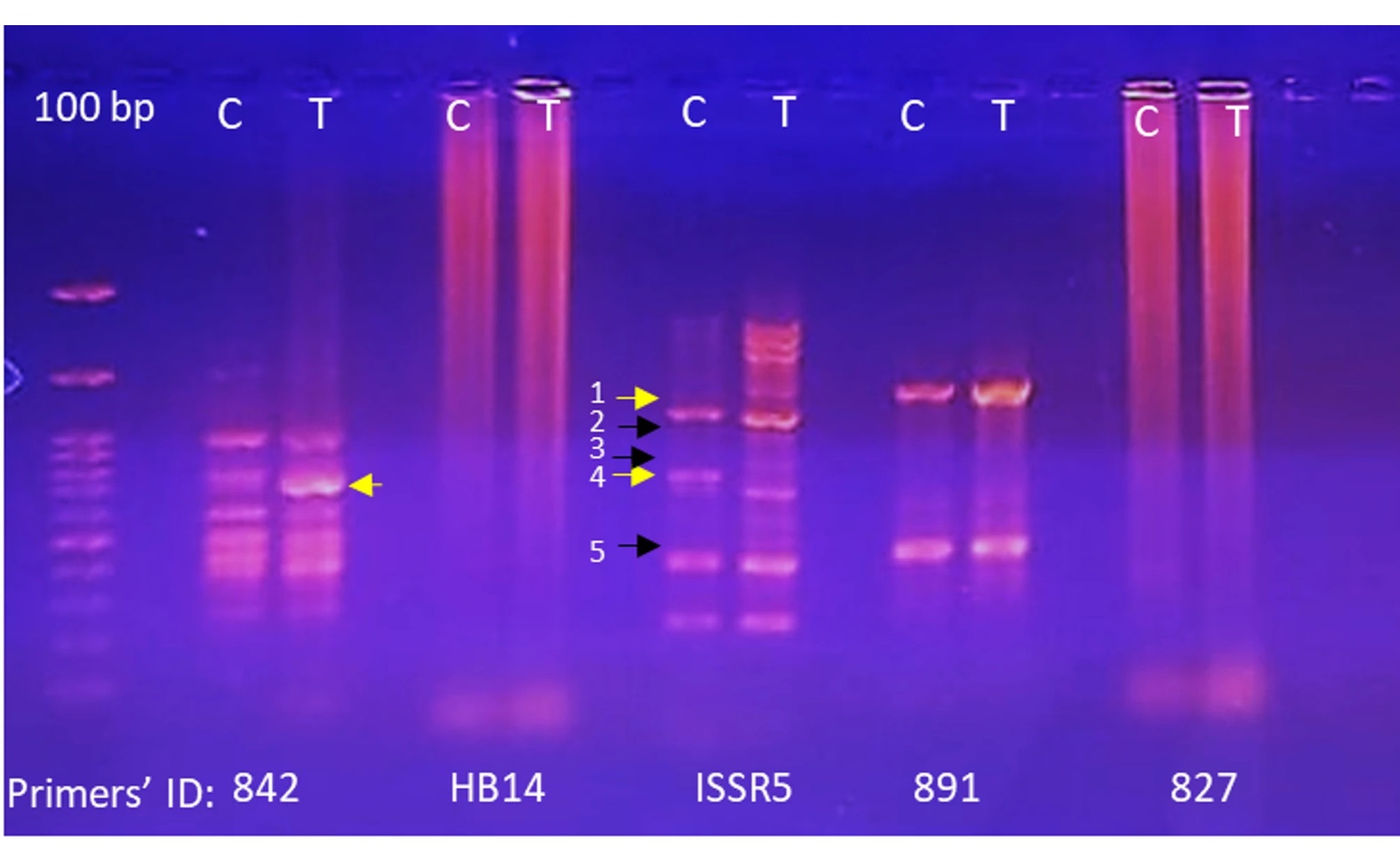
Inter-Simple Sequence Repeat (ISSR) profiling demonstrates that 5-azacytidine treatment induces significant genomic modifications in Ceratorhiza hydrophila, evidenced by the appearance of novel DNA bands (yellow arrows) and the loss of existing bands (black arrows) compared to the untreated control.

Image adapted from: Abdelhamid et al. / CC BY (Source)

Key Findings

  • In a study conducted on Ceratorhiza hydrophila fungus, a chemical treatment altered its DNA without harming the cells
  • This DNA change reduced antibacterial activity against Clostridium sporogenes but significantly increased antifungal activity against Candida albicans
  • The treatment triggered the production of new compounds, including a novel indole derivative and diisooctyl phthalate, not found in untreated fungi
The increasing resistance of bacteria and fungi to existing drugs is a major global health concern, demanding a constant search for new antimicrobial compounds. Traditional methods of drug discovery are slowing down, prompting researchers to explore alternative strategies for finding these vital new treatments. One promising avenue is unlocking the hidden potential within microorganisms like fungi, which are known to produce a diverse range of bioactive chemicals[2]. Researchers at Helwan University recently investigated a novel approach to stimulate the production of these chemicals in a lesser-known fungus called Ceratorhiza hydrophila[1]. The study focused on epigenetic modulation – a way of altering gene expression without changing the underlying DNA sequence. This is achieved by influencing how genes are “read” by the cell, essentially switching dormant genes “on” or “off”. Fungi naturally produce a variety of secondary metabolites – complex chemicals not directly involved in growth but often possessing powerful biological activities, such as antimicrobial properties[3]. However, many fungi possess “silent” biosynthetic gene clusters (BGCs) – sets of genes capable of producing these metabolites but not actively expressed under normal conditions[4]. Epigenetic inhibitors offer a way to activate these silent BGCs, potentially leading to the creation of new compounds with therapeutic potential. The team used a chemical called 5-azacytidine (5-aza) to suppress epigenetic inhibitors within C. hydrophila. 5-aza works by reducing DNA methylation, a process that typically silences genes. The researchers found that a concentration of 50 µM 5-aza significantly altered the fungus’s DNA without harming the cells. This epigenetic change triggered a notable shift in the antimicrobial compounds produced by the fungus. Specifically, the treatment reduced antibacterial activity against Clostridium sporogenes but dramatically increased antifungal activity against Candida albicans, exhibiting a 22 mm inhibition zone. This selective change in activity is significant, highlighting the potential to tailor the fungus’s output towards specific therapeutic needs. To understand what was driving this change, the researchers performed detailed analyses of the fungal metabolites. Using GC-MS (Gas Chromatography-Mass Spectrometry), they identified a dramatic alteration in the metabolic profile, including the production of novel compounds not present in untreated fungi, such as a new indole derivative and diisooctyl phthalate. Further computational modelling of the fungal promoter regions and molecular docking opportunities suggested a mechanistic explanation for these changes, linking the observed effects to alterations in primary biosynthetic pathways. Essentially, the epigenetic changes appeared to be redirecting the fungus’s metabolic machinery towards the production of these new and potent antifungal compounds. This study builds upon the growing body of research demonstrating the power of epigenetic modifiers to unlock hidden biosynthetic potential in fungi[5]. While previous work has focused on more well-studied fungal species, this research demonstrates the successful application of this strategy in C. hydrophila, a previously underexplored source of bioactive compounds. The findings align with the broader concept that fungi living in unique environments, such as those in symbiotic relationships with plants (endophytes), can be “factories” of clinically relevant agents[4]. The activation of silent BGCs through epigenetic modification, as seen in this study, offers a powerful tool for drug discovery, particularly in the face of increasing antimicrobial resistance[2]. The research suggests that epigenetic screening could be a valuable initial step in identifying promising fungal species for further investigation.

GeneticsBiochemMycology

References

Main Study

1) Epigenetic modulation of Ceratorhiza hydrophila by 5-azacytidine enhances antifungal metabolite production: insights from antimicrobial, metabolic, genomic and computational analyses

Published 9th September, 2025

https://doi.org/10.1186/s12866-025-04330-8


Related Studies

2) A Comprehensive Overview of Antibacterial Agents for Combating Multidrug-Resistant Bacteria: The Current Landscape, Development, Future Opportunities, and Challenges.

https://doi.org/10.3390/antibiotics14030221


3) A Comprehensive Review of the Diversity of Fungal Secondary Metabolites and Their Emerging Applications in Healthcare and Environment.

https://doi.org/10.1080/12298093.2024.2416736


4) Epigenetic Activation of Silent Biosynthetic Gene Clusters in Endophytic Fungi Using Small Molecular Modifiers.

https://doi.org/10.3389/fmicb.2022.815008


5) Epigenetic modifiers as inducer of bioactive secondary metabolites in fungi.

https://doi.org/10.1007/s10529-024-03478-z


Related Articles

An unhandled error has occurred. Reload 🗙