How Energy Controls DNA Packaging During Cell Cycles

Jenn Hoskins
22nd May, 2025

How Energy Controls DNA Packaging During Cell Cycles

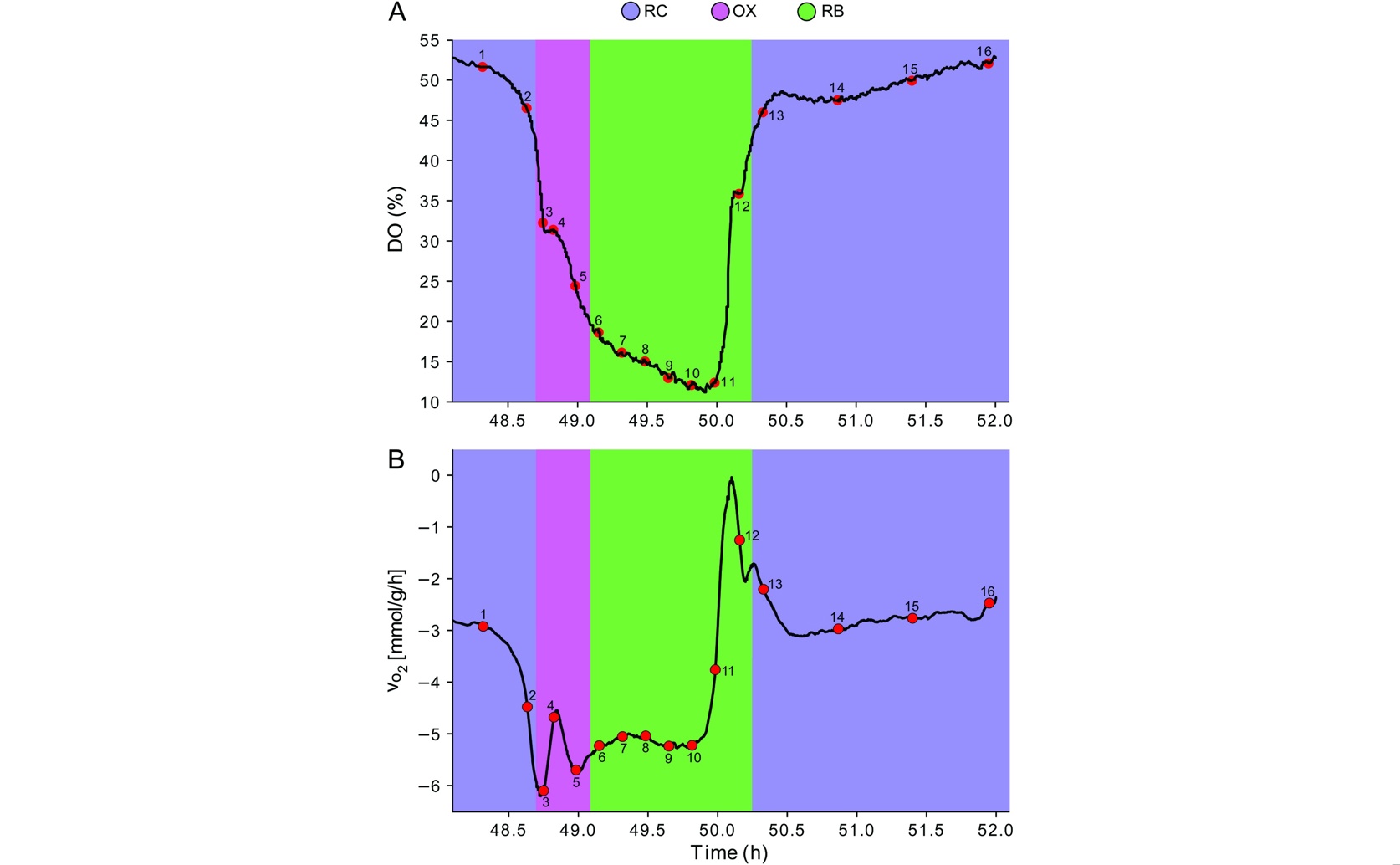
The temporal profiles of dissolved oxygen (A) and derived oxygen uptake rates (B) delineate the distinct metabolic phases of the yeast (Saccharomyces cerevisiae) metabolic cycle, serving as the physiological constraints required to model the dynamic regulation of histone modifications.

Image adapted from: Guzmán-Dinamarca et al. / CC BY (Source)

Key Findings

  • Researchers at Texas A&M found that yeast metabolism directly influences how genes are regulated
  • They discovered that acetyl-CoA activates metabolism-related genes, while SAM enhances genes involved in protein production
  • The study showed that DNA must be accessible for these metabolic substances to effectively modify gene activity
Epigenetic modifications play a crucial role in determining the stable characteristics of eukaryotic cells. However, the mechanisms that drive the initial diversification of these epigenetic marks remain unclear. A recent study conducted by researchers at Texas A&M University[1] explores the dynamic relationship between metabolic processes and epigenetic changes in Saccharomyces cerevisiae, commonly known as yeast, during its Yeast Metabolic Cycle (YMC). The study focused on understanding how the production rates of specific metabolic co-substrates, acetyl-CoA and S-adenosylmethionine (SAM), influence histone post-translational modifications (PTMs), specifically H3K9Ac and H3K4me3. Histone modifications are chemical changes to the proteins around which DNA is wrapped, and they play a key role in regulating gene expression. By integrating flux analysis with transcriptomic data, the researchers were able to track the production and utilization of these co-substrates over time. Their findings revealed that the production rates of acetyl-CoA and SAM do not occur in synchrony during the YMC, indicating that each co-substrate has distinct regulatory functions. Acetyl-CoA flux was found to correlate with the enrichment of H3K9Ac at genes involved in metabolic processes. This suggests that fluctuations in acetyl-CoA levels directly impact the acetylation of histones associated with genes that control metabolism. On the other hand, SAM flux was linked to the enrichment of H3K4me3 at genes related to translation, the process by which proteins are synthesized from genetic information. Gene ontology analysis further supported these observations by categorizing the affected genes according to their biological functions. The association between acetyl-CoA dynamics and metabolic gene regulation aligns with previous studies that highlight the role of metabolic substrates in epigenetic modifications[2][3]. Additionally, the link between SAM dynamics and translation processes emphasizes the broader impact of metabolism on gene expression beyond just metabolic functions. One of the key insights from the study is the role of chromatin accessibility in mediating the influence of metabolic fluxes on histone modifications. Chromatin accessibility refers to how tightly DNA is packed around histones, which affects the ability of enzymes to modify histones and thus regulate gene expression. The researchers discovered that genes with more accessible promoter regions were more susceptible to changes in H3K4me3 and H3K9Ac levels in response to metabolic fluxes. This finding underscores the importance of the physical state of chromatin in determining how metabolic signals are translated into epigenetic changes. This research builds on earlier studies that have established a connection between metabolism and epigenetics in cancer biology[4]. For instance, in pancreatic cancer, cancer stem cells (CSCs) exhibit unique metabolic and epigenetic profiles that contribute to their resistance to treatment and ability to drive tumor growth. The current study extends these concepts by demonstrating that even in a simpler organism like yeast, metabolic fluxes can directly influence epigenetic states, highlighting a fundamental biological principle. Moreover, the study at Texas A&M University contributes to a growing body of evidence showing that metabolic enzymes and the availability of metabolic co-substrates are critical regulators of the epigenome[2][3]. By providing a detailed analysis of how acetyl-CoA and SAM production rates affect specific histone marks, the researchers offer potential new targets for therapeutic intervention. In cancer treatment, for example, manipulating metabolic pathways to alter epigenetic states could make CSCs more susceptible to existing treatments, addressing a significant challenge in reducing cancer mortality[4]. The methods used in this study are noteworthy for their ability to integrate different types of biological data. By combining flux analysis, which measures the rates of metabolic reactions, with transcriptomic data, which captures gene expression levels, the researchers were able to create a comprehensive picture of how metabolism and epigenetics interact over time. This integrative approach could be applied to other organisms and biological systems to further unravel the complex relationships between metabolism and gene regulation. In conclusion, the study by Texas A&M University provides valuable insights into the interplay between metabolism and epigenetic modifications. By demonstrating that the production rates of acetyl-CoA and SAM are linked to specific histone marks and that chromatin accessibility plays a crucial role in this process, the research adds a significant piece to the puzzle of how cells regulate their functions in response to metabolic changes. This work not only advances our understanding of basic biological processes but also opens up new avenues for therapeutic strategies targeting metabolic-epigenetic interactions in diseases such as cancer.

GeneticsBiochemMycology

References

Main Study

1) Dynamic metabolic regulation of histone modifications during the yeast metabolic cycle

Published 20th May, 2025

https://doi.org/10.1371/journal.pone.0323242


Related Studies

2) Connections between metabolism and epigenetics: mechanisms and novel anti-cancer strategy.

https://doi.org/10.3389/fphar.2022.935536


3) Metabolism and the Epigenome: A Dynamic Relationship.

https://doi.org/10.1016/j.tibs.2020.04.002


4) Metabolism and epigenetics of pancreatic cancer stem cells.

https://doi.org/10.1016/j.semcancer.2018.09.008


Related Articles

An unhandled error has occurred. Reload 🗙