How tree populations vary genetically across eastern Mexico

Jim Crocker
29th December, 2025

How tree populations vary genetically across eastern Mexico

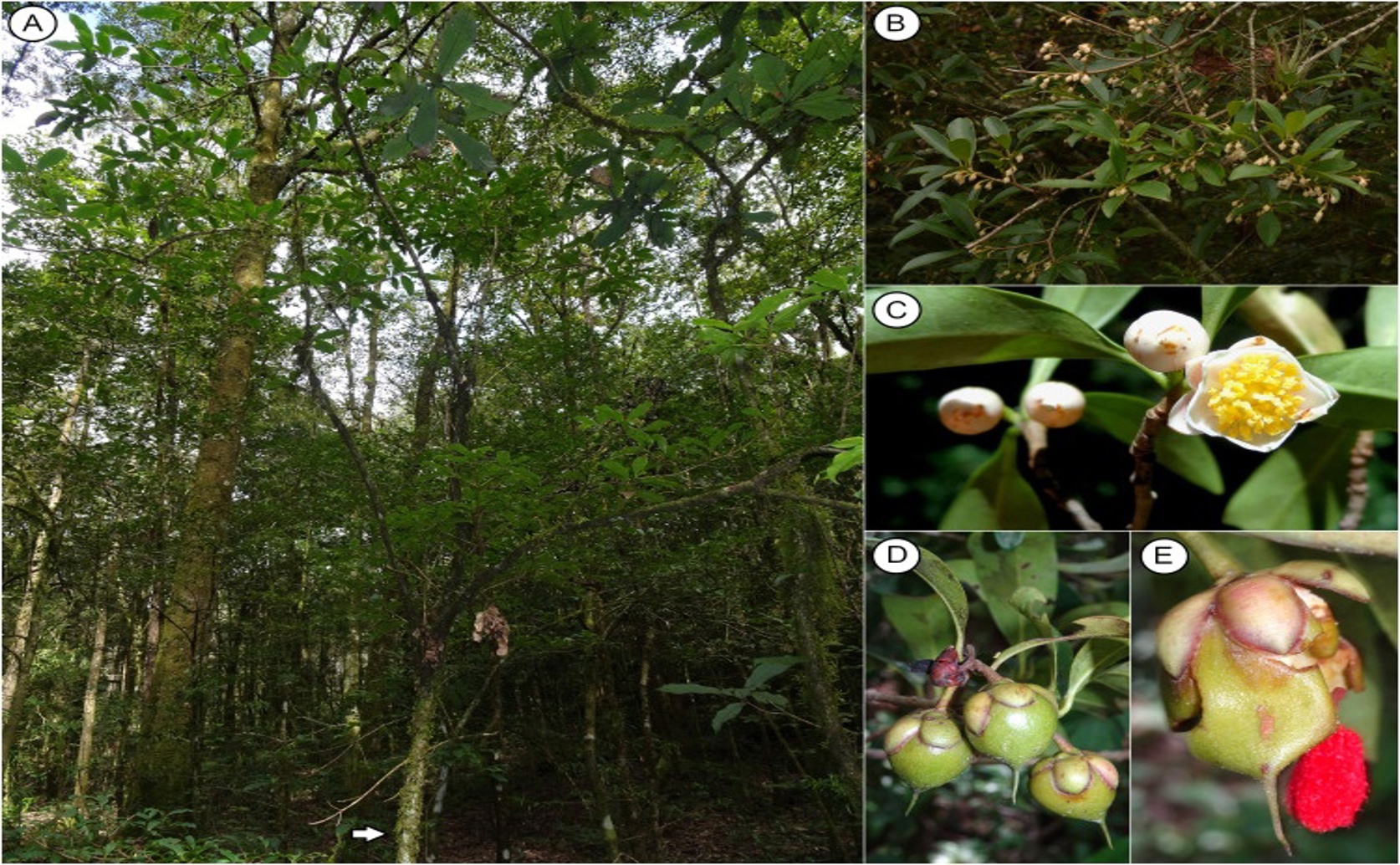
This genetic diversity study focuses on the Mexican cloud forest tree Ternstroemia sylvatica, shown here with its overall tree form (a), leaf arrangement (b), flowers (c), fruits (d), and an open fruit revealing a seed (e).

Image adapted from: Alvarado-Sizzo et al. (Photos: Leccinum Jesús García-Morales & José Rodrigo Carral Domínguez) / CC BY (Source)

Key Findings

  • This study assessed the genetic diversity of Ternstroemia sylvatica trees across eastern Mexico’s cloud forests
  • T. sylvatica populations show high genetic differentiation, with most variation occurring within populations
  • Genetic analysis revealed two primary groups—a northern group with lower diversity and a southern group with higher diversity and subgroups, suggesting historical fragmentation limits gene flow
Temperate and tropical montane cloud forests are vital ecosystems, globally threatened despite their importance for water regulation and biodiversity[2]. Conservation efforts are often hampered by limited resources, necessitating prioritization of areas most in need of protection. Mexico’s cloud forests are particularly rich in endemic species, but face significant pressure from habitat loss and fragmentation. Understanding the genetic health and structure of key species within these forests is crucial for effective conservation planning. A recent study by researchers at INAH Morelos (Jardín Etnobotánico)[1] investigated the genetic diversity and population structure of Ternstroemia sylvatica, a tree species experiencing a fragmented distribution across eastern Mexico. The study focused on assessing how genetic differences vary across the species’ range and whether populations are isolated or interconnected. T. sylvatica is found in fragmented forests, with its current distribution shaped by both natural events and human activity. The research team collected leaf samples from 366 individual trees across 16 different populations. They then analyzed these samples using 18 microsatellite markers – specific DNA regions that vary between individuals, allowing them to track genetic differences. The analysis revealed a surprisingly high level of genetic differentiation between populations (FST = 0.21), meaning that trees in different areas are quite distinct from one another. Importantly, the majority of genetic variation (79.50%) was found within populations, suggesting that each local group holds a unique piece of the species’ overall genetic diversity. Further analysis using two computational methods, STRUCTURE and DAPC, identified two primary genetic clusters. A northern group exhibited lower genetic diversity, while a southern group showed significantly higher diversity, further subdivided into ten distinct subgroups geographically aligned. These findings indicate that T. sylvatica populations have experienced historical fragmentation, leading to limited gene flow – the exchange of genetic material between groups. This is supported by evidence of inbreeding, indicated by a deficit of heterozygotes (a measure of genetic variation within individuals) across most populations. Inbreeding can reduce a population’s ability to adapt to changing conditions and increase its vulnerability to disease. The study also suggests potential hybridization with other Ternstroemia species in areas where they coexist. The high genetic diversity observed in specific populations could be a result of mixing genes with closely related species, which, while potentially beneficial in some cases, also complicates conservation efforts as it blurs species boundaries. This research builds upon previous work highlighting the importance of prioritizing conservation efforts in Mexican cloud forests[2]. The identification of genetically distinct clusters and subgroups within T. sylvatica provides valuable information for targeted conservation strategies. The observed genetic diversity in the southern populations suggests they may serve as important reservoirs of genetic variation, crucial for the long-term survival of the species. The fragmentation patterns observed echo findings in other cloud forest species, such as Chiranthodendron pentadactylon[3], which also shows population isolation linked to geographical barriers like the Isthmus of Tehuantepec. Interestingly, the genetic data aligns with the ecological observations of Ternstroemia sylvatica’s traditional medicinal uses[4]. The plant’s reported anti-inflammatory and antioxidant properties might be linked to specific genetic variants found in the more diverse southern populations. While this connection requires further investigation, it underscores the potential value of integrating traditional knowledge with genetic research for conservation purposes. The study’s findings also complement research on Liquidambar styraciflua[5], which also revealed genetic structure and limited gene flow across a fragmented distribution, highlighting a common pattern in species inhabiting these complex landscapes. The research team’s work emphasizes the need for conservation strategies that maintain connectivity between T. sylvatica populations, potentially through the creation of habitat corridors. Protecting the genetically diverse southern populations is also critical, as they represent a vital resource for the species’ future resilience.

GeneticsEcologyPlant Science

References

Main Study

1) Spatial genetic diversity and populational differentiation of Ternstroemia sylvatica (Ericales: Pentaphylacaceae) in eastern Mexico

Published 26th December, 2025

https://doi.org/10.1371/journal.pone.0339000


Related Studies

2) Tropical montane cloud forests: current threats and opportunities for their conservation and sustainable management in Mexico.

https://doi.org/10.1016/j.jenvman.2010.11.007


3) Nuclear phylogeography of the temperate tree species Chiranthodendron pentadactylon (Malvaceae): Quaternary relicts in Mesoamerican cloud forests.

https://doi.org/10.1186/s12862-020-01605-8


4) Antioxidant, anti-inflammatory and antinociceptive potential of Ternstroemia sylvatica Schltdl. & Cham.

https://doi.org/10.1016/j.apjtm.2017.10.007


5) Phylogeography of Liquidambar styraciflua (Altingiaceae) in Mesoamerica: survivors of a Neogene widespread temperate forest (or cloud forest) in North America?

https://doi.org/10.1002/ece3.938


Related Articles

An unhandled error has occurred. Reload 🗙