Flower Features and Reproduction of an Endangered Plant

Jim Crocker
30th March, 2025

Flower Features and Reproduction of an Endangered Plant

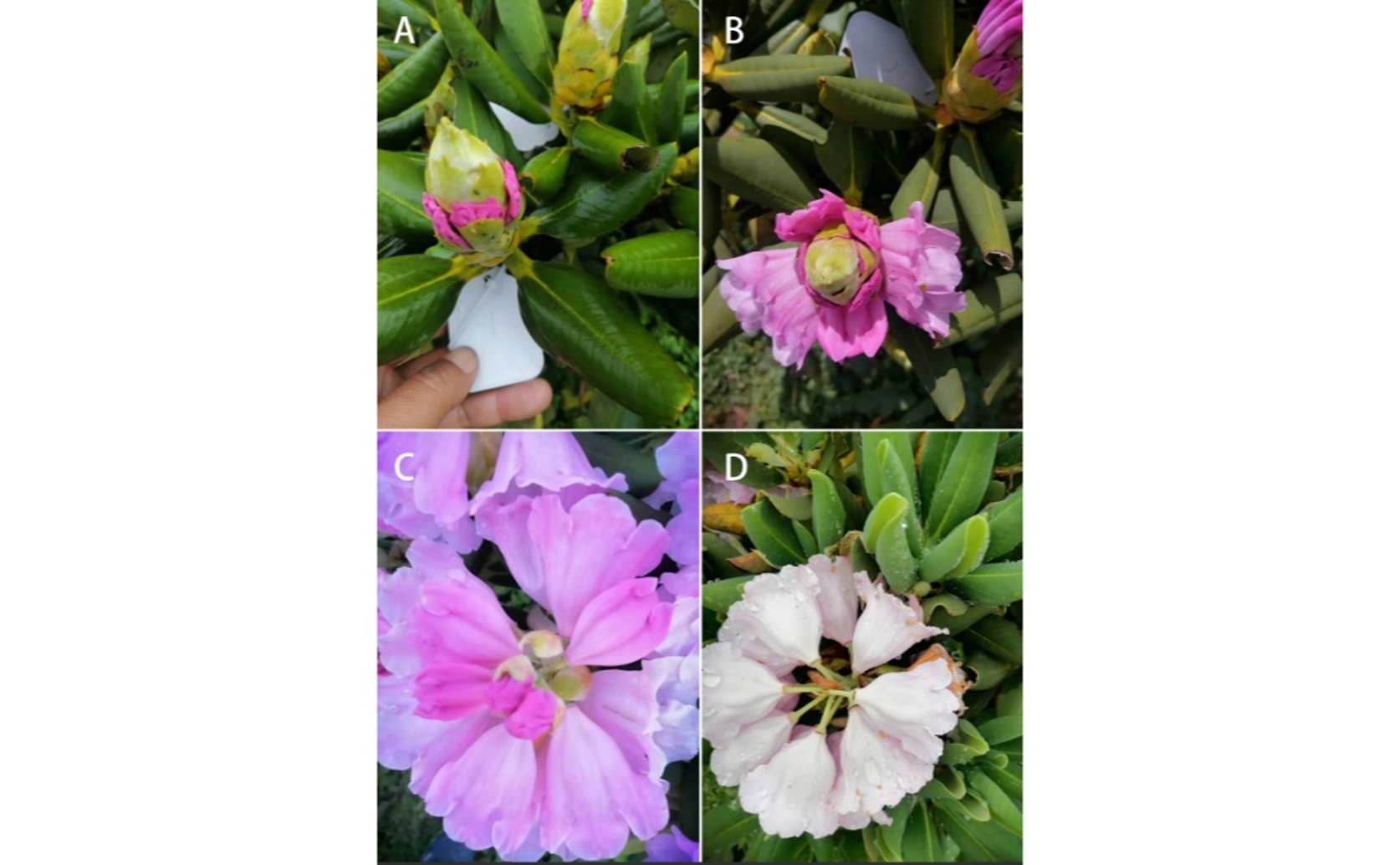
The flowering progression of Rhododendron platypodum from the bud stage (a) through its initial opening (b), full bloom (c), and fading stage (d) demonstrates the development of spatial separation between its reproductive organs, a key trait supporting the plant's primarily outcrossing breeding system.

Image adapted from: Wang et al. / CC BY (Source)

Key Findings

  • In Zhaoyun Mountain, China, the endangered Rhododendron platypodum exists in only a few small populations
  • The plant flowers for a short time and depends on specific bees for pollination, which limits its seed production
  • Using artificial pollination greatly increases fruit numbers, offering a way to help conserve and boost its populations
Rhododendron platypodum Diels, an endangered ornamental plant known as the “queen flower,” faces significant challenges in its natural habitat in China. Limited to three sites in the high-elevation subtropical regions, its populations consist of only a few individuals. Researchers at the Chongqing Academy of Forestry Sciences conducted a comprehensive study[1] to understand the factors contributing to its poor population regeneration and to provide insights for genetic breeding aimed at supporting its conservation and popularization. The study focused on the flowering characteristics and breeding system of R. platypodum in Zhaoyun Mountain, Chongqing. Flowering began in mid-April and concluded in late May, with each flower lasting approximately nine days. This relatively short flowering period suggests that the window for successful pollination is limited, which can impact seed production. One critical aspect examined was pollen viability, which was found to be highest in the mornings and evenings, peaking three days after flowering. Similarly, the receptivity of the stigma, the part of the flower that receives pollen, was greatest between the second and third days of flowering. These findings indicate a narrow timeframe during which pollination can effectively occur, highlighting the importance of timely pollinator activity. R. platypodum exhibits a breeding system characterized by partial self-compatibility and facultative outbreeding. This means that while the plant can self-pollinate, it generally prefers to outcross with other individuals. However, artificial pollination experiments revealed that natural pollination does not effectively support self-pollination or parthenogenesis (development of seeds without fertilization). Instead, cross-pollination (xenogamy) and pollination within the same plant but between different flowers (geitonogamy) resulted in higher fruit set rates. Additionally, artificially pollinated flowers produced more fruits than those pollinated naturally, suggesting that natural conditions do not facilitate optimal pollination. The primary pollinators identified for R. platypodum were Bombus species (bumblebees) and Apis cerana sinensis (a species of honeybee). These pollinators are essential for effective seed production, as the plant relies heavily on their visits for pollen transfer. This dependence on specific pollinators aligns with findings from earlier studies on related Rhododendron species. For instance, research on Rhododendron semibarbatum[2] demonstrated that different pollinators, such as males and workers of bumblebee species, have varying effectiveness in seed production. Similarly, another study on Rhododendron arboreum[3] highlighted how different floral morphs and their respective pollinators influence mating outcomes and genetic diversity. The Chongqing Academy of Forestry Sciences' research also identified several factors adversely affecting R. platypodum populations. High pollen viability and simultaneous maturity of stigma and pollen are typically advantageous for reproduction. However, in this case, the reliance on effective pollinators and issues like pollen restriction have negatively impacted population stability. Moreover, other challenges such as limited seed dispersal, difficulties in seed germination, and stringent environmental requirements for seedlings and saplings further exacerbate the plant's endangered status. This study builds on the foundational understanding of plant breeding systems outlined in earlier theoretical models[4]. Breeding systems play a crucial role in determining genetic diversity and evolutionary trajectories of plant populations. By applying these genetic and ecological principles, the researchers were able to link the breeding behavior of R. platypodum to its current conservation challenges. The partial self-compatibility observed suggests that while the plant can self-pollinate, it does so less effectively than outcrossing, which is necessary for maintaining genetic diversity and population resilience. Furthermore, the findings underscore the importance of pollinator health and behavior in plant reproduction. Just as the study on R. semibarbatum showed that different pollinator behaviors can influence seed production[2], the dependence of R. platypodum on specific bee species highlights the interconnectedness of plant and pollinator populations. Conservation efforts for R. platypodum must therefore also consider the preservation and support of its pollinator species to ensure successful pollination and subsequent seed production. The research conducted by the Chongqing Academy of Forestry Sciences provides valuable insights into the reproductive biology of R. platypodum. By identifying the limitations in natural pollination and the critical role of effective pollinators, the study offers a pathway for targeted conservation strategies. These strategies may include artificial pollination techniques, habitat management to support pollinator populations, and genetic breeding programs to enhance the plant's resilience and adaptability. In summary, the endangered status of Rhododendron platypodum is influenced by a combination of its specific breeding system, reliance on particular pollinators, and environmental challenges affecting seed dispersal and germination. The study conducted by the Chongqing Academy of Forestry Sciences not only elucidates these factors but also integrates findings from previous research to provide a comprehensive understanding of the species' reproductive ecology. Addressing these challenges through informed conservation efforts is essential for the preservation and continued existence of this beautiful and valuable ornamental plant.

GeneticsEcologyPlant Science

References

Main Study

1) Flower traits and breeding system of Rhododendron platypodum diels, an endangered plant species in China

Published 27th March, 2025

https://doi.org/10.1371/journal.pone.0319513


Related Studies

2) Bumblebee pollination and reproductive biology of Rhododendron semibarbatum (Ericaceae).

https://doi.org/10.1007/s10265-008-0155-y


3) Contradistinctive floral attributes, pollination guilds and their consequence on the outcrossing rate in two elevational morphs of Rhododendron arboreum Sm.

https://doi.org/10.3389/fpls.2024.1355680


4) Evolution of plant breeding systems.

Journal: Current biology : CB, Issue: Vol 16, Issue 17, Sep 2006


Related Articles

An unhandled error has occurred. Reload 🗙